
When something breaks on your walking pad — a worn belt, a chewed power cord, a dead remote — the first question is always where to buy walking pad replacement parts that actually fit. Order the wrong belt or an underrated cord and you’ve wasted money at best and created a safety problem at worst. The good news: reliable sources exist for nearly every part, if you know where to look and how to verify fit.
This guide ranks six trusted sources from safest to riskiest, shows you how to identify exactly which part you need, compares sources on price, speed, and fit guarantees, and flags the listings to avoid — so your repair works the first time.
Table of Contents
This guide covers how to identify the exact part you need, how to read your rating label, the six trusted sources ranked, OEM vs. third-party trade-offs, red flags, a fast decision method, tips for ordering from overseas brands, and what to do while you wait for the part to arrive.
Quick Answer: Where to Buy Walking Pad Replacement Parts
| Question | Answer |
|---|---|
| Safest source? | The manufacturer’s own parts store or support team — guaranteed fit, zero guesswork. |
| Fastest source? | Major marketplaces (Amazon etc.) with manufacturer-sold listings — often 2-day delivery. |
| Cheapest source? | Secondhand marketplaces for discontinued models — but verify fit carefully. |
| What do you need before ordering? | Exact model number (from the rating label) and the part name or dimensions. |
| What should you avoid? | “Universal” parts, listings without model compatibility info, and no-name electrical components. |

Before You Buy: Identify Exactly What You Need
Every successful parts order starts with identification. Knowing where to buy walking pad replacement parts matters less than knowing exactly what to order — get this wrong and even the best seller can’t help you.
Find your exact model number. It’s on the rating label — usually on the pad’s underside or rear — alongside the voltage, amperage, and serial number. Photograph the whole label; you’ll reference it constantly. “Looks like a WalkingPad A1” is not a model number — brands revise hardware silently, and parts change between revisions.
Name the part precisely. “The black thing under the belt” gets you nowhere with support. Learn the standard names: walking belt, deck (the board under the belt), front/rear rollers, motor cover, power cord, safety key, remote control, console/display, and side rails. A photo of the broken part next to a ruler helps support identify it instantly.
Note the specs that matter. For belts: length × width × thickness. For power cords: voltage, amperage, gauge (AWG), and connector types at both ends. For remotes and safety keys: they’re often model-specific with no substitutes — the manufacturer is your only real option.
Check your warranty first. If the pad is still covered, the manufacturer may send the part free or handle the repair. Ordering a part yourself first can complicate a warranty claim, so check what a walking pad warranty covers before spending anything.
How to Read Your Rating Label Like a Parts Pro
The rating label is the single most useful square inch on your walking pad. Support teams ask for it first, parts listings reference it, and it settles every “will this fit?” argument. Here is how to read it.
Where to find it. On most walking pads the label is a silver or white sticker on the underside of the deck or on the rear end cap. On a few models it hides inside the motor compartment or under the belt area — check your manual’s diagram if you can’t spot it. Tip it carefully onto its side (unplugged, belt stopped) rather than flipping it upside down, which can stress the console cable on some models.
What each field means for parts buying:
- Model number — the exact identifier parts compatibility lists use. Copy it character for character; a trailing letter or revision code (A1 vs. A1 Pro vs. A1 v2) can mean different belts.
- Serial number — identifies your specific unit and its production batch. Support uses this to confirm warranty status and to pin down silent hardware revisions.
- Rated voltage and frequency — e.g., 110–120V / 60Hz. Your replacement power cord and any power supply must match these. A 220V cord on a 120V pad (or vice versa) is how appliances get fried.
- Rated current / power — e.g., 4A or 500W. Replacement cords must be rated at or above this amperage; undersized cords overheat.
- Manufacturing date — helps you judge whether parts are likely still in stock and whether your unit predates a hardware revision.
When the label is worn off or missing. It happens on well-used pads. Don’t guess: contact the manufacturer with your order confirmation or receipt, which usually records the exact model. Photos of the whole unit, the remote, and the console can also help support identify it. And once you’ve identified the model, write it on a piece of masking tape and stick it somewhere sensible — future-you will be grateful.
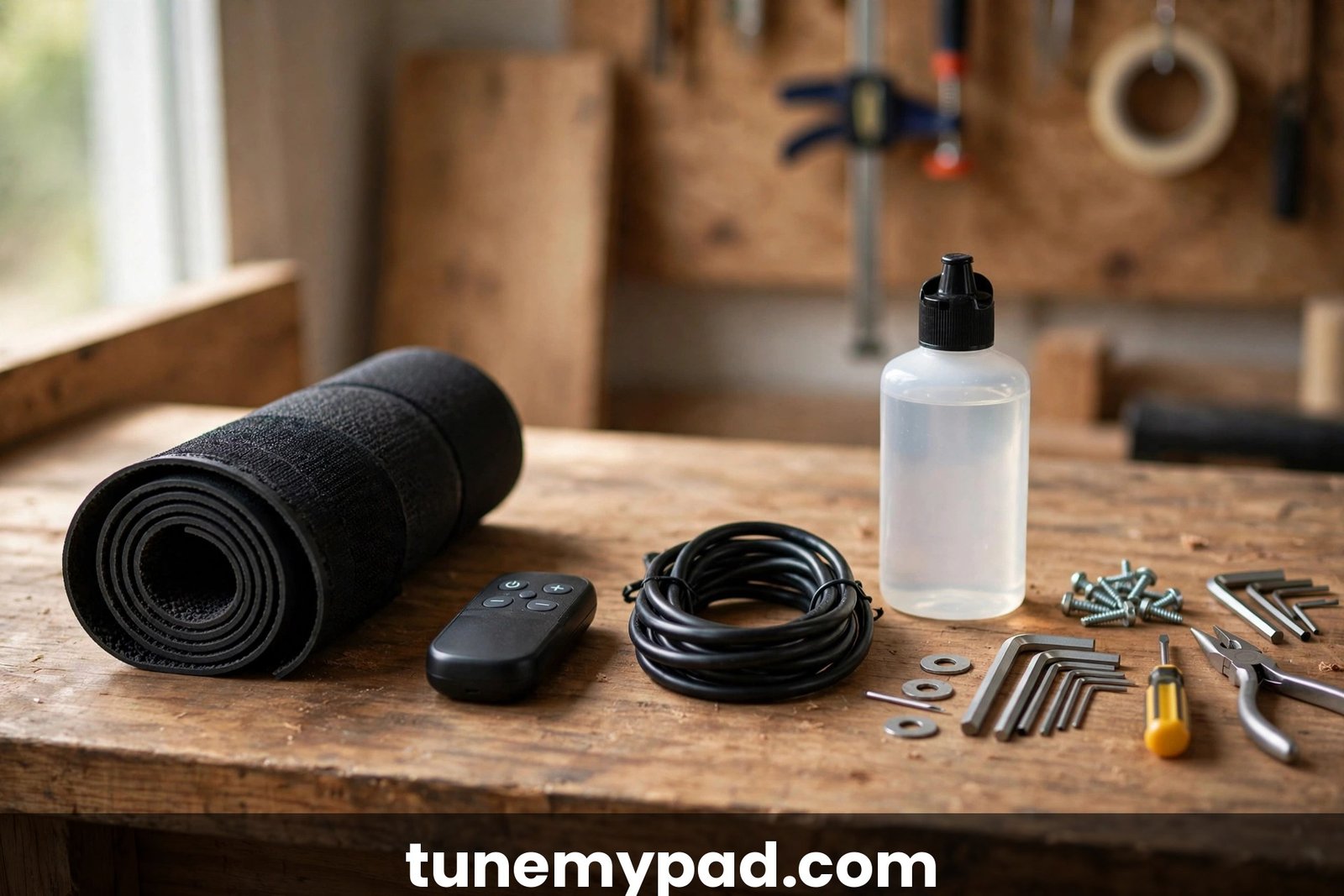
The 6 Trusted Sources, Ranked
1. The manufacturer’s parts store or support team
This is the gold standard. The part is guaranteed to fit your exact model, specs are correct by definition, and support can confirm compatibility before you order. Many brands sell belts, cords, remotes, and safety keys directly through their website’s support or parts section. Downsides: shipping can take 1–3 weeks for overseas brands, and prices run higher than marketplaces. For anything electrical or model-specific, start here — no exceptions.
2. Authorized dealers and retailers
Big-box fitness retailers and authorized online dealers sometimes stock common parts for the brands they carry. The advantage over marketplaces is accountability: authorized sellers source through official channels, so counterfeit risk is near zero. Call or chat before ordering to confirm the part matches your exact model number.
3. Manufacturer-sold listings on major marketplaces
On Amazon and similar marketplaces, look for listings where the seller is the brand itself (check the “sold by” line, not just the product title). You get marketplace shipping speed with manufacturer authenticity. The trap: third-party sellers using the brand’s name in the title while selling knockoffs. Always verify the actual seller.
4. Specialty treadmill and fitness parts retailers
Independent parts specialists stock belts, decks, rollers, and hardware for many treadmill types. They’re knowledgeable — most will help you match a belt by dimensions if you call with measurements. Quality varies by retailer, so check reviews and return policies. Best for: belts and mechanical parts on older or discontinued models where the manufacturer no longer stocks parts.
5. Secondhand marketplaces (eBay, Facebook Marketplace)
For discontinued models, secondhand is sometimes the only option — sellers part out dead units, and “for parts” listings can yield an exact-match belt or remote. Rules: buy from sellers with strong feedback, ask for the donor unit’s exact model number, get clear photos with measurements, and never buy used electrical components (cords, power supplies) — insulation and conductors degrade invisibly.
6. Local fitness equipment repair shops
Often overlooked, and often the fastest path to a working pad. Repair shops keep common belts, lube, and hardware in stock, can match parts by measurement on the spot, and will install them for a labor fee. Best for: urgent repairs, uncertain diagnoses (“is it the belt or the deck?”), and anyone who’d rather not DIY. Search for treadmill or fitness equipment repair in your area and ask if they service walking pads specifically.
Source Comparison: Speed, Price, and Fit Guarantee
| Source | Fit guarantee | Typical speed | Price level | Best for |
|---|---|---|---|---|
| Manufacturer direct | Guaranteed | 1–3 weeks | $$$ | Electrical parts, exact-fit belts |
| Authorized dealers | Very high | 3–7 days | $$$ | Current models, accountable sellers |
| Manufacturer on marketplace | High (verify seller) | 2–5 days | $$–$$$ | Fast delivery of genuine parts |
| Specialty parts retailers | High with guidance | 3–10 days | $$ | Belts by dimension, older models |
| Secondhand marketplaces | Verify yourself | Varies | $ | Discontinued models, donor parts |
| Local repair shops | Expert-matched | Same day–1 week | $$ + labor | Urgent fixes, uncertain diagnoses |
Price and speed trade against certainty. When the part is electrical or safety-critical — power cords, power supplies, motor components — certainty wins every time, which is why the manufacturer’s store tops every honest answer to where to buy walking pad replacement parts. When it’s a mechanical wear part and the manufacturer is out of stock, specialty retailers and careful secondhand buying fill the gap.
OEM vs. Third-Party Parts: What the Price Difference Actually Buys
OEM (original equipment manufacturer) parts come from or through your pad’s brand. Third-party parts come from independent makers. Both can work; the price gap pays for different things.
| Aspect | OEM (brand) parts | Quality third-party parts | Cheap no-name parts |
|---|---|---|---|
| Fit confidence | Guaranteed for your model | Good if dimensions verified | Gamble |
| Spec accuracy | Matches original exactly | Usually close; verify ratings | Often overstated or vague |
| Electrical safety | Tested and certified | Varies; check certifications | Risky — avoid for cords |
| Warranty impact | None — keeps warranty intact | May void warranty if it causes damage | Likely voids warranty |
| Typical price | Highest | 20–40% less than OEM | Cheapest by far |
| Support | Brand support helps with install | Seller support only | Usually none |
The practical rule: buy OEM for anything electrical (cords, power supplies, remotes with batteries, control boards) and for anything where dimensions must be exact to the millimeter (belts). Third-party is reasonable for simple mechanical wear items — end caps, side rail covers, hardware — where the only requirement is the right shape. Cheap no-name electrical parts are never worth the savings; a $9 cord that overheats can cost you the whole pad, or worse. If you do go third-party for a belt, our walking pad belt replacement guide explains the measurements that have to match before you order.
Red Flags: Sellers and Listings to Avoid
- “Universal” belts, remotes, or safety keys. Walking pad parts are model-specific. Universal claims are the #1 source of parts that don’t fit.
- Listings with no model compatibility info. If the seller can’t tell you which models a part fits, they don’t know — and neither will you until it arrives wrong.
- No-name electrical components. Off-brand power cords, chargers, or power supplies with vague specs are a fire risk. Never gamble on electrical parts.
- Stock photos only, no measurements. Legitimate parts sellers show the actual item and give dimensions. Stock-photo-only listings hide a lot.
- Prices far below everyone else. A $12 “genuine” belt is either counterfeit or the wrong part. If the deal looks impossible, it is.
- Sellers who won’t answer fit questions. A seller who ignores “will this fit model X?” before the sale will ignore you after it too.
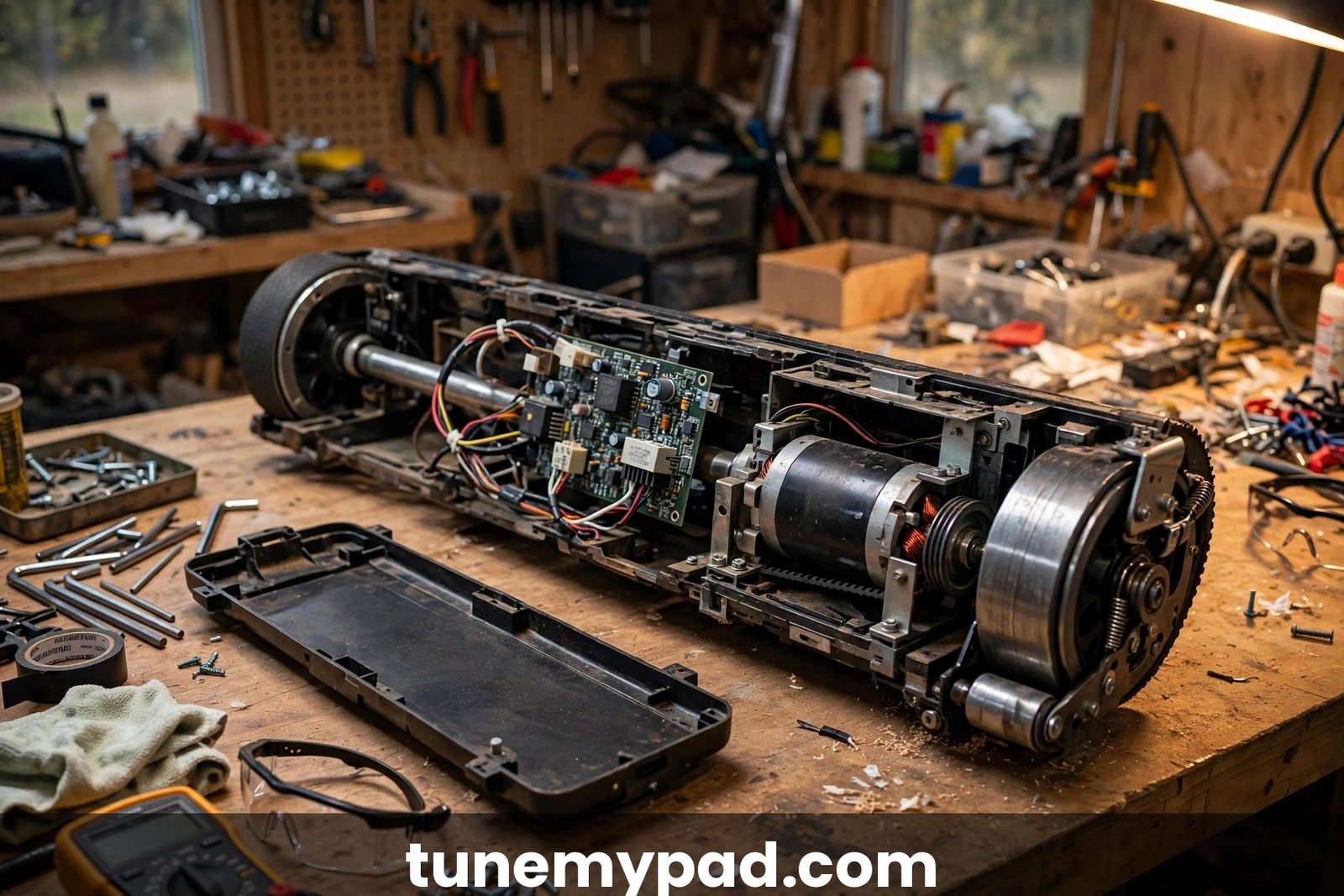
How to Decide Where to Buy Walking Pad Replacement Parts Fast
When the pad is broken and you want it fixed, run through this decision tree instead of comparison-shopping for hours:
- Still under warranty? → Contact the manufacturer. The part may be free, and self-ordering first can complicate the claim. Stop here.
- Is the part electrical? (cord, power supply, remote, control board) → Buy from the manufacturer or a manufacturer-sold marketplace listing. Full stop. See our power cord replacement guide for the specs that must match.
- Do you need it this week? → Call a local repair shop first (same-day possibility), then check manufacturer-sold marketplace listings with fast shipping.
- Is the model discontinued? → Specialty parts retailer matched by dimensions, then secondhand donor parts with verified model numbers.
- Is it a simple mechanical wear item? (end caps, covers, hardware) → Third-party is fine if the shape and dimensions check out — these carry the least risk of the whole parts catalog.
- Tight budget, mechanical part, manufacturer out of stock? → Specialty retailer with phone support, or secondhand from a high-feedback seller — with the verification checklist below, no exceptions.
Ninety percent of buyers land on one of the first three branches. The decision tree exists to stop you from spending an evening saving $15 on a part that might not fit.
Ordering From Overseas Brands Without the Headache
Many walking pad brands ship parts from overseas warehouses, which adds friction. None of it is a dealbreaker if you plan for it.
Expect 1–3 weeks, not days. Standard international shipping is slow; expedited options exist but can cost more than the part. If you depend on the pad daily, order the moment you diagnose the problem — don’t wait to see if it “gets better.”
Track it and budget for customs. Get a tracking number and watch it; parcels sometimes stall at customs. Depending on your country, import duties or handling fees may apply on delivery — a $40 part with a $15 customs fee is still usually cheaper than the alternatives, but factor it in before you compare prices.
Pay with protection. Use a credit card or a payment service with buyer protection for international parts orders. If the part never ships or arrives wrong, a chargeback or dispute is your leverage. Avoid wire transfers or direct bank payments to unfamiliar sellers.
Combine consumables into the order. If you’re already paying international shipping, add silicone lubricant, a spare safety key, or a backup remote to the same order. Small items that are model-specific become expensive emergencies later; they’re cheap insurance now. Your walking pad maintenance schedule will tell you which consumables you’ll need anyway.
Mind support time zones. Overseas support teams may take 24–48 hours to reply. Send one complete message — model number, serial number, clear photos, and exactly what you need — instead of a vague opener that starts a three-day back-and-forth.
How to Verify a Part Fits Before Ordering
Run through this checklist and you’ll almost never order wrong:
- Match the exact model number — from your rating label to the listing’s compatibility list. No match, no order.
- Compare dimensions for belts and decks: length, width, and thickness against your old part’s measurements.
- Compare specs for electrical parts: voltage, amperage, gauge, and connector types must match or exceed the original.
- Check the return policy before paying. Even careful buyers get it wrong sometimes; a 30-day return window is your safety net.
- Message the seller with your model number and a photo of the old part. Their answer (or silence) tells you everything about their reliability.
- Keep the old part until the new one is installed and tested. It’s your reference if anything looks off.
What to Do While You Wait for the Part
A broken pad sitting idle for two weeks is an invitation to either impatience or improvisation. Do the first; avoid the second.
Don’t run a damaged belt “just a little.” A fraying or slipping belt chews up the deck underneath, turning a $50 belt replacement into a belt-plus-deck job. Unplug the pad and leave it alone until the part arrives.
Use the downtime for inspection. With the pad unplugged, check the deck surface for gouges, spin the rollers by hand to feel for grinding, and vacuum dust out of the motor vents. You may discover the real problem is smaller — or bigger — than you thought, while there’s still time to adjust the order.
Never jury-rig electrical parts. A taped-up power cord, a spliced wire, or a borrowed charger with “close enough” specs is how fires start. If the broken part is electrical, the pad stays unplugged until the correct replacement is installed. If you’re tempted to bridge the gap with household wiring, read whether you can use an extension cord with a walking pad first — the same safety logic applies.
Store it sensibly meanwhile. Folded, upright, and out of the way beats sprawled across the living room for two weeks. It keeps the damaged part from getting worse and keeps everyone else in the house from tripping over your repair project.
FAQs: Buying Walking Pad Replacement Parts
Where is the best place to buy walking pad replacement parts?
The manufacturer’s own parts store or support team is the best source — guaranteed fit and correct specs. For faster shipping, buy from manufacturer-sold listings on major marketplaces (verify the “sold by” line). Specialty parts retailers are the best fallback for discontinued models.
Can I buy walking pad parts on Amazon?
Yes, but verify the seller. Listings sold directly by the brand are genuine; third-party sellers using brand names in titles may sell knockoffs. Check the “sold by” field, read reviews mentioning your exact model, and avoid “universal” parts.
Are generic walking pad belts worth it?
Rarely. Walking pad belts are model-specific in length, width, and thickness, and generics seldom match all three. A wrong-size belt causes chronic drift and fast wear. Buy the belt specified for your exact model number.
What parts should I never buy secondhand?
Electrical components — power cords, power supplies, chargers — degrade invisibly and are a fire risk used. Also avoid used belts (you’re buying someone else’s wear) and used safety keys (often model-paired). Mechanical hardware like end caps and side rails is generally fine secondhand.
How do I find parts for a discontinued walking pad model?
Start with the manufacturer — they sometimes retain parts stock. Then try specialty treadmill parts retailers (match by exact dimensions), secondhand marketplaces for donor units, and local repair shops that can match parts by measurement. Document your model number and measurements before you start hunting.
Should I just replace the whole pad instead of repairing it?
Do the math: a belt ($30–$80) or remote ($15–$30) is worth replacing on a pad that’s otherwise healthy. But if the motor or control board is dead on an old, out-of-warranty budget pad, a replacement unit is often cheaper than professional repair. Multiple simultaneous failures usually mean it’s time.
Can I put a regular treadmill belt on my walking pad?
No — this is a common and expensive mistake. Full-size treadmill belts are wider, longer, and usually thicker than walking pad belts, and walking pad decks and rollers are sized to match their specific belt. Even a “close” belt will drift, rub, and wear out fast. Always buy the belt specified for your exact walking pad model, or one matched to its precise dimensions by a knowledgeable parts retailer.
Do walking pad brands sell parts on their own websites?
Many do, though the path varies: some brands have a dedicated parts or accessories store, others handle parts only through support tickets or live chat. Check the support section of the brand’s website first — search for “replacement parts” or your model number plus “parts.” If there’s no visible store, open a support ticket with your model and serial number; most brands will sell or direct you to an authorized source.
How long do manufacturers keep replacement parts in stock?
For current models, typically several years — brands that expect repeat business keep belts, remotes, cords, and safety keys available. For discontinued models, stock dries up unpredictably, sometimes within a year or two. If your pad is a few years old and still going strong, buying a spare belt and remote while they’re available is cheap insurance against a future where they aren’t.
What should I tell support when I contact them about a part?
Send one complete message: exact model number and serial number (from the rating label), purchase date and where you bought it, a clear description of the problem, and close-up photos of the broken part. Mention anything you’ve already tried. Complete first messages routinely get resolved in one reply; vague openers (“my pad is broken, need parts”) start a days-long back-and-forth.
Conclusion
Knowing where to buy walking pad replacement parts comes down to one principle: certainty beats bargains. Start with the manufacturer for guaranteed fit, use authorized and specialty sellers as backups, verify model numbers and specs before every order, and never gamble on electrical components. Follow that approach and a broken belt, cord, or remote becomes a minor errand — not the end of your walking habit.
External References
- U.S. Consumer Product Safety Commission — Federal safety guidance, recalls, and the SaferProducts database for checking equipment issues.
- Federal Trade Commission — U.S. consumer protection resources, including guidance on vetting online sellers and avoiding counterfeit goods.