
Shopping for an under-desk treadmill? You’ll see motors advertised as 2.0 HP, 2.5 HP, even 3.0 HP — and the numbers seem to mean everything and nothing at the same time. How much horsepower does an under desk treadmill need is one of the most practical questions a buyer can ask, because the motor is the component most likely to fail, the hardest to replace, and the one manufacturers exaggerate about most aggressively.
The short answer: how much horsepower does an under desk treadmill need depends on whether the number is continuous or peak (manufacturers almost always advertise the bigger, less honest one), how much you weigh, and how many hours a day you’ll walk. This guide decodes HP vs. CHP, gives you the real minimums for different users, explains why under-desk motors are different from full-treadmill motors, and shows you the warning signs of an underpowered machine before you buy.
Table of Contents
Quick Answer: How Much Horsepower Does an Under Desk Treadmill Need?
| Question | Answer |
|---|---|
| Minimum for walking (under 200 lbs)? | 1.5 continuous horsepower (CHP) is the honest minimum for daily walking use. |
| What if I weigh over 220 lbs? | Look for 2.0+ CHP; heavier users and longer sessions need the headroom. |
| Is advertised “2.5 HP” enough? | Only if it’s continuous HP. “Peak HP” of 2.5 usually means ~1.25 CHP — borderline for daily use. Always confirm which rating is quoted. |
| Do I need more HP for running? | Yes — jogging or running needs 2.5+ CHP, but most under-desk models aren’t designed for running regardless of the motor sticker. |
| Does more HP mean more noise or power use? | Slightly higher power draw, but a properly-sized motor actually runs quieter and cooler than an undersized one straining at its limit. |
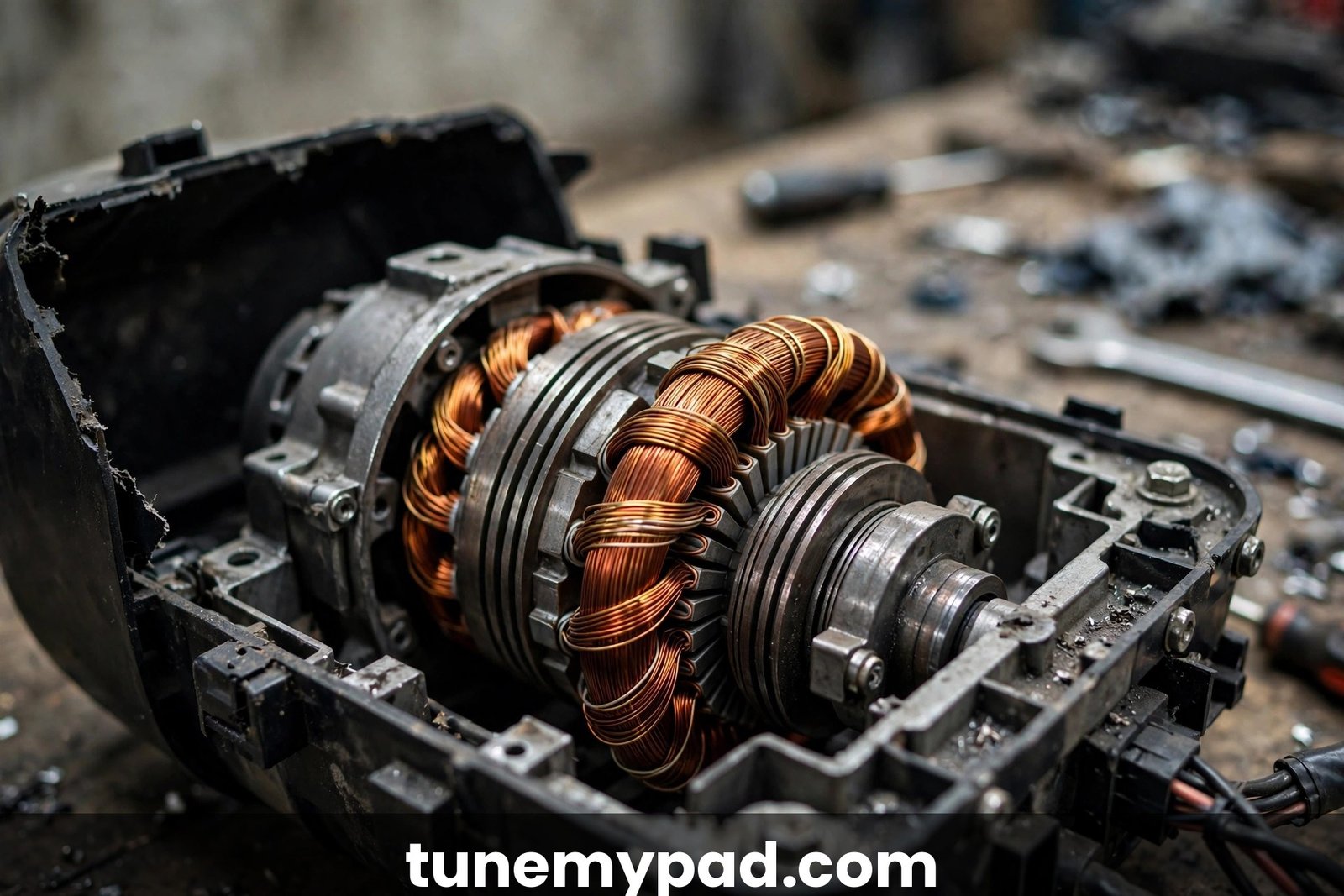
HP vs. CHP: The Number That Actually Matters
If you’re asking how much horsepower does an under desk treadmill need, the HP vs. CHP distinction is where to start. This distinction is the entire ballgame when sizing a motor for walking use.
Peak horsepower (HP): the marketing number
To answer how much horsepower does an under desk treadmill need, you must first understand peak vs. continuous ratings. Peak HP is the maximum power a motor can produce in a short burst — seconds, not hours. It’s real in the engineering sense, but it’s nearly useless for predicting how a treadmill performs during your 3-hour workday. Manufacturers love it because the number is roughly double the continuous rating, which looks better on a product page.
Continuous horsepower (CHP): the honest number
The honest answer to how much horsepower does an under desk treadmill need always uses continuous HP. Continuous HP is the power the motor can sustain indefinitely without overheating. This is the number that determines whether your treadmill cruises through a workday or strains, overheats, and dies young. Reputable manufacturers publish CHP; budget brands often publish only peak HP and hope you don’t notice the difference.
The conversion rule of thumb
This conversion is the key to how much horsepower does an under desk treadmill need in real terms. As a rough guide, peak HP is typically 1.5–2x the continuous rating. So a “2.5 HP” motor with no other qualification is probably a ~1.25–1.5 CHP motor — right at the minimum for daily walking. A “3.0 HP peak” motor is roughly 1.5–2.0 CHP. When a listing won’t specify, assume the worst and size up.
The Real Minimums by User and Use Case
So how much horsepower does an under desk treadmill need? Here are the real minimums: Forget the marketing. Here are honest minimums based on how the machines actually get used:
| User profile | Daily use | Minimum CHP | Notes |
|---|---|---|---|
| Under 160 lbs, casual walking | 1–2 hrs/day | 1.25 CHP | Fine for light use; expect a shorter lifespan under heavy use |
| 160–220 lbs, regular walking | 2–4 hrs/day | 1.5 CHP | The sweet spot for most office workers |
| Over 220 lbs, or 4+ hrs/day | 4–6 hrs/day | 2.0 CHP | Headroom prevents overheating and extends motor life |
| Shared office / hot-desking | All day, multiple users | 2.0–2.5 CHP | Commercial-adjacent duty cycle; consider a true commercial unit |
| Any jogging or running | Any | 2.5+ CHP | And honestly, buy a running treadmill, not an under-desk model |
Why weight matters more than speed
Walking at 2 mph doesn’t sound demanding, but moving a 250-pound person for four hours is serious continuous work for a small motor. Heat is the enemy: an undersized motor runs hot, and heat degrades the motor windings, the control board, and the belt lubricant. This is the most common failure mode in budget walking pads — not a dramatic breakdown, but a slow decline into sluggishness, then a dead motor at 14 months, just past warranty. Our guide to walking pad motor replacement cost shows why getting this right upfront matters financially.
Why Under-Desk Motors Are Different
The physics behind how much horsepower does an under desk treadmill need differs from full-size machines. You might wonder why a full-size treadmill needs 3.0+ CHP while a walking pad gets by with 1.5. Three reasons:
Lower speeds, lower demands
Speed is the biggest variable in how much horsepower does an under desk treadmill need. Power demand rises steeply with belt speed. Walking at 2 mph needs a fraction of the power of running at 8 mph. Under-desk treadmills cap out around 3–4 mph precisely because their motors are sized for walking. The engineering matches the use case — as long as you actually use it for walking.
Smaller belts, less friction
A compact walking belt has less surface area dragging against the deck than a full-size running belt. Less friction means less load on the motor. This is also why belt lubrication matters so much on small machines: a dry belt on a small motor is a much bigger relative load than a dry belt on a big one. Keep up with silicone oil maintenance and your motor will thank you.
Duty cycle: the hidden spec
Beyond raw power, how much horsepower does an under desk treadmill need also depends on duty cycle. Duty cycle describes how long a motor can run before needing rest. Quality under-desk motors are designed for long, low-intensity duty cycles — exactly the workday pattern. Cheap motors may be rated for the HP but not for the duty cycle, which is why some budget pads overheat after 90 minutes despite “adequate” horsepower. Look for explicit continuous-duty ratings or generous warranties (2+ years on the motor) as proxies.
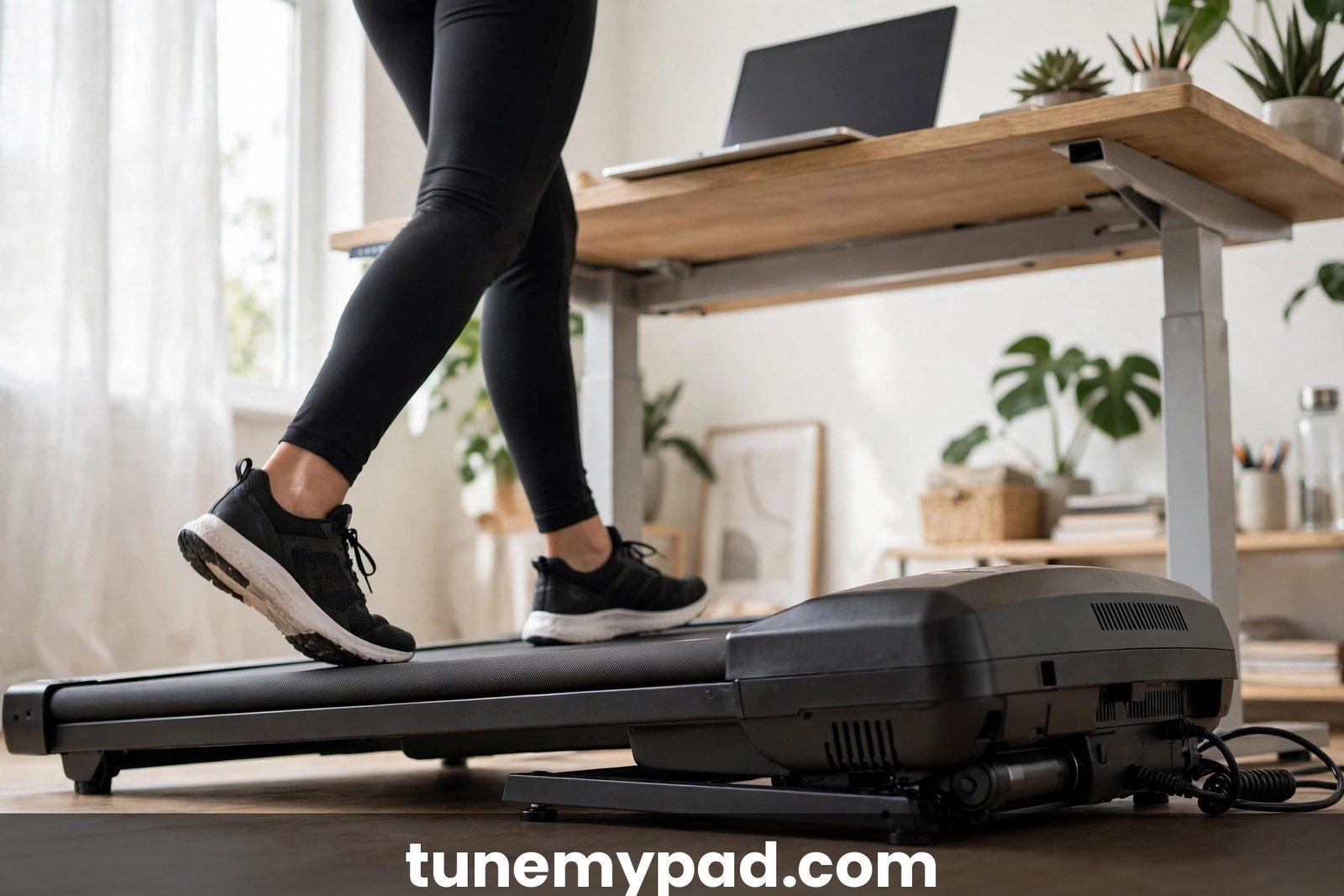
7 Honest Answers About Treadmill Motor Power
1. Is 2.5 HP enough for an under desk treadmill?
A common version of how much horsepower does an under desk treadmill need is: ‘Is 2.5 HP enough?’ If it’s 2.5 continuous HP, it’s more than enough for any walking use — that’s generous headroom. If it’s 2.5 peak HP (about1.25–1.5 CHP), it’s adequate for lighter users and moderate daily use, but heavier users should size up. The question to ask the seller is always: “Is that continuous or peak?”
2. What happens if the motor is underpowered?
A predictable cascade: the motor runs hot, thermal protection trips (the pad shuts off mid-walk), the belt feels sluggish under load, components age prematurely, and eventually the motor or control board fails. Warning signs include the pad slowing when you step on, a hot smell after long sessions, and frequent auto-shutoffs. If your pad is already doing this, see our overheating guide. For official treadmill safety guidance, see the CPSC’s treadmill safety resources — safety is an often-overlooked part of how much horsepower does an under desk treadmill need.
3. Does a bigger motor use much more electricity?
Electricity cost rarely decides how much horsepower does an under desk treadmill need. Less than you’d think. A 1.5 CHP walking motor draws roughly 300–600 watts during use — comparable to a desktop computer setup. A 2.0 CHP motor draws modestly more. The difference on your power bill is a few dollars a month at most. Ironically, an oversized motor loafing along can be more efficient than an undersized one straining, because electric motors are least efficient near their maximum load.
4. Should I care about brushless vs. brushed motors?
Motor type is a footnote to how much horsepower does an under desk treadmill need, but it matters. Yes, somewhat. Brushless motors run cooler, quieter, and longer than brushed motors, with no brushes to wear out. They’re increasingly common in mid-range walking pads and are worth a modest premium. Brushed motors are fine at the budget end but expect a shorter service life under heavy daily use.
5. How does incline affect horsepower needs?
Incline changes how much horsepower does an under desk treadmill need significantly. Incline dramatically increases motor load — lifting your body weight uphill takes far more power than flat walking. If you plan to use incline regularly (on a model that offers it), add at least 0.5 CHP to the minimums above. Note that most flat under-desk pads don’t offer incline at all, which is one reason their modest motors suffice.
6. Can I trust the HP rating on Amazon listings?
Skepticism helps when evaluating how much horsepower does an under desk treadmill need from a listing. Treat unqualified HP numbers as peak ratings until proven otherwise. Red flags: no mention of “continuous,” suspiciously round numbers across unrelated brands (they’re often quoting the same generic motor’s peak), and specs that list HP but not amperage or wattage. Green flags: explicit “CHP” or “continuous duty” language, detailed spec sheets, and responsive sellers who answer the continuous-vs-peak question directly.
7. Is it worth paying more for a bigger motor?
Value is the real question behind how much horsepower does an under desk treadmill need. Usually yes, within reason. The price jump from a 1.5 to a 2.0 CHP machine is often $50–$100 — cheap insurance against the most expensive failure a walking pad can have. Diminishing returns kick in above ~2.5 CHP for pure walking use; beyond that you’re paying for capacity you’ll never use. Match the motor to your weight and hours, add a little headroom, and stop there.
How to Verify Motor Claims Before You Buy
Verification is the final step in answering how much horsepower does an under desk treadmill need. Since motor ratings are only meaningful with honest numbers, here’s how to get them:
- Ask directly. Message the seller: “Is the rated HP continuous or peak?” Evasive or copy-paste answers tell you everything.
- Check the motor label. If you already own the pad, the motor itself usually has a label with rated voltage, amperage, and sometimes duty class. Amperage × voltage gives you watts; 746 watts about 1 HP (electrical input, before efficiency losses).
- Read the warranty. A 1-year motor warranty on a “3.0 HP” machine is the manufacturer telling you what it actually believes about the motor. Two-plus years signals confidence.
- Weigh the machine. This sounds odd, but motor mass correlates with capability. A 60-pound pad with a “3.0 HP” motor is more suspicious than an 80-pound one — real copper and steel weigh something.
- Search owner forums. Search “[model] motor burned out” or “[model] overheating.” Patterns in user reports are more honest than any spec sheet.
Motor Size, Noise, and Heat: What Bigger Really Changes
Misconceptions cloud how much horsepower does an under desk treadmill need. Buyers often assume a bigger motor means a louder, hotter, thirstier machine. The reality is more interesting — and it favors buying adequate power.
A right-sized motor runs quieter
Electric motors are loudest when straining. An undersized motor working near its limit produces more whine, more vibration, and more heat than a larger motor cruising at half load. If low noise matters to you (shared office, sleeping family, downstairs neighbors), adequate horsepower is a noise-reduction strategy, not a noise penalty. Pair it with the techniques in our quiet treadmill desk guide and the difference is dramatic.
Heat is the lifespan limiter
Every 10°C of extra operating temperature roughly halves the life of motor insulation — that’s a rule of thumb from motor engineering, and it explains why overheating kills budget pads. A motor with headroom stays cooler because it converts a higher share of its electrical input into motion instead of waste heat. Ventilation matters too: even a good motor will cook in an enclosed alcove, so follow our clearance and airflow rules.
The efficiency curve
Efficiency is part of how much horsepower does an under desk treadmill need. Motors have a sweet spot — typically 50–80% of rated load — where efficiency peaks. Size your motor so your normal walking load lands in that band: a 180-pound person walking at 2 mph on a 1.5 CHP motor is right in the sweet spot, while the same person on a 1.0 CHP motor is pushing past it all day. This is the engineering argument behind the minimums table above.

When the Motor Isn’t the Problem
Not every problem is about how much horsepower does an under desk treadmill need. Before blaming horsepower, rule out the issues that mimic an underpowered motor:
- Dry belt: the #1 cause of sluggish-feeling pads. A belt starved of silicone lubricant can double the motor’s workload. Lubricate first, judge power second.
- Over-tensioned belt: a belt cranked too tight creates enormous drag. It should lift 2–3 inches at the center when pulled up.
- Dust-choked motor housing: dust blankets the motor and traps heat, triggering thermal cutoffs that feel exactly like power loss. Vacuum the vents quarterly.
- Voltage sag: long extension cords or overloaded circuits starve the motor of voltage, which reads as weakness. Plug directly into the wall.
- Worn deck: a deck worn through its low-friction coating drags like sandpaper. If lubrication stops helping, the deck may be done.
If you’ve addressed all five and the pad still struggles, then it’s a motor sizing problem — and the replacement math in our motor replacement cost guide will tell you whether to repair or replace.
The takeaway for how much horsepower does an under desk treadmill need is simple: 1.5 CHP minimum. If you remember nothing else: 1.5 continuous HP is the honest minimum for daily walking use, 2.0 CHP if you’re heavier or walk all day, and any unqualified “HP” number should be mentally halved. Size the motor to your actual use, keep the belt lubricated, give it ventilation clearance, and a right-sized motor will hum along for years. Undersize it, and you’ll meet your motor repair technician sooner than you’d like.
What About Wattage Ratings?
Wattage is another lens on how much horsepower does an under desk treadmill need. Some listings quote watts instead of (or alongside) horsepower. The conversion is straightforward: 746 watts of electrical input equals 1 mechanical HP in theory, though real motors are 70–85% efficient, so a “750W” motor delivers roughly 0.7–0.85 HP of actual shaft power. As a buying rule: look for 900W+ input for regular daily walking (roughly 1.2+ true HP), and 1100W+ if you’re heavier or walk long hours. Wattage is harder to fudge than HP because it ties directly to the amperage on the motor label — when a listing gives watts but not HP, it’s often (not always) a sign of a more honest spec sheet.
Also note the difference between input watts and output power. Cheap listings sometimes quote the electrical input as if it were mechanical output, inflating the apparent capability by 20–30%. Combined with the peak-vs-continuous confusion, a “1000W” budget motor might deliver barely 1.0 CHP in real terms. This is why cross-checking with weight, warranty length, and owner reviews matters more than any single number. For workplace electrical safety standards, see OSHA’s electrical safety resources. Reading the fine print matters for how much horsepower does an under desk treadmill need.
FAQ
Can a walking pad motor be upgraded to a more powerful one?
In theory, sometimes; in practice, almost never worth it. The motor, control board, and power supply are matched as a system — dropping in a bigger motor usually requires a new controller and risks frame and belt components that weren’t designed for the extra torque. Unless you’re an electronics hobbyist doing it for fun, put the money toward a correctly-sized machine instead. When asking how much horsepower does an under desk treadmill need, remember that the motor, controller, and power supply work as a matched system.
How much horsepower does an under desk treadmill need for a 300 lb person?
For heavier users, how much horsepower does an under desk treadmill need? At least 2.0 CHP. Look for 2.0–2.5 CHP minimum, and verify the machine’s stated weight capacity (many budget pads top out at 220–265 lbs regardless of motor). At higher body weights, every component — belt, deck, rollers, frame — is under more stress, so buy from brands with honest weight ratings and strong warranties, not just big HP numbers.
Is 1.0 HP enough for a walking pad?
For very light, occasional use by a lighter person, a true 1.0 CHP motor can work — but it has no headroom, and “1.0 HP” on a budget listing is often peak (meaning ~0.5–0.7 CHP), which is genuinely inadequate for daily use. For a machine you’ll walk on every workday, 1.5 CHP is the floor worth paying for. If you’re wondering how much horsepower does an under desk treadmill need for daily use, 1.5 CHP is the practical floor.
Do walking pads lose power over time?
Motors don’t exactly lose horsepower, but the system loses efficiency: belts dry out, decks wear, dust accumulates in the motor housing, and components age. Regular lubrication, cleaning, and ventilation keep the system near its original performance. A pad that feels weaker than it used to usually needs maintenance, not a bigger motor — see our maintenance guides before assuming the motor is dying.
Why do two pads with the same HP feel different?
Because the HP number is only one variable. Belt/deck friction, roller quality, control-board programming (how aggressively it feeds power), and the honesty of the rating all matter. Two “2.5 HP” pads can differ enormously if one is quoting peak and the other continuous. Feel and owner reviews beat spec sheets. The real question of how much horsepower does an under desk treadmill need can’t be answered from the HP sticker alone.
Conclusion
How much horsepower does an under desk treadmill need turns out to be a simpler question than the industry wants it to be: 1.5 continuous horsepower for most walkers, 2.0+ if you’re heavier or walk all day, and deep skepticism toward any number that doesn’t say “continuous.” Buy the headroom once, maintain the machine, and the motor — the heart of your walking pad — will outlast your interest in upgrading.