

The walking pad vs outdoor walking debate sounds almost silly at first. Why buy a machine to do something you can do for free outside your front door? But anyone who has tried to build a consistent walking habit knows the real enemy is not motivation. It is weather, darkness, unsafe streets, bad air, and schedules that leave no daylight. A walking pad removes every one of those excuses.
This guide compares walking pad vs outdoor walking across 7 proven differences: convenience and consistency, weather independence, safety, calorie burn accuracy, joint impact, mental health benefits, and cost. If your goal is simply more daily steps, our beginner week-one walking plan works beautifully on either surface.
Here is the honest takeaway up front: outdoor walking wins on enjoyment, fresh air, and vitamin D. The walking pad wins on consistency, which is the thing that actually determines your results. In the walking pad vs outdoor walking decision, consistency beats scenery for most busy people.
Quick Answer: Walking Pad vs Outdoor Walking
Walk outside when you can, and use the walking pad when you cannot. That is the practical answer to walking pad vs outdoor walking, and most fitness coaches would agree. Outdoor walks give you sunlight, varied terrain, and a mental reset that no machine replicates. But a walking pad guarantees your steps happen regardless of rain, darkness, or deadlines.
If you currently walk outside three times a week and skip the rest, adding a pad for the other days can double your weekly activity without adding a single outdoor session. Both count toward the American Heart Association’s weekly activity recommendations. The walking pad vs outdoor walking choice is not either-or for most people. It is about building a system where bad weather never cancels your movement again.
Table of Contents
Proven Difference 1: Consistency Beats Perfection
The single biggest factor in fitness results is not workout quality. It is showing up. Outdoor walking depends on conditions cooperating: decent weather, daylight, safe routes, and free time aligned with all three. Miss any one and the walk does not happen. Over a year, weather and darkness cancel an enormous number of planned walks. This is where the walking pad vs outdoor walking consistency gap opens up.
A walking pad works at 6 AM in a snowstorm, at 10 PM after the kids are asleep, and during a work call you cannot reschedule. Users routinely report that their daily step counts double after getting a pad, not because pad walking is superior, but because it is always available. In the walking pad vs outdoor walking results comparison, availability wins. The best exercise is the one that survives your actual life.
That said, do not underestimate the motivational power of a beautiful walk. People who love the outdoors often find pad walking boring by comparison. If you are someone who genuinely looks forward to outdoor walks, protect that habit. The walking pad vs outdoor walking decision should add options, not replace something you love.
Proven Difference 2: Weather Independence
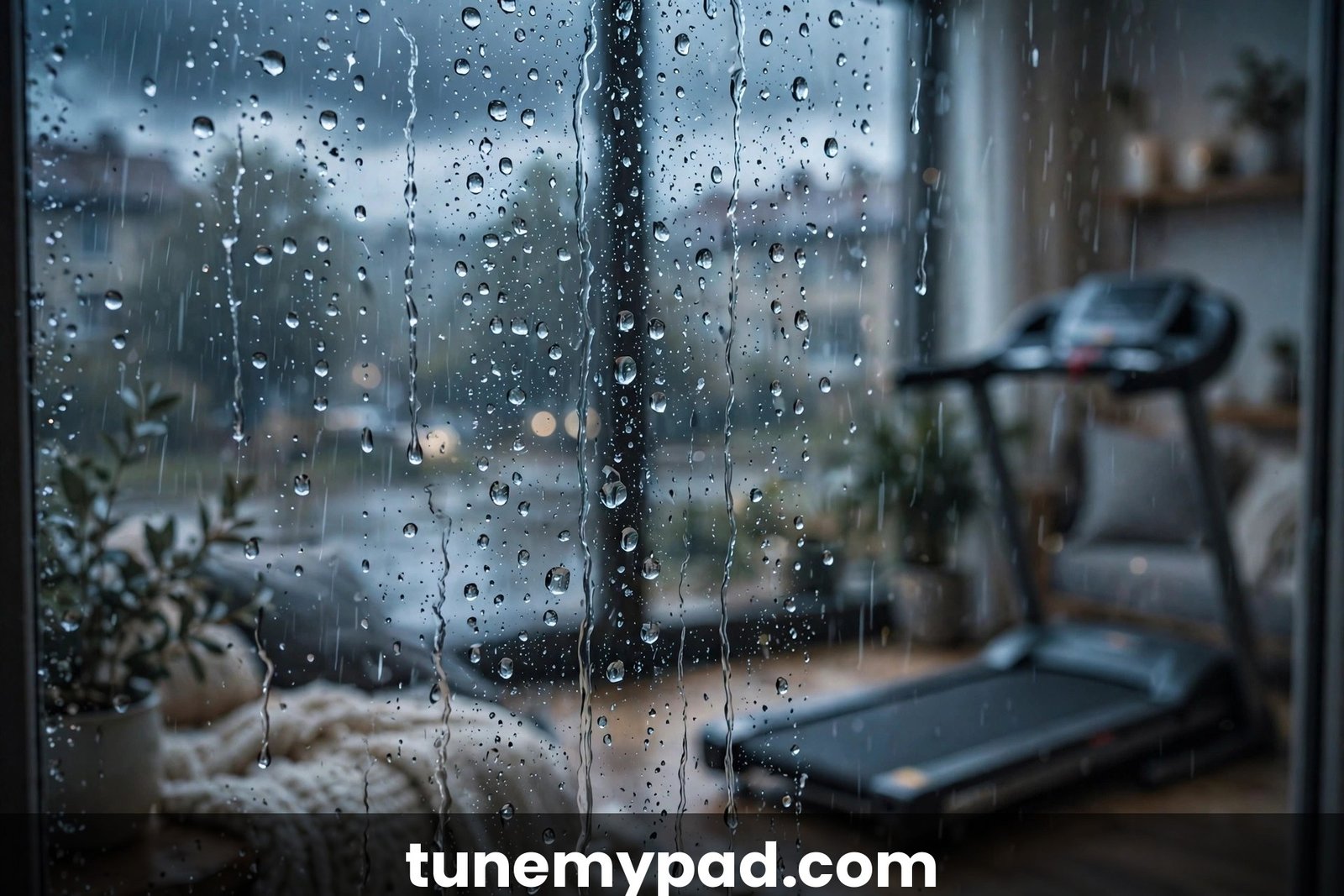
Rain, heat, cold, ice, and bad air quality shut down outdoor walking regularly. In many climates, several months a year are unpleasant or unsafe for walking outside. A heat wave makes afternoon walks dangerous. Icy sidewalks make winter walks a fall risk. Wildfire smoke has canceled outdoor exercise for weeks at a time in recent years across entire regions.
The walking pad does not care about any of this. Your climate-controlled room is the same in January and July. For people in extreme climates, the walking pad vs outdoor walking weather question is not a lifestyle preference. It is the difference between exercising year-round and exercising seasonally. Seasonal exercisers lose fitness every off-season and spend months rebuilding. Pad owners maintain steady activity all year.
Proven Difference 3: Safety
Outdoor walking carries real risks that pad walking eliminates: traffic, poorly lit streets, uneven sidewalks, unleashed dogs, and personal safety concerns, especially for women walking alone at night or in isolated areas. These are not hypothetical. They are the reasons millions of people do not walk outside as much as they would like.
A walking pad is the safest possible walking environment. No cars, no tripping hazards, no strangers, and you can stop instantly. For older adults, people with balance issues, or anyone recovering from injury, the walking pad vs outdoor walking safety comparison strongly favors the pad. Our walking pad guide for seniors covers the stability advantages in detail.
Outdoor walking is not dangerous for most people in most neighborhoods during daylight. But “most” is doing a lot of work in that sentence. If safety concerns limit your outdoor walking, the pad is not a compromise. It is liberation.
Proven Difference 4: Calorie Burn and Tracking
Calorie burn per mile is nearly identical between pad and outdoor walking at the same speed. Your body does not know whether the ground moves under you or you move over the ground. Small differences exist: outdoor walking on hills or uneven terrain burns slightly more, while pad walking at a steady pace is more efficient. For practical purposes, the walking pad vs outdoor walking calorie difference is negligible.
Where the pad wins is measurement. It tracks time, distance, and estimated calories automatically, giving you clean data every session. Outdoor walking requires a phone or watch, GPS can be inaccurate, and most people do not track consistently. If you are the type who improves what you measure, the walking pad vs outdoor walking tracking advantage helps you stay accountable with zero effort.
There is also a subtle accuracy point worth noting. Outdoor GPS watches commonly over or under-report distance by 5 to 10 percent in cities with tall buildings or under tree cover. A walking pad measures belt rotations directly, which is more consistent from session to session, even if its absolute calibration is off. For tracking trends over months, which is what matters for fitness, the pad’s consistency is arguably more useful than the watch’s theoretical accuracy. When the walking pad vs outdoor walking debate turns to data quality, boring consistency beats exciting variability.
Related: How Many Calories Does a Walking Pad Burn? 7 Best Estimates
Proven Difference 5: Joint Impact and Terrain
Walking pads offer a flat, cushioned, predictable surface. Every step lands the same way, which is gentle on joints and ideal for beginners, heavier walkers, or anyone with foot or knee sensitivity. There are no surprises: no curbs, no potholes, no cambered roads that stress one ankle.
Outdoor walking gives you natural variety: grass, trails, hills, and uneven ground that challenge stabilizing muscles and build functional strength. That variety is genuinely beneficial. Trail walking engages muscles that flat pad walking never touches. But it also raises injury risk from missteps. In the walking pad vs outdoor walking joint debate, the pad is safer and more predictable, while the outdoors builds more well-rounded resilience. Neither is wrong. They train slightly different things.
| Factor | Walking pad | Outdoor walking |
|---|---|---|
| Surface | Flat, cushioned, predictable | Varied: pavement, grass, trails |
| Joint stress | Very low and consistent | Low, but varies with terrain |
| Fall/injury risk | Minimal | Low, higher on uneven ground |
| Stabilizer muscle use | Low | Moderate to high |
| Best for | Beginners, joint issues, rehab | Building well-rounded fitness |
Proven Difference 6: Mental Health Benefits
This is outdoor walking’s strongest round. Time in nature reduces stress hormones, improves mood, and restores attention in ways that indoor exercise does not fully replicate. Sunlight regulates circadian rhythms and boosts vitamin D. A walk in a park is therapy that happens to include cardio. No honest walking pad vs outdoor walking comparison can hand this category to the machine.
But pad walking has underappreciated mental benefits too. Walking while working reduces afternoon stress without leaving your desk. Walking while watching a show turns screen time into active time. And for people with anxiety about exercising in public, the privacy of home is mentally freeing. The walking pad vs outdoor walking mental-health question has two winners: nature wins on restoration, the pad wins on stress-free accessibility.
The ideal is both. Use outdoor walks as your mental-health ritual and the pad as your consistency engine. They complement each other perfectly.
Proven Difference 7: Cost and Practicality
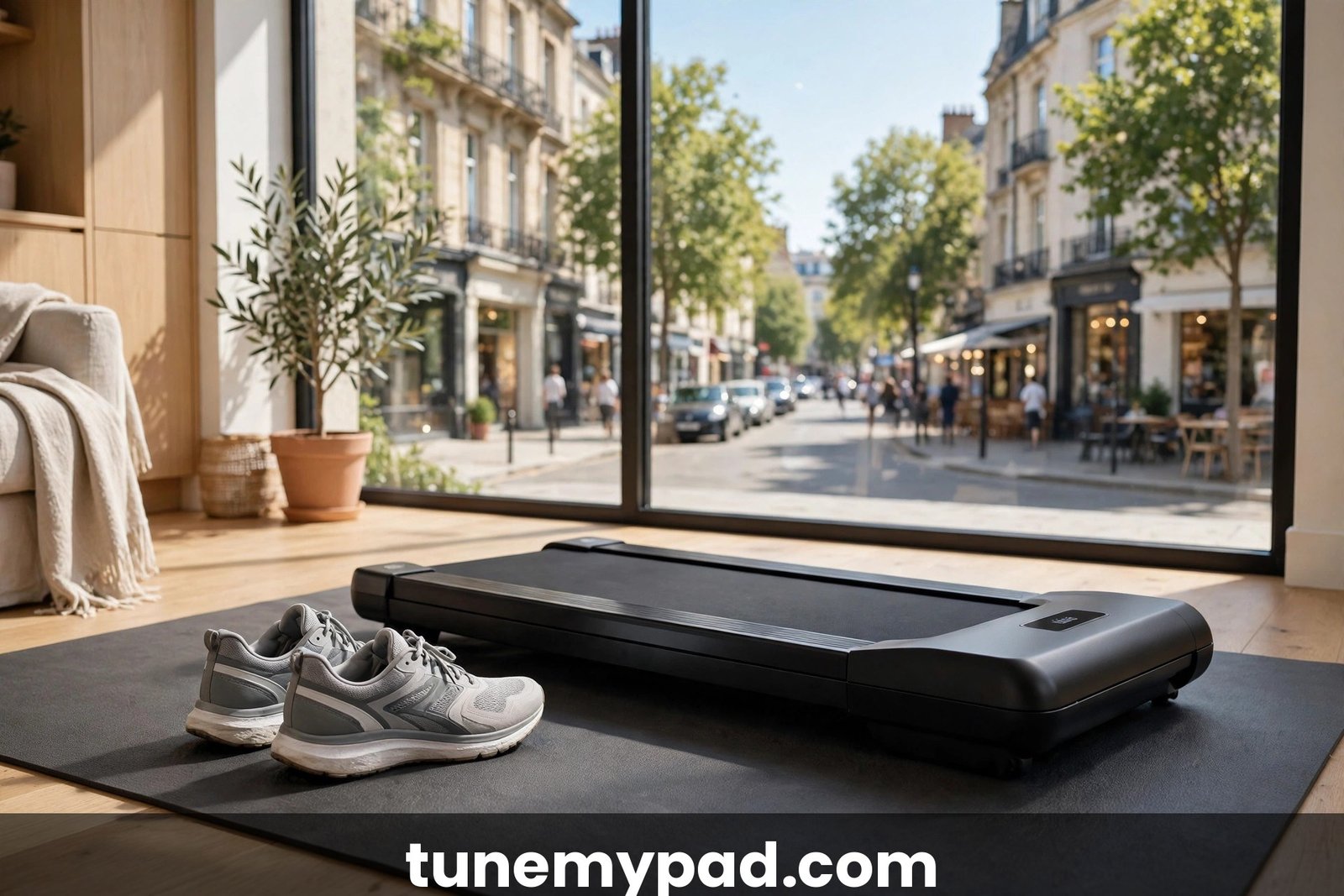
Outdoor walking is free. That is its unbeatable advantage and the hardest thing for any product to compete with. Shoes are the only real cost, and you need those anyway. In the walking pad vs outdoor walking cost comparison, the outdoors wins by default.
The pad costs $150 to $500 plus a few dollars a year in electricity and maintenance. Spread over three years of daily use, that is pennies per walk. The practical question is whether those pennies buy you walks that would not otherwise happen. If the pad adds 5,000 daily steps you were not getting, it is one of the cheapest health investments available. If you already walk outside daily without fail, the pad adds little.
Practicality also includes setup. The pad needs space, a desk setup for work-walking, and occasional maintenance. Outdoor walking needs shoes and a door. For pure simplicity, nothing beats stepping outside. The walking pad vs outdoor walking practicality round goes to the outdoors, with the pad winning only for people whose schedules or climates make outdoor walking unreliable.
How to Combine Both for Maximum Benefit
The smartest resolution to the walking pad vs outdoor walking question is a weekly rhythm that uses each where it shines. Here is a template that works for busy people. Monday through Friday: walk on the pad during work hours, accumulating 8,000 to 12,000 steps without scheduling anything. This is your consistency base, and it happens automatically. Saturday: take a long outdoor walk, 60 to 90 minutes, ideally somewhere green. This is your mental-health session and your vitamin D dose. Sunday: rest or a gentle pad stroll while watching something.
This split gives you the best of both worlds. The pad delivers volume: five days of steady activity that no outdoor-only routine can match for a busy schedule. The weekend outdoor walk delivers restoration: sunlight, nature, and varied terrain that keep your body and mind well-rounded. People who adopt this pattern often report that the walking pad vs outdoor walking tension disappears entirely, because each covers the other’s weakness.
Adjust the ratio to your life. Hate the cold? Shift winter entirely to the pad and return outdoors in spring. Love hiking? Keep the pad for weekdays and spend weekends on trails. Training for an event? Use the pad for easy recovery walks and the outdoors for long efforts. The walking pad vs outdoor walking framework is flexible on purpose. There is no rulebook, only the principle that some movement every day beats perfect movement occasionally.
One practical tip: keep your outdoor walking shoes and your pad walking shoes separate if you can. Outdoor shoes track in dirt that wears the belt faster, and pad shoes stay cleaner for indoor floors. It is a small detail, but pad owners who do this report longer belt life and less cleaning.
Related: Walking Pad Morning Routine Work From Home: Best Start (2026)
Seasonal Strategy: A Year-Round Walking Plan
Map your year and the walking pad vs outdoor walking balance shifts naturally with the seasons. Spring: the best outdoor walking season in most climates. Lean into parks and trails, and use the pad only on rainy workdays. Summer: heat and humidity make midday outdoor walks miserable or unsafe in many regions. Shift the bulk of your steps to the air-conditioned pad, and save outdoor walks for early mornings or evenings.
Fall: a second golden season for outdoor walking. Crisp air and daylight make it easy. This is the time to rebuild any outdoor habit that summer heat killed. Winter: short days, cold, ice, and darkness end outdoor walking for many people. This is when the pad earns its price. Owners who bought a pad “for winter” often find it becomes a year-round habit, because the convenience is addictive once experienced.
The seasonal approach also protects you from the all-or-nothing trap. Many outdoor-only walkers lose all fitness every winter and spend spring rebuilding. That annual cycle is demoralizing and unhealthy. A pad breaks the cycle: winter becomes a maintenance season instead of a lost season. When spring arrives, you start from fit instead of from zero. In the walking pad vs outdoor walking long game, eliminating the winter collapse is one of the pad’s biggest hidden wins.
Track your monthly step averages to see the pattern. Outdoor-only walkers typically show a deep winter valley. Pad owners show a flat line all year. That flat line is the whole argument. Health compounds from consistency, and consistency compounds from removing excuses. The walking pad vs outdoor walking seasonal strategy is really just applied common sense: use the tool that works in the conditions you actually face.
What About Running Outdoors vs Walking on a Pad
Some readers weighing walking pad vs outdoor walking are really asking whether slow indoor walking can substitute for their outdoor runs. The honest answer is no, not fully. Running is vigorous exercise: higher heart rate, greater cardiovascular adaptation, more calories per minute, and bone-density benefits that walking does not provide. If you are a runner, a walking pad is a supplement, not a replacement.
But here is the nuance most runners miss: easy walking volume improves recovery and base fitness in ways that support running. Many coaches now prescribe daily easy walking alongside run training, because it increases blood flow and aerobic base without adding joint stress. A runner who adds 8,000 pad steps on rest days often recovers faster than one who sits. So the walking pad vs outdoor walking question for runners becomes: keep your runs, and let the pad handle everything else.
If injury has paused your running, the pad is an excellent bridge. It maintains your walking fitness and routine while your injury heals, so your return to running starts from active rather than detrained. Runners who discover the pad during injury rehab frequently keep it afterward for exactly this reason.
Frequently Asked Questions
Is walking on a pad as good as walking outside?
For calorie burn and cardiovascular benefit, yes, essentially identical at the same speed and duration. Outdoor walking adds mental-health and balance benefits from nature and varied terrain that the pad cannot replicate.
Can I use a walking pad instead of going outside?
You can, and many people do during bad weather or busy periods. But keeping some outdoor walks preserves the sunlight, fresh air, and mood benefits. Think replacement for bad days, supplement for good ones.
Does a walking pad help when the weather is bad?
That is its primary superpower. Rain, snow, heat, darkness, and bad air never cancel a pad walk. Owners in harsh climates consistently cite weather independence as the top benefit.
Which burns more calories, treadmill walking or outdoor walking?
They are effectively equal at the same speed. Outdoor hills and wind add a small premium, while the pad’s steady pace is slightly more efficient. The difference is too small to matter for weight goals.
Is it boring to walk on a pad compared to outside?
It can be, which is why most pad owners pair walking with work, shows, podcasts, or calls. Outdoor walking entertains you with scenery. Pad walking needs a distraction strategy, and it works fine once you find yours.
Do I still need sunlight if I walk indoors?
Yes. Try to get daylight exposure separately, even 10 minutes on a balcony or by a window. Vitamin D and circadian health need real light that indoor walking does not provide.
Can older adults use a walking pad safely?
Yes, often more safely than outdoor walking. The flat predictable surface, handrail options, and instant stop make pads ideal for seniors. Start slow and use support until balance confidence builds.
How do I stay motivated to use a walking pad in summer when I could go outside?
Pair pad sessions with something you only allow yourself while walking: a favorite show, an audiobook series, or work calls. When the pad owns your entertainment, the walking pad vs outdoor walking motivation battle resolves itself, because the pad becomes the fun option.
Will a walking pad damage my floors?
Not if you use a mat. A dense rubber or foam mat protects hardwood, laminate, and tile from scratches and vibration. Place the mat first, then the pad, and check occasionally for trapped grit underneath.
How loud is a walking pad compared to street noise?
Much quieter than the traffic you would hear on an outdoor walk near roads. A pad at desk speed hums at conversation level, while roadside walking exposes you to 70-plus decibels of traffic. In the walking pad vs outdoor walking noise comparison, your ears prefer the pad.
The Bottom Line
The walking pad vs outdoor walking debate has a clear resolution: do both. Walk outside for joy, sunlight, and mental restoration. Walk on the pad for consistency when weather, darkness, or deadlines intervene. If you must choose one, choose based on your bottleneck. If you skip walks because of weather and schedule, the pad will transform your activity level. If you already walk outside daily without fail, save your money. Either way, the goal is not to win the walking pad vs outdoor walking argument. It is to never let a rainy Tuesday steal your steps again.
Start where you are right now today, honestly and realistically. If you own neither, begin with outdoor walks, since they are free, and add a pad the first winter you catch yourself skipping. If you already own a pad, protect one weekly outdoor walk for your mind. The two forms of walking are teammates, not rivals, and the people who thrive are the ones who stop treating the walking pad vs outdoor walking choice as a loyalty test and start treating it as a toolkit.
Related: How Long Can a Walking Pad Run Continuously? 7 Facts
Related: Walking Pad for Seniors Over 60: 7 Best Safety Tips