
One of the first questions every new owner asks is how many calories does a walking pad burn. The display on the pad happily shows a number, your fitness tracker shows a different number, and an online calculator gives a third. So which one is right, and how many calories does a walking pad burn in a normal hour of walking?
The honest answer is that how many calories does a walking pad burn depends mostly on your weight, your speed, and how long you walk. The pad’s own estimate is usually optimistic. In this guide we give you realistic numbers by weight and speed, explain why displays lie, show the simple math behind walking calories, and teach you how to track accurately.
Whether you walk for weight loss or just want credit for your steps, understanding how many calories does a walking pad burn helps you set honest goals. Let us get into the real numbers.
Quick Answer: How Many Calories Does a Walking Pad Burn
How many calories does a walking pad burn? A 150-pound person burns roughly 200 to 240 calories per hour at 2 mph and 280 to 320 per hour at 3 mph. A 200-pound person burns about 270 to 320 per hour at 2 mph and 370 to 430 at 3 mph. Most pad displays overestimate by 15 to 30 percent, so when tracking how many calories does a walking pad burn, subtract about a quarter from the display number for a realistic figure.
Table of Contents
The Honest Numbers by Speed and Weight
Let us answer how many calories does a walking pad burn with a proper table. These are estimates based on standard metabolic equations for level walking, adjusted for the slightly lower effort of belt walking. Your actual burn varies with fitness, body composition, and walking efficiency, but these numbers land within 10 to 15 percent for most people.
| Your weight | 1.5 mph (slow) | 2 mph (easy) | 2.5 mph (moderate) | 3 mph (brisk) |
|---|---|---|---|---|
| 130 lbs | 150/hr | 185/hr | 225/hr | 265/hr |
| 150 lbs | 170/hr | 210/hr | 255/hr | 300/hr |
| 180 lbs | 205/hr | 250/hr | 305/hr | 360/hr |
| 200 lbs | 225/hr | 280/hr | 340/hr | 400/hr |
| 230 lbs | 260/hr | 320/hr | 390/hr | 460/hr |
Notice how much weight matters. When people ask how many calories does a walking pad burn, the biggest variable is the walker, not the pad. A 230-pound walker at 3 mph burns nearly triple what a 130-pound walker burns at 1.5 mph. Two people on identical pads can have completely different answers to how many calories does a walking pad burn.
Speed matters too, but less dramatically than people assume. Going from 2 mph to 3 mph adds about 40 percent more calories, but it also makes working at a desk much harder. For most desk walkers, the sweet spot for how many calories does a walking pad burn without hurting productivity is 2 to 2.5 mph.
Why Your Pad’s Display Lies
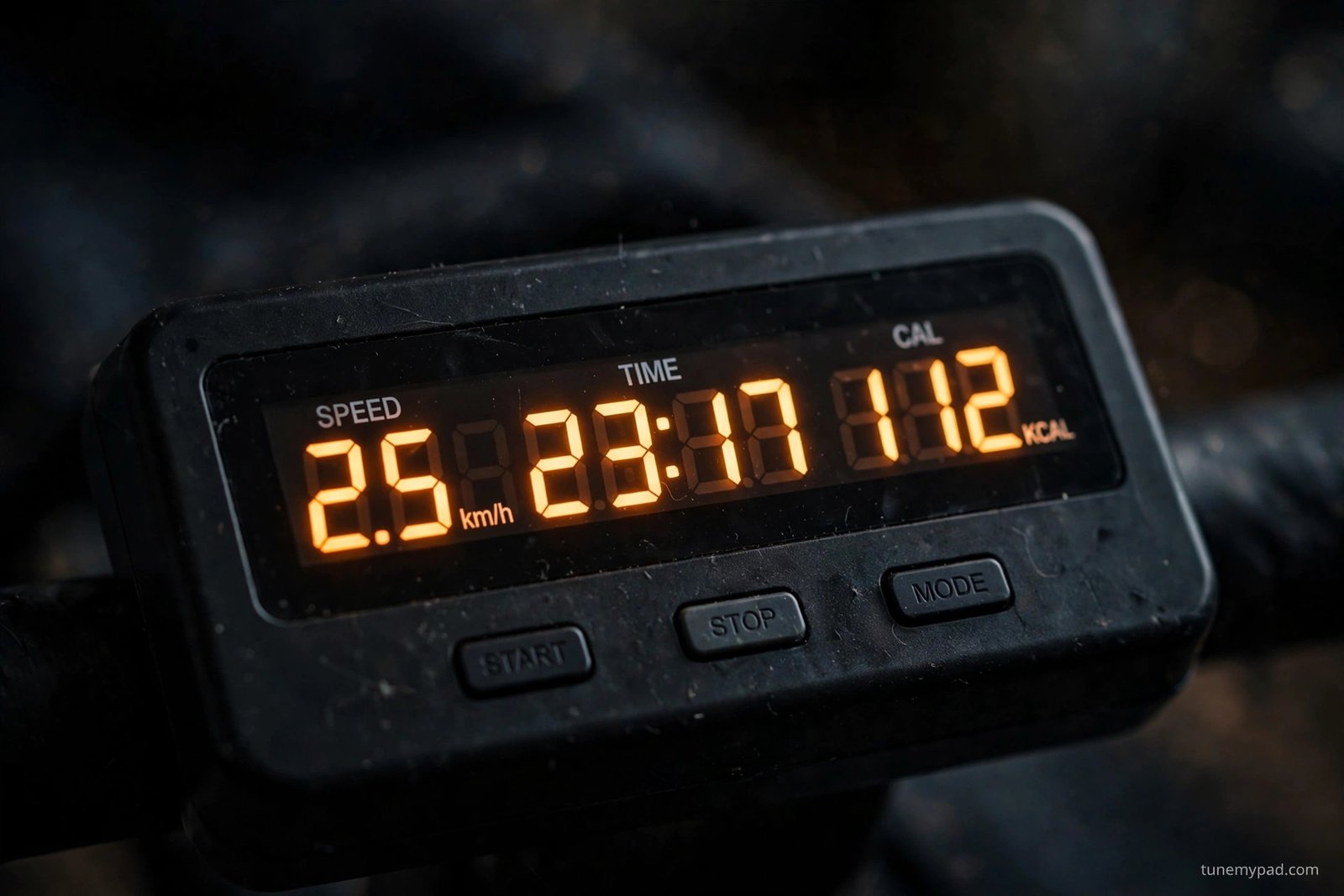
Almost every walking pad overestimates calories, often by 15 to 30 percent. Understanding why helps you interpret how many calories does a walking pad burn correctly. The display uses a generic formula based on speed, time, and sometimes a default weight, usually around 150 to 165 pounds. If you weigh more or less, the number is wrong from the start.
Worse, most pads never ask for your weight at all. They apply a one-size-fits-all formula that cannot know the main variable in how many calories does a walking pad burn. Some pads also count the warm-up and cool-down at full estimated rates, and a few seem to add a generous “motivation bonus” that has no basis in physiology.
The practical fix is simple: when checking how many calories does a walking pad burn on your display, multiply by 0.75 to 0.85 for a realistic number. Or ignore the display entirely and use the table above with your actual weight. Your fitness tracker, if it knows your weight and heart rate, usually beats the pad’s guess.
Why displays overestimate
- They use a default weight, not yours
- Generic formulas assume outdoor walking effort
- Belt walking is slightly easier than ground walking
- Some brands inflate numbers to look impressive
- They ignore fitness level and efficiency differences
The Simple Math Behind Walking Calories
The physiology behind how many calories does a walking pad burn is straightforward. Moving your body mass over distance costs energy, roughly 0.5 to 0.75 calories per pound per mile depending on speed and grade. Since walking pads are flat, you are at the lower end of effort compared to hilly outdoor walks.
A handy rule of thumb for how many calories does a walking pad burn: multiply your weight in pounds by 0.5, then multiply by miles walked. A 160-pound person walking 3 miles burns about 160 x 0.5 x 3 = 240 calories. At 2 mph, 3 miles takes 90 minutes, which matches the table above nicely.
This math also explains why heavier walkers get more from every session. Every extra pound costs energy to move, so the answer to how many calories does a walking pad burn scales almost linearly with body weight. It is one of the few areas in fitness where starting heavier is an advantage.
Walking Pad vs Outdoor Walking Calories
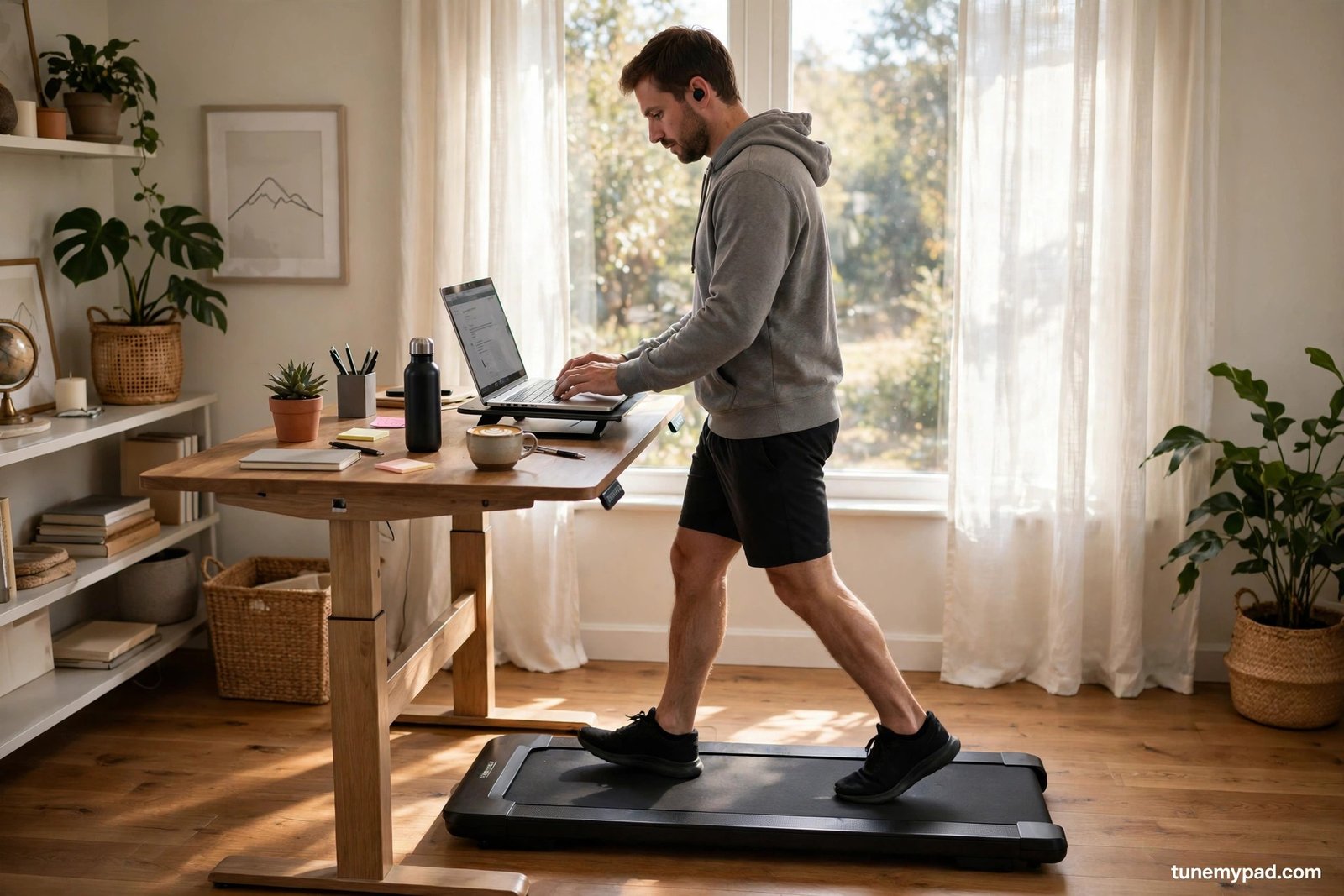
People often wonder whether how many calories does a walking pad burn differs from outdoor walking. The answer is: slightly less, but not enough to matter. Belt walking eliminates wind resistance and the tiny stabilizing efforts of uneven ground, so studies suggest treadmill-style walking burns about 5 to 10 percent fewer calories than outdoor walking at the same speed.
In practice, this gap disappears because pad walkers walk more consistently. The person who walks 2 hours daily on a pad while working burns far more weekly calories than the person who manages two outdoor walks a week. When comparing how many calories does a walking pad burn versus the sidewalk, consistency beats the small per-minute difference.
One real difference: outdoor walkers vary pace and terrain naturally, which adds variety. Pad walkers can replicate this with speed intervals, which we cover below. Either way, the calorie gap between pad and pavement is minor compared to the gap between walking and sitting.
How to Burn More Without Walking Faster
Faster is not the only way to raise how many calories does a walking pad burn. Since most desk walkers cannot type well above 2.5 mph, these tricks add burn at comfortable speeds. They all work by recruiting more muscle or adding time, the two honest levers of calorie burn.
First, add duration. An extra 30 minutes at 2 mph burns more than 30 minutes at 3 mph versus 2 mph speed difference debates suggest. Time on the pad is the most underrated answer to how many calories does a walking pad burn. Second, add arm movement: swinging your arms naturally while walking, or doing light arm circles during calls, measurably increases burn.
Third, try intervals. Alternate 5 minutes at 2 mph with 2 minutes at 3 mph. The variation raises average burn and keeps the session interesting. Fourth, walk after meals: a 15 to 20 minute post-meal walk improves glucose control and adds easy calories to the daily total. None of these require running or breathlessness, which is the whole appeal of asking how many calories does a walking pad burn in the first place.
Burn boosters ranked
- More minutes per day (biggest lever)
- Speed intervals within a comfortable range
- Natural arm swing instead of holding the desk
- Post-meal walks for glucose and calorie benefits
- Standing breaks between sessions to avoid compensation
Related: Walking Pad Calories Burned Calculator: Best Manual Guide (2026)
How to Track Calories Accurately
If you want a trustworthy personal answer to how many calories does a walking pad burn for you, combine methods. A fitness tracker or smartwatch that knows your weight, age, and heart rate beats every pad display. Wear it on every walk for two weeks, then average the results at each speed. That average is your number.
Heart rate adds real accuracy. Two people at 2 mph can burn different amounts if one person’s heart works harder. Trackers with heart rate sensors capture this; pad displays never do. This is why serious trackers of how many calories does a walking pad burn eventually stop looking at the pad’s screen entirely.
For the data-minded, keep a simple log for two weeks: date, minutes, speed, tracker calories. You will quickly see your personal pattern, like 2 mph = 105 calories per 30 minutes. Once you know your numbers, planning weekly totals becomes simple arithmetic. The Mayo Clinic’s walking guide is a solid reference for building a sustainable walking habit around these numbers.
Tracking setup that works
- Enter your correct weight in your tracker app
- Wear the tracker on every walk, not just workouts
- Log speed and minutes for two weeks
- Compute your personal calories-per-30-minutes at each speed
- Re-check quarterly as fitness improves
What 300 Extra Calories a Day Adds Up To
Numbers feel abstract until you project them. If how many calories does a walking pad burn for you is about 300 per workday, that is 1,500 per week, or roughly 78,000 per year. Since a pound of fat holds about 3,500 calories, that is the equivalent of 22 pounds of energy over a year, before any diet changes.
Real-world weight loss is slower than the math suggests, because bodies compensate: you might eat slightly more or move slightly less later. Studies of walking interventions typically show about half the predicted weight loss. So a realistic expectation from how many calories does a walking pad burn at 300 a day is 8 to 12 pounds over a year, which is still life-changing for many people.
The compound benefits go beyond the scale. Daily walkers report better energy, sleep, and mood, which makes healthy eating easier. When people ask how many calories does a walking pad burn, the calorie number is just the entry point; the lifestyle shift is the real prize. General activity guidance from the CDC supports building exactly this kind of daily movement habit.
Related: Are Walking Pad Calories Accurate? What the Display Doesn’t Tell You
Related: Walking Pad Weight Loss Plan for Beginners: 8-Week Guide
Sample Day: 300 Calories Without Trying Hard
Theory is nice, but schedules make it real. Here is how a typical desk worker banks around 300 calories on a walking pad without any single heroic workout. The trick is splitting the time across the day so no session feels long.
| When | What | Minutes | Est. calories (150 lbs) |
|---|---|---|---|
| 8:30 am | Easy walk while clearing email, 2 mph | 30 | 105 |
| 12:30 pm | Post-lunch walk, 2.2 mph | 40 | 150 |
| 3:30 pm | Afternoon slump walk, 2 mph | 30 | 105 |
| 6:00 pm | Wind-down stroll, 1.8 mph | 20 | 65 |
That is 2 hours total and roughly 425 calories for a 150-pound walker, comfortably above the 300 target. Notice that no session exceeds 40 minutes and speeds stay desk-friendly. This is the realistic shape of how many calories does a walking pad burn in a normal work-from-home day: accumulated in pleasant chunks, not suffered through in one go.
Adjust the template to your life. Night owls can shift everything later. Part-time walkers can do just the lunch and afternoon blocks and still clear 250 calories. The structure matters more than the exact times: anchor walks to existing habits like email, lunch, and the afternoon slump, and the calories accumulate on autopilot.
If two hours sounds like a lot, start with half of it. Even 60 daily minutes at an easy pace adds up to real numbers over weeks, and it is far easier to extend a habit you already enjoy than to start an ambitious one you dread. Build the routine first, then let the duration grow naturally.
Common Calorie Tracking Mistakes
Even with good numbers, people mis-track. The most common mistake is trusting the pad display as gospel, then wondering why the scale does not move. As covered above, displays run 15 to 30 percent hot. Always discount the display or use your tracker instead.
The second mistake is forgetting that weight changes the math. If you lose 15 pounds, the answer to how many calories does a walking pad burn for you drops too, because there is less of you to move. Recalculate your personal numbers every 10 pounds or so, or your deficit quietly shrinks.
Third, do not double-count. Your total daily energy includes your basal metabolic rate, the calories you burn just being alive. Walking calories add on top of that base. Some apps add exercise calories to an already-active baseline, inflating the total. Pick one tracking method and stick with it.
Finally, wear the tracker consistently. A tracker worn only on walk days misses the full picture, and one worn loosely gives noisy heart-rate data. Snug fit, every walk, same wrist: boring, but it is what makes the data trustworthy.
Frequently Asked Questions
How many calories does a walking pad burn in 30 minutes?
How many calories does a walking pad burn in 30 minutes? For a 150-pound person at 2 mph, about 100 to 120 calories. At 3 mph, about 140 to 160. Heavier walkers burn proportionally more; lighter walkers less. Halve the hourly numbers in the table above for a quick 30-minute estimate.
Is 2 hours on a walking pad enough to lose weight?
Two hours at 2 mph burns roughly 400 to 560 calories for most adults, which is a meaningful deficit. Whether the numbers translate to weight loss depends on diet, but 2 daily hours plus sensible eating produces steady results for most people within 2 to 3 months. Track your weight weekly, keep portions honest, and give the process at least 8 weeks before judging it.
Why does my friend burn more than me on the same pad?
Weight is the main reason. How many calories does a walking pad burn scales with body mass, so a heavier friend burns more at identical speed and time. Fitness level, walking efficiency, and even fidgeting contribute smaller differences. Compare against your own history, not other people.
Do I burn calories standing on the pad when it is off?
Barely more than standing anywhere else. The question how many calories does a walking pad burn assumes the belt is moving. Standing still burns roughly 80 to 100 calories per hour for most adults. The pad only earns its keep when you walk.
How many calories does a walking pad burn compared to running?
Running burns roughly double per minute. But most people cannot run for 2 hours while working, and many cannot run daily without injury. How many calories does a walking pad burn per week often beats running totals simply because the pad gets used far more hours.
Should I eat back the calories I burn walking?
For weight loss, no, or only partially. Since displays overestimate how many calories does a walking pad burn, eating back the full displayed number can erase your deficit. Eat normally, prioritize protein, and let the walking create a gentle deficit. If you feel genuinely fatigued, add a small snack rather than a full meal.
Does incline change the numbers?
Most walking pads are flat, so incline is not a factor. If yours has incline, even a slight grade raises how many calories does a walking pad burn noticeably: a 3 percent grade can add 20 to 30 percent more burn at the same speed. Check your manual before assuming your pad is truly flat.
How accurate are online walking pad calorie calculators?
Decent ones that ask for weight, speed, and time land within 10 to 15 percent, far better than pad displays. The best calculators use the same metabolic equations behind the table in this guide. Whatever tool you use to estimate how many calories does a walking pad burn, consistency matters more than perfection.
Does walking create an afterburn effect?
Barely. High-intensity exercise creates meaningful excess post-exercise oxygen consumption, but easy walking does not. The calories you burn on a pad are almost entirely the ones burned during the walk itself. This is fine: the advantage of pad walking is volume and consistency, not afterburn. Plan your totals from walk-time numbers only.
Can walking target belly fat specifically?
No exercise targets fat in one spot; the body decides where fat comes off. But regular walking combined with sensible eating reduces overall body fat, which includes belly fat over time. Many walkers notice their waistline changing within 2 to 3 months of consistent daily walking. Patience and consistency beat any “fat-burning zone” trick.
How long until walking shows on the scale?
Most consistent walkers notice the scale moving within 3 to 4 weeks, assuming diet stays steady. Early changes are small, often 1 to 2 pounds a month, which is exactly the healthy rate experts recommend. The scale also fluctuates daily with water and food, so weigh yourself weekly under the same conditions rather than daily. If the trend over a month is flat, look at diet first: it is easy to unconsciously eat back a gentle walking deficit with an extra snack or two.
The Bottom Line on Walking Pad Calories
How many calories does a walking pad burn? For most adults, 200 to 400 per hour depending on weight and speed, with pad displays reading 15 to 30 percent high. Use your weight and the table in this guide, not the screen, and you will have honest numbers to plan with.
The deeper truth is that the exact number matters less than the habit. A pad that burns a realistic 250 calories an hour, used two hours a day, beats a perfect estimate on a pad gathering dust. Stop chasing precision, start banking the hours, and let consistency do the heavy lifting.
One more thing: revisit your numbers every couple of months. As your fitness improves, your body gets slightly more efficient and the same walk costs a few fewer calories. That is a sign of progress, not a problem. Nudge your duration up a little to compensate, and keep the habit that is quietly transforming your days.
These are estimates for general information, not medical advice. If you have a heart condition, diabetes, or another health concern, check with your doctor before starting a new exercise routine.
3 thoughts on “How Many Calories Does a Walking Pad Burn? 7 Honest Estimates”