
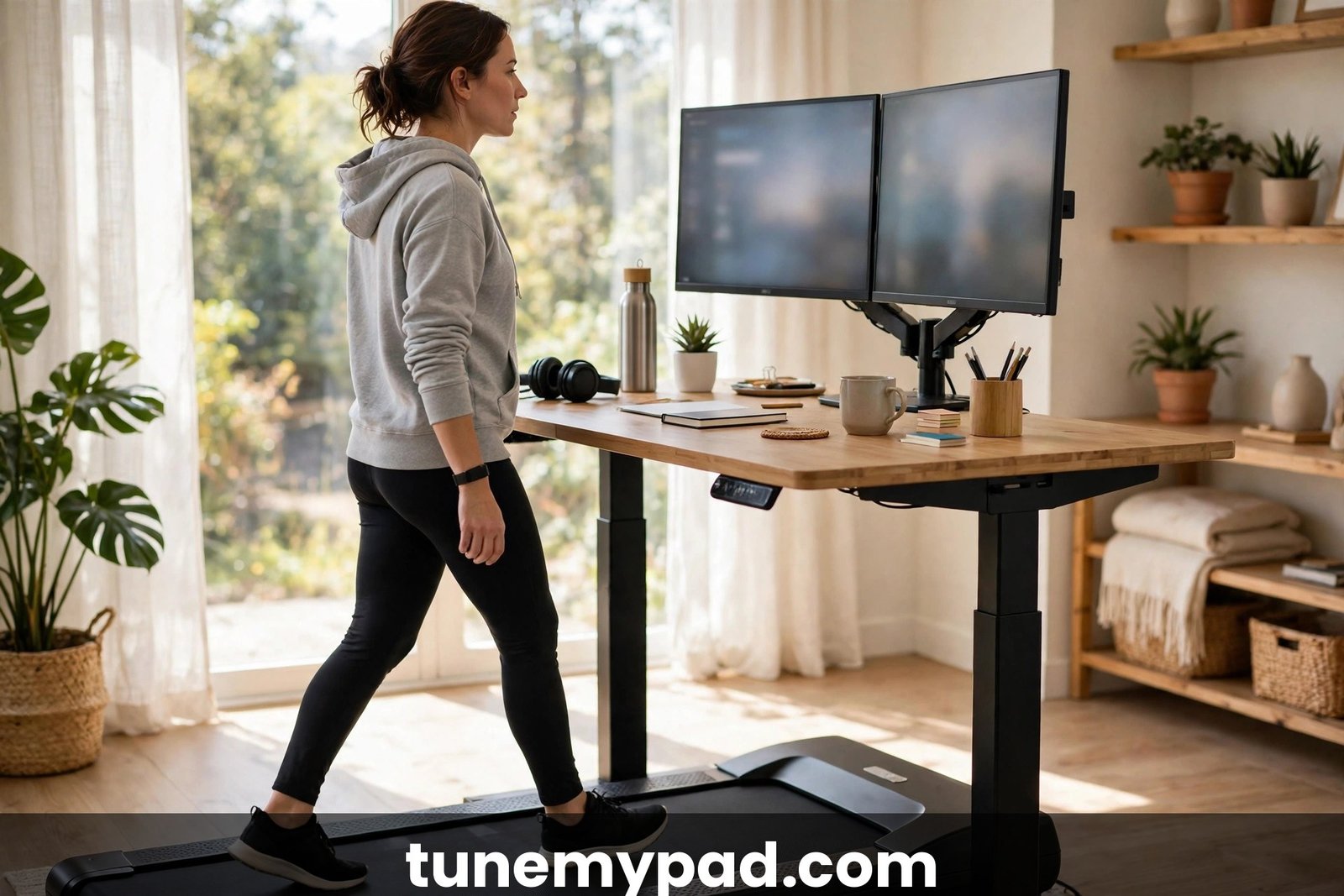
Can you lose weight with a walking pad? It is one of the most searched questions about these machines, and the honest answer is yes, with one big condition. A walking pad burns real calories and makes it almost effortless to stay active for hours a day. But like any exercise tool, it only leads to weight loss if your total calories burned exceed the calories you eat. No machine overrides diet.
This guide gives you 7 proven answers to the question “can you lose weight with a walking pad”: how the calorie math works, what results real people see, the role of speed and time, the diet connection, the mistakes that stall progress, and a simple weekly plan. If you want the raw numbers first, our walking pad calorie burn estimates break down exactly what different speeds and body weights produce.
The short version: can you lose weight with a walking pad? Yes, thousands of people have, mostly by walking 2 to 4 hours a day at a desk and eating sensibly. It is not magic and it is not fast, but it is one of the most sustainable ways to lose weight because it never feels like a workout.
Quick Answer: Can You Lose Weight with a Walking Pad?
Yes. The honest answer to “can you lose weight with a walking pad” is yes, if you walk enough to create a calorie deficit. A 180-pound person walking at 2 mph burns about 160 calories per hour. Walk three hours a day at your desk and that is roughly 480 extra calories burned daily, or about a pound of fat per week, without changing anything else. The reason the answer to “can you lose weight with a walking pad” is yes for so many people is that the pad turns hours you would have spent sitting into hours spent moving.
The catch is diet. If you eat back those 480 calories with snacks, the scale will not move. Walking pads work best as part of a simple plan: walk daily, eat mostly whole foods, and track your weight weekly. People who do that consistently report losing 10 to 30 pounds over several months. The Mayo Clinic’s overview of exercise benefits explains why this combination of daily movement and modest diet control works so reliably. So can you lose weight with a walking pad? The evidence from real users says clearly yes, as long as food stays under control.
Table of Contents
Proven Answer 1: Yes, Because the Calorie Math Works
Weight loss is governed by energy balance. Eat less energy than you burn and your body makes up the difference from stored fat. A pound of fat holds roughly 3,500 calories, so a daily deficit of 500 calories produces about a pound of loss per week. The question “can you lose weight with a walking pad” is really a question about whether a pad can create that deficit reliably.
Here is the math for a 180-pound person. Sitting at a desk burns about 100 calories per hour. Walking at 2 mph on a pad burns about 260 calories per hour. The difference is 160 extra calories per hour of walking. Walk for 3 hours during the workday and you have added 480 calories to your daily burn. Do that five days a week and you have created a 2,400-calorie weekly deficit from the pad alone, before any dietary changes. That is the mechanical reason the answer to “can you lose weight with a walking pad” is yes.
Lighter and heavier people get different numbers. A 140-pound person burns about 120 extra calories per hour at 2 mph, while a 220-pound person burns about 200. Heavier beginners often see the fastest initial results, which is encouraging, though some of the early drop is water weight. The key point stands across body sizes: whether “can you lose weight with a walking pad” earns a yes depends on hours walked, and the pad makes those hours painless.
| Body weight | Extra calories per hour at 2 mph | 3 hours daily, 5 days a week |
|---|---|---|
| 140 lbs | ~120 | ~1,800 (about 0.5 lb) |
| 160 lbs | ~140 | ~2,100 (about 0.6 lb) |
| 180 lbs | ~160 | ~2,400 (about 0.7 lb) |
| 200 lbs | ~180 | ~2,700 (about 0.8 lb) |
| 220 lbs | ~200 | ~3,000 (about 0.9 lb) |
These are estimates, not guarantees. Individual metabolism, walking efficiency, and the accuracy of your pad’s calorie display all introduce error. But the direction is undeniable: consistent desk walking creates a meaningful deficit, which is why so many people find they can lose weight with a walking pad when gym routines failed them.
Proven Answer 2: Real People Report Real Results
Forums and reviews are full of firsthand reports from people asking can you lose weight with a walking pad and then answering their own question months later. The typical story goes like this: bought a pad for general health, started walking 2 hours a day during work calls, lost 15 pounds in four months without a formal diet. The pattern repeats because the mechanism is so simple. Nobody has to find willpower for a workout. They just stop sitting all day.
The most successful reports share three traits. First, they walked a lot, usually 10,000 to 15,000 steps daily. Second, they were patient, measuring progress over months, not weeks. Third, most made at least small dietary changes, like cutting sugary drinks or late-night snacking. Nobody in these stories lost 30 pounds by walking alone while eating whatever they wanted. So can you lose weight with a walking pad? Real-world evidence says yes, and the people who succeed treat the pad as a lifestyle change, not a 30-day trick.
Proven Answer 3: Speed and Duration Matter More Than You Think
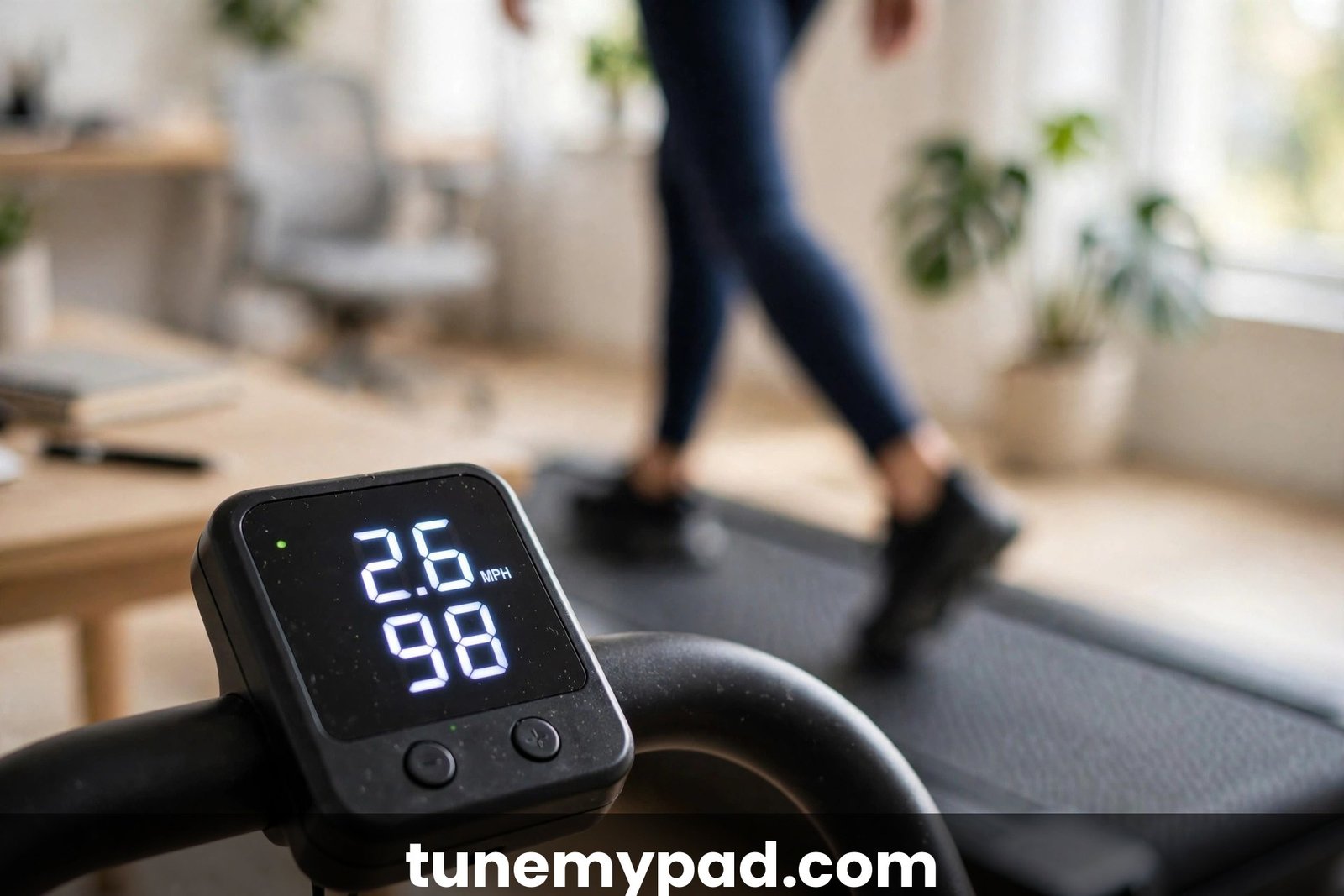
Not all pad time is equal. Walking at 1 mph burns barely more than standing. Walking at 2 mph is the sweet spot most desk walkers use: fast enough to matter, slow enough to type comfortably. Push to 2.5 or 3 mph and calorie burn jumps 30 to 50 percent, but most people cannot do focused computer work at that pace. The practical answer to can you lose weight with a walking pad depends on finding your personal balance between burn rate and usability.
Duration is the bigger lever. An extra hour of walking beats an extra 0.5 mph almost every time, because you can sustain the hour all day, every day. Someone walking 4 hours at 1.8 mph burns far more than someone walking 1 hour at 3 mph. This is the underappreciated secret of the walking pad: it wins on volume, not intensity. When people doubt that “can you lose weight with a walking pad” deserves a yes, they are usually picturing a 20-minute stroll. Picture 15,000 steps instead.
Proven Answer 4: You Will See Results in Weeks, Not Days
Set honest expectations. With a 500-calorie daily deficit, expect about a pound a week. The first two weeks may show faster loss from water and glycogen shifts, then progress settles into a steady rhythm. Most people notice their clothes fitting differently around week 4 to 6, and see clear scale changes by week 8. Anyone promising that “can you lose weight with a walking pad” means results in seven days is selling something.
Plateaus happen. After a few months, your body adapts, and the same walking burns slightly fewer calories as you get lighter and more efficient. When progress stalls, add 30 minutes of walking, nudge your speed up slightly, or tighten up food intake. Small adjustments restart the trend. The people who keep the weight off are the ones who treat plateaus as data, not failure.
Related: Walking Pad Weight Loss Plan for Beginners: 8 Best Weeks
Proven Answer 5: Diet Still Does Most of the Work
Here is the uncomfortable truth behind “can you lose weight with a walking pad”: exercise is the smaller half of the equation. A single restaurant meal can erase three hours of walking. Studies consistently show that diet changes drive more weight loss than exercise changes, because it is far easier to not eat 500 calories than to burn 500 calories. The CDC’s guide to losing weight makes the same point: lasting results come from combining activity with eating changes. The walking pad is a powerful tool, but it cannot outrun a bad diet.
That does not mean you need a strict diet. The most sustainable approach pairs the pad with simple food rules: eat mostly whole foods, keep protein adequate, cut liquid calories, and stop eating when satisfied rather than stuffed. Many successful pad users never count a calorie. They just walk a lot and eat a little less. If “can you lose weight with a walking pad” is the question, eating mindfully makes the answer a confident yes, and the combination is genuinely potent, because the walking suppresses appetite for many people and improves insulin sensitivity. Anyone still wondering “can you lose weight with a walking pad” after reading the science should look at the weekly plan below: the math holds up at every step count.
Watch out for compensation, the sneaky habit of eating more because you exercised. Your fitness tracker says you burned 400 calories, so you “earn” a 600-calorie treat. This single behavior explains most cases where someone walks daily yet cannot lose weight with a walking pad. Track your food honestly for two weeks. Most people are surprised.
Proven Answer 6: Avoid These Progress-Killing Mistakes
Several common mistakes explain why some people cannot lose weight with a walking pad despite daily use. First, overestimating calorie burn. Pad displays are notoriously optimistic, sometimes by 20 to 30 percent. Base your expectations on conservative estimates, not the screen. Second, walking too slowly to matter. A 1 mph amble while reading is better than sitting, but it barely moves the needle. Aim for at least 1.8 to 2 mph for meaningful burn.
Third, inconsistency. Walking five hours on Monday and zero the rest of the week averages out poorly. Daily moderate walking beats occasional marathons. Fourth, ignoring strength. Walking preserves muscle poorly compared to resistance training. Add two short bodyweight sessions per week to protect your metabolism while losing. Fifth, impatience. Quitting at week three because “it is not working” is the most common reason people conclude you cannot lose weight with a walking pad. Give it twelve weeks of honest effort before judging.
| Mistake | Why it stalls loss | Fix |
|---|---|---|
| Trusting the calorie display | Overestimates by 20-30% | Use conservative estimates |
| Walking under 1.5 mph | Burn barely exceeds sitting | Target 1.8-2.5 mph |
| Skipping days | Weekly total stays low | Walk daily, even 30 min |
| No strength work | Muscle and metabolism drop | 2x weekly bodyweight routine |
| Quitting at week 3 | Too early to see trends | Commit to 12 weeks, then judge “can you lose weight with a walking pad” fairly |
Related: What Speed on a Walking Pad to Lose Weight? 7 Fat-Burn Zones
Proven Answer 7: A Simple Weekly Plan That Works
You do not need a complicated program to prove that “can you lose weight with a walking pad” deserves a yes. Here is a starter plan that has worked for many beginners. Week 1 to 2: walk 60 to 90 minutes daily at 1.5 to 2 mph, focusing on building the habit. Do not worry about diet yet. Just get moving. Week 3 to 4: increase to 2 to 3 hours daily at 2 mph. Start one simple food change, like dropping sugary drinks.
Week 5 to 8: hold 2 to 3 hours of daily walking, add two 15-minute bodyweight sessions per week (squats, push-ups, planks), and tighten food further if the scale is not moving. Week 9 to 12: reassess. If you are losing half a pound to a pound per week, change nothing. If stalled, add 30 minutes of walking or trim 200 calories from food. This gradual ramp is why so many people discover they can lose weight with a walking pad: it never demands a heroic effort, just a steady one.
Track two numbers weekly: your morning weight (average of 3 days) and your total walking hours. If hours are up and weight is flat for three weeks, the issue is food, not the pad. Adjust there. For a detailed day-by-day structure, see our beginner walking pad weight loss plan.
What the Science Says About Walking and Weight Loss
Researchers have studied the question “can you lose weight with a walking pad” from several angles. Step-count studies consistently find that people who increase daily steps lose more weight than sedentary controls, even without formal exercise programs. One well-known finding is that non-exercise activity thermogenesis, the calories burned through daily movement outside of workouts, varies by up to 800 calories a day between similar people. A walking pad directly increases this number, which is a big part of why “can you lose weight with a walking pad” gets a yes even when you never break a sweat.
Workplace walking studies add more support. Trials that gave office workers treadmill desks found average weight losses of 2 to 5 pounds over several months, plus improvements in blood sugar and cholesterol, all without prescribed diets. The participants simply walked while working. Critics note these are modest results, and they are right: nobody claims “can you lose weight with a walking pad” promises dramatic speed. But modest, sustained, effortless loss is exactly what keeps weight off long-term, unlike crash diets that rebound.
The CDC’s physical activity guidelines recommend at least 150 minutes of moderate activity per week for adults. Two hours of daily pad walking delivers 840 minutes, more than five times the minimum. From a public-health perspective, the question “can you lose weight with a walking pad” is almost beside the point: the activity level it produces is protective against dozens of conditions regardless of the scale.
How Many Daily Steps Tip the Scale
Step counts give you a concrete daily target. Roughly speaking, 2,000 steps equal about a mile and burn 80 to 100 calories for an average adult. To create a meaningful deficit from walking alone, most successful pad users land between 10,000 and 15,000 steps a day. That sounds like a lot until you realize that three hours of desk walking at 2 mph produces around 9,000 to 10,000 steps without any dedicated exercise time.
Here is a practical ladder. If you currently average 3,000 steps, jumping to 8,000 is a huge win, and “can you lose weight with a walking pad” gets a yes at that level if your diet cooperates. At 10,000 steps, most people see steady progress. At 15,000 steps, the calorie burn becomes genuinely hard to out-eat accidentally. Do not chase 20,000 steps immediately; build up by 2,000 steps per week to avoid sore feet and burnout.
Track steps with your phone or a cheap pedometer rather than trusting the pad’s display alone. And remember that steps are a means, not the goal. The goal is a sustained calorie deficit, and steps are simply the most painless way to get there. Ask anyone who has done it “can you lose weight with a walking pad” and they will usually point to their step history, not their workout log, as the proof.
Related: Walking to Beat the Afternoon Energy Slump at Work: 7 Tips
Frequently Asked Questions
How long does it take to lose 20 pounds with a walking pad?
At a steady pound per week, about five months. Realistic timelines run four to seven months depending on diet, starting weight, and daily walking hours. Faster loss usually means water weight or an aggressive diet, not just the pad.
Will walking on a pad reduce belly fat specifically?
You cannot target fat loss to one area, but consistent walking plus a calorie deficit reduces overall body fat, including belly fat. Many people notice their waistline shrinking before the scale moves much.
Is 10,000 steps a day on a walking pad enough to lose weight?
It is a great start. Ten thousand steps burns roughly 300 to 500 calories depending on your size. Combined with sensible eating, that is enough for steady loss of about half a pound per week.
Can you lose weight with a walking pad without dieting?
It is much harder. Without dietary changes, most people compensate by eating more, wiping out the deficit. You do not need a strict diet, but some attention to food is nearly always necessary.
What speed is best for weight loss on a walking pad?
Between 2 and 3 mph for dedicated sessions, and 1.5 to 2 mph while working. The best speed is the fastest one you can sustain for your planned duration without dreading it.
Do I need incline to lose weight on a walking pad?
No, but it helps. Incline increases calorie burn significantly at the same speed. If your pad has incline, use it for dedicated workout sessions a few times a week.
Why am I not losing weight even though I walk every day?
The usual suspects: eating more than you think, overestimating calorie burn, walking too slowly, or not enough total hours. Track food honestly for two weeks and the answer usually appears.
Does walking speed matter for the question “can you lose weight with a walking pad”?
Yes, but less than total time. A faster pace burns more per minute, yet most people cannot sustain it while working. When asking “can you lose weight with a walking pad,” focus first on daily hours, then nudge speed upward as fitness improves.
Is a walking pad better than a treadmill for weight loss?
For most people, yes, simply because the pad gets used more. A full treadmill gathers dust while a pad under your desk accumulates steps all day. So if “can you lose weight with a walking pad” is the question, the pad’s convenience advantage often beats the treadmill’s intensity advantage in practice.
The Bottom Line
Can you lose weight with a walking pad? Yes, absolutely, provided you walk enough hours and keep your eating in check. The pad’s superpower is not intensity but consistency: it converts dead sitting time into calorie-burning movement, day after day, without willpower battles. Walk 2 to 4 hours daily, eat mindfully, add a little strength work, and give it twelve weeks. The scale will move, and more importantly, you will have built an active lifestyle that keeps the weight off for good. The next time someone asks you “can you lose weight with a walking pad,” you will have your own success story as the answer.

Related: How Many Calories Does a Walking Pad Burn? 7 Best Estimates