
You are three hours into a walking workday, the step count is climbing, and a thought interrupts your flow: how long can a walking pad run continuously before the motor begs for mercy? It is a smarter question than it sounds. Walking pads are compact machines with small motors, and unlike gym treadmills they were not designed for marathon sessions — push past their limits and you get thermal shutdowns, shortened motor life, or worse. Understanding how long can a walking pad run continuously is the difference between a motor that lasts years and one that lasts months.
The honest answer to how long can a walking pad run continuously is: most models handle 60 to 99 minutes of nonstop use, followed by a 20–30 minute cool-down. But that number moves with motor size, your weight, walking speed, room temperature, and maintenance — so the real skill is understanding duty cycle, the engineering concept behind the limit, and learning to read your own machine.
This guide gives you 7 duty-cycle facts that answer how long can a walking pad run continuously in every scenario that matters: long workdays, heavy users, hot rooms, back-to-back family sharing, and what to do when the pad shuts itself off mid-stride.
Table of Contents
Quick Answer: How Long Can a Walking Pad Run Continuously
| Question | Answer |
|---|---|
| How long can a walking pad run continuously? | Most walking pads run 60–99 minutes continuously, then need a 20–30 minute rest. Premium models with larger motors may stretch past 2 hours. |
| What is duty cycle? | The ratio of run time to rest time a motor is designed for. A “60-minute duty cycle” means 60 minutes on, then a cool-down before the next session. |
| What happens if you exceed it? | The motor overheats. Most pads have a thermal cutoff that stops the belt; repeated overheating shortens motor and belt life. |
| Does walking speed affect runtime? | Yes. Faster speeds and heavier users make the motor work harder and generate more heat, shortening safe continuous runtime. |
| How can I walk longer safely? | Split the day into sessions with cool-down breaks, keep the belt lubricated, ensure ventilation clearance, and walk at moderate speeds. |

The one-line rule: when you ask how long can a walking pad run continuously, think in sessions, not marathons — 60–90 minutes on, 20–30 minutes off, all day long.
What “Continuously” Actually Means: Duty Cycle Explained
“Continuous” sounds absolute, but in motor engineering it is a rating with fine print. Electric motors carry duty cycle ratings defined by international standards (IEC 60034-1): S1 means continuous duty (can run indefinitely at rated load), S2 means short-time duty (rated for a specific period, like 60 minutes, followed by rest), and S3–S8 cover various intermittent patterns.
Here is the part most buyers miss: the vast majority of walking pads use S2-style short-time-duty motors, even when marketing copy says “continuous.” A typical compact walking pad motor (1.0–2.0 HP peak, often under 1.0 HP continuous) is engineered for walking sessions, not all-day conveyor operation. The manufacturer’s “99 minutes” figure you see on many displays is not a coincidence — it reflects the thermal design point of the motor.
So when you ask how long can a walking pad run continuously, you are really asking: how long before heat buildup exceeds what the motor can shed? That depends on:
- Motor size and quality. Bigger continuous-duty horsepower = longer safe runtime. A 2.5 HP (continuous) motor laughs at 3-hour sessions; a 0.75 HP motor sweats through 60 minutes.
- Load. Your body weight plus speed determines current draw. A 220-pound user at 3 mph generates far more heat than a 140-pound user at 1.5 mph.
- Ambient temperature. A pad in a 85°F garage hits thermal limits much faster than one in a 68°F air-conditioned office.
- Ventilation. Motors shed heat through vents and the surrounding air. A pad shoved against a wall or buried under a desk with no airflow overheats sooner. See our guide on does a walking pad need ventilation and clearance for clearance rules.
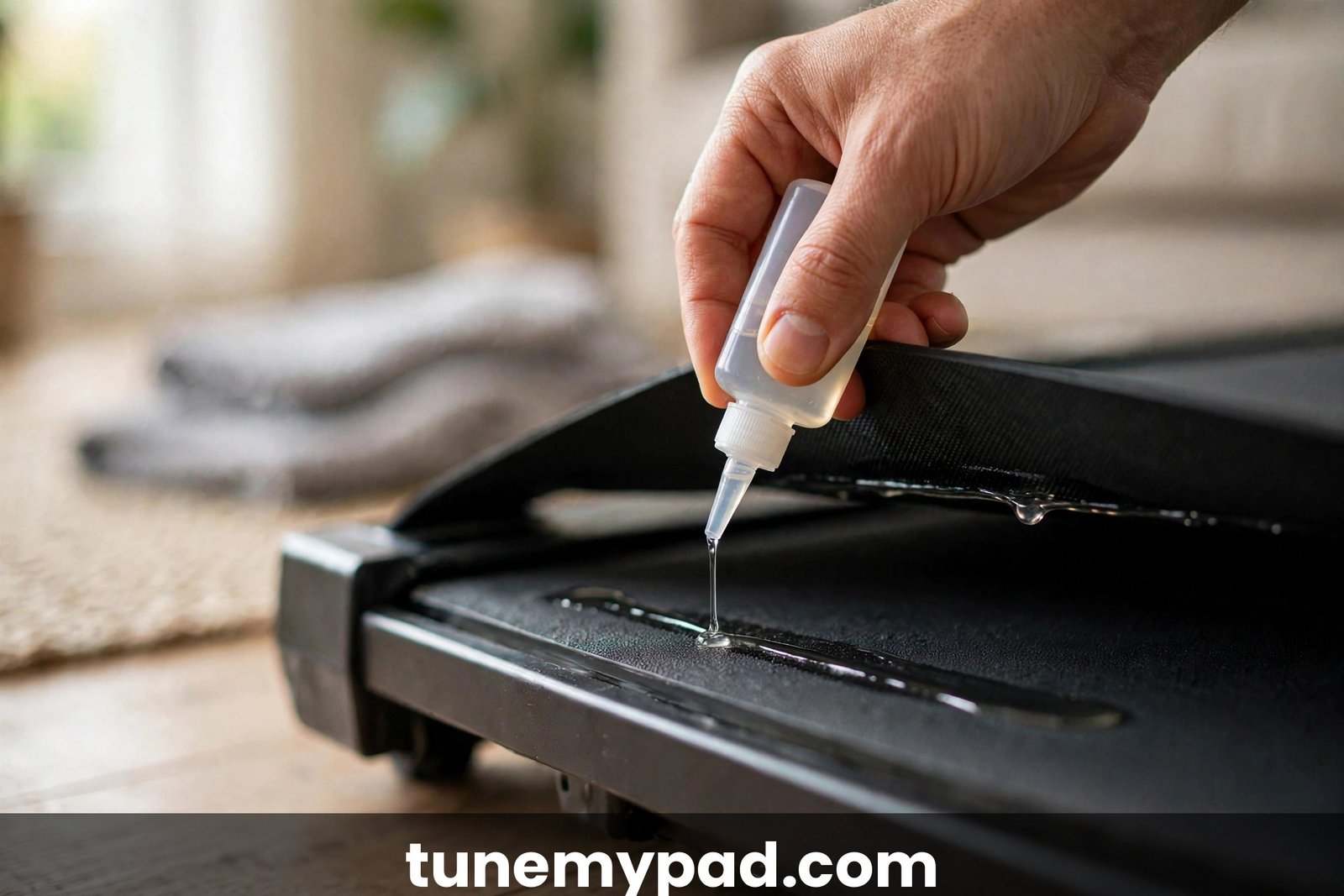
- Maintenance. A dry, tight belt forces the motor to work harder — more friction, more current, more heat, shorter runtime. Regular lubrication directly improves how long can a walking pad run continuously in practice. Our silicone oil guide shows exactly how much to use.
7 Duty-Cycle Facts: How Long Can a Walking Pad Run Continuously
Fact 1: The 60–99 Minute Standard
Open the manual of almost any walking pad on the market and you will find a maximum continuous runtime between 60 and 99 minutes. This is the industry’s de facto standard for compact walking-pad motors, and it directly answers how long can a walking pad run continuously for the average buyer: about an hour to an hour and a half, then rest.
Why 99 and not 100? Many pads have a built-in session timer that caps at 99 minutes — a firmware-level guardrail reflecting the motor’s thermal design. When the timer ends, the belt stops and the pad insists on a break. This is a feature, not a bug: it prevents the single most common cause of premature motor death.
Budget models (under $300) cluster at the 60-minute end; mid-range models ($300–$600) typically allow 90–99 minutes. If your manual specifies a number, treat it as gospel — it is the definitive answer to how long can a walking pad run continuously for your specific machine.
Fact 2: The Cool-Down Is Not Optional
After a continuous session, most manufacturers recommend 20–30 minutes of rest with the pad powered on but idle (or fully off in a ventilated spot). During this time the motor’s internal temperature falls back toward ambient, the belt relaxes, and the control board resets its thermal budget.
Skipping cool-downs is the slow-motion version of overheating. Each back-to-back session starts from a higher baseline temperature, so the second hour generates more heat stress than the first even at identical speed and load. Two 60-minute sessions with a proper break between them are dramatically easier on the motor than one 120-minute session. Internalize that, and how long can a walking pad run continuously stops being a constraint.
Practical scheduling for long walking workdays (making how long can a walking pad run continuously irrelevant): 90 minutes on, 30 minutes off, repeated. Four such cycles give you 6 hours of walking with full thermal recovery between each — and the breaks are perfect for seated deep-work blocks, calls, or lunch. This rhythm is also why asking how long can a walking pad run continuously matters less than asking how to structure the day: the day’s total is unlimited if the sessions are separated.
Fact 3: S1 vs. S2 — Know Your Motor’s Rating
If you want the engineer’s answer to how long can a walking pad run continuously, check whether your motor is rated S1 (continuous duty) or S2 (short-time duty). The rating is sometimes printed on the motor label under the hood — though on sealed walking pads you may need the manual or manufacturer support to confirm.
- S1 (continuous duty): designed to run indefinitely at its rated load without overheating. Rare in compact walking pads; found in premium treadmill desks and commercial units. If you have S1, session limits are about your endurance, not the motor’s.
- S2 60 min (short-time duty): rated for 60 minutes at load, then must cool to near-ambient before restarting. This is the most common walking-pad rating, and the reason the short answer to how long can a walking pad run continuously is ‘about an hour.’
- S2 90/99 min: a beefier short-time rating — longer sessions, same rest requirement.
Do not confuse peak horsepower with continuous horsepower. A “2.5 HP peak” motor might be 1.0 HP continuous — and continuous HP is what determines thermal behavior. Marketing loves peak numbers; physics only respects continuous ones. When comparing models for long-runtime use, continuous HP is the spec that predicts how long can a walking pad run continuously.
Fact 4: Heat Is the Enemy — Learn the Warning Signs
Motors die of heat, not hours — which is why how long can a walking pad run continuously is really a heat question in disguise. Every minute past the thermal design point degrades insulation, dries lubricants, and stresses electronics. Your pad will usually warn you before catastrophic damage — if you know what to watch for:
- Hot plastic smell. The first and most reliable warning. If the area around the motor cover smells hot or plasticky, stop immediately and let it cool for 30+ minutes.
- Noticeably hot motor cover. Warm is normal; too-hot-to-touch is not.
- Belt slowing under load or speed fluctuating at constant settings — the motor is struggling.
- Unusual humming, grinding, or whining that was not there when the pad was new.
- Thermal cutoff trips: the belt stops dead mid-session and the display shows an error or goes dark. This is the pad protecting itself. Let it cool fully (30–60 minutes) before restarting.
If you smell burning or see smoke, unplug the pad immediately and do not restart it until it has been inspected. Our guide on why a walking pad overheats covers the full diagnostic ladder, and the U.S. Consumer Product Safety Commission (cpsc.gov) publishes general home fitness equipment safety guidance worth reading.
Fact 5: Weight, Speed, and Incline Shorten Runtime
How long can a walking pad run continuously is not a fixed number even for one machine — it shrinks as load grows. The physics is straightforward: the motor draws current proportional to the work it does, and heat rises with the square of current. Small load increases create disproportionate heat increases.
Rough impact on safe continuous runtime (relative to a 150-pound user at 2 mph on flat):
| Condition | Approximate runtime impact |
|---|---|
| User near max weight capacity | −20–30% |
| Speed at 3.5+ mph vs. 2 mph | −15–25% |
| Incline raised (if available) | −10–20% |
| Hot room (80°F+) | −10–20% |
| Dry, unlubricated belt | −15–30% |
| Combined worst case | −40–60% |
A heavy user jogging at 4 mph on a dry belt in a hot garage might hit thermal cutoff in 30 minutes on a pad rated for 99 — while a light user strolling at 1.5 mph in air conditioning on a maintained belt could exceed the rating comfortably. The manual’s number assumes moderate conditions; adjust your expectations — and your answer to how long can a walking pad run continuously — to your reality.
Fact 6: Lubrication Directly Extends Duty Cycle
Friction is heat, and the belt-deck interface is where most of it is born. A well-lubricated belt glides; a dry belt drags, forcing the motor to draw more current for the same speed. Regular silicone lubrication is the single highest-leverage maintenance habit for improving how long can a walking pad run continuously in real-world conditions.
The routine:
- Every 3 months or 40 hours of use (whichever comes first): apply 100% silicone oil under the belt per your manual — typically 10–15 ml per side. Exact amounts are in our silicone oil guide.
- Check belt tension quarterly. A belt too tight adds drag; too loose slips. Both waste energy as heat.
- Vacuum dust from motor vents monthly. Dust blankets are thermal blankets.
- Wipe the belt surface to remove grit that increases friction.
Users who maintain their pads often report that thermal cutoffs they used to hit at 60 minutes simply stop happening — the same motor, the same user, just less friction to fight. Maintenance does not change the official answer to how long can a walking pad run continuously, but it determines whether you reach it.
Fact 7: Ignoring the Limit Has Real Consequences
What actually happens if you routinely exceed how long a walking pad can run continuously? The consequences escalate:
- Thermal cutoff trips become frequent — annoying but protective.
- Motor insulation degrades, shortening motor life from years to months. Replacement costs real money: see our walking pad motor replacement cost breakdown.
- Belt and deck wear accelerates as heat softens materials and dries lubricants faster.
- Control board components age prematurely — capacitors especially dislike heat.
- Warranty claims get denied. Manufacturers can often tell from failure patterns (and sometimes from internal logs) that a motor was chronically overheated. “Exceeding rated duty cycle” is a standard warranty exclusion.
- In extreme, neglected cases: fire risk. It is rare, but overheated motors in dusty, poorly ventilated spaces are exactly the scenario behind the “can a walking pad catch fire” question. Our fire safety guide covers prevention.
None of this is meant to scare you off long walking days — it is meant to steer you toward session-structured long walking days, which are completely safe.
Typical Duty Cycles by Pad Tier
Use this table to match a purchase to the how long can a walking pad run continuously you actually need in daily life.
| Tier | Typical motor (continuous HP) | Rated continuous runtime | Cool-down | Best for |
|---|---|---|---|---|
| Budget (under $300) | 0.75–1.0 HP | 40–60 min | 30 min | Light use, 1–2 hrs/day |
| Mid-range ($300–$600) | 1.0–1.5 HP | 60–99 min | 20–30 min | Regular WFH use, 3–5 hrs/day in sessions |
| Premium ($600+) | 1.5–2.5 HP | 99 min–2+ hrs | 20 min | Heavy daily use, shared households |
| Treadmill-desk bases | 2.0–3.0 HP (often S1) | 2–4+ hrs | 15–20 min | All-day walking workstations |
If your household shares one pad between two or three walkers, size up a tier. Shared use is where how long can a walking pad run continuously gets tested hardest. Back-to-back users are the hardest duty-cycle scenario because the motor never gets its cool-down — the second walker’s “session one” starts at the first walker’s end-of-session temperature.
How to Structure an All-Day Walking Workday
Here is the session template that makes how long can a walking pad run continuously a non-issue:
- Session 1: 8:30–10:00 AM — 90 minutes at 1.5 mph while doing email and light tasks.
- Break: 10:00–10:30 — seated deep work or a call. Pad rests.
- Session 2: 10:30 AM–12:00 PM — 90 minutes at 1.2–1.5 mph for writing or coding.
- Lunch: 12:00–1:00 PM — pad fully off, longer cool-down.
- Session 3: 1:00–2:30 PM — 90 minutes at 1.5–2.0 mph; admin and reading.
- Break: 2:30–3:00 PM — seated work.
- Session 4: 3:00–4:30 PM — 90 minutes at 1.5 mph; wrap-up tasks.
Total: 6 hours of walking, ~12,000–15,000 steps, zero thermal stress — proof that how long can a walking pad run continuously is a rhythm question, not a limit — because no single session asked the motor for more than its rating. The breaks double as posture variety, which your back and feet will thank you for. This is also the rhythm that beats the afternoon energy slump without a single espresso.
Memorize this table and you will never have to learn how long can a walking pad run continuously from the smell of hot plastic.
Warning Signs: Stop Immediately If You Notice These
| Sign | What it means | What to do |
|---|---|---|
| Burning or acrid smell | Insulation or belt overheating | Unplug immediately; inspect before reuse |
| Smoke | Active overheating failure | Unplug; do not restart; contact support |
| Belt stops mid-session with error | Thermal cutoff tripped | Cool 30–60 min; reduce next session length |
| Motor cover too hot to touch | Beyond normal operating temp | Stop; cool; check ventilation and lubrication |
| Repeated cutoffs at short runtimes | Degraded motor or chronic overload | Service check; may need motor replacement |
| Tripped breaker alongside heat | Electrical overload | Check circuit load; see dedicated circuit guide |
Frequently Asked Questions
How long can a walking pad run continuously on its first day out of the box?
New pads still obey the same answer to how long can a walking pad run continuously — 60–99 minutes — but give a new machine an easier break-in: keep first-week sessions under 45 minutes. Fresh belts are slightly tight and factory lubrication is minimal; short early sessions let everything seat in. After a week of normal use plus your first lubrication, the full rated runtime applies.
Does pausing the belt count as rest for the motor?
Pausing for a minute or two (a bathroom break, a quick call) helps slightly — the motor stops generating heat — but it does not meaningfully reset the thermal budget. Real cool-down requires 20+ minutes of non-operation. Do not string together “pauses” to dodge the rating; how long can a walking pad run continuously is measured in sustained operation, and five 20-minute walks with 2-minute pauses between them is thermally close to one 100-minute walk.
How long can a walking pad ru continuously at 1 mph vs. 4 mph?
Dramatically different. At 1 mph with a light user, many pads can exceed their rated runtime without complaint — the motor is barely working. At 4 mph near max user weight, expect the effective safe runtime to fall 30–50% below the rating. Speed is the biggest lever you control: halving your speed roughly quarters the heat the motor must shed.
Can I run a walking pad all day if I keep sessions short?
Yes — that is exactly the right approach, and the practical answer to how long can a walking pad run continuously for heavy users. Ten 30-minute sessions across a day with real breaks between them are far gentler than two 3-hour sessions. Total daily hours are limited by your stamina and the pad’s maintenance state, not by a daily cap, as long as each session respects the continuous rating and cool-downs are honored.
Will running past the limit void my warranty?
Quite possibly. Most walking-pad warranties exclude damage from “improper use,” and exceeding the rated duty cycle qualifies. Manufacturers can often diagnose chronic overheating from the failure mode (cooked windings, glazed belts). If you need long runtimes regularly, buy a pad rated for them rather than pushing a budget motor past its design point and hoping the warranty covers the fallout. Our warranty coverage guide explains what is typically included.
How long can a walking pad run continuously in a hot garage?
Less than indoors — when asking how long can a walking pad run continuously in a hot garage, plan on 60–70% of the rated runtime when ambient temperatures exceed 80°F. Garages combine heat with dust (which clogs vents) and often share circuits with power tools. If the garage is your only option, add a fan aimed at the motor end, keep the pad away from walls, lubricate more often, and shorten sessions. Better yet, reconsider: heat is the enemy of both motors and motivation.
The Bottom Line
How long can a walking pad run continuously? For most models, 60 to 99 minutes — then 20 to 30 minutes of rest. That rating reflects the motor’s thermal design, and it shrinks with heavy users, high speeds, hot rooms, and neglected maintenance, while proper lubrication and ventilation help you actually reach it.
But the rating is not a cage; it is a rhythm. Structure your day as 60–90 minute walking sessions separated by real breaks and you can walk 6+ hours daily without ever asking the motor for more than it was built to give. Respect the cool-down, keep the belt slick, watch for heat warnings, and your walking pad will measure its life in years, not months — no matter how long your workdays run.