

Dinner’s done, the couch is calling, and your body is about to spend the next three hours doing nothing with a full stomach. A walking pad evening routine after dinner replaces that slump with 15–30 minutes of gentle movement — and the payoff is bigger than the effort suggests: smoother digestion, steadier blood sugar, fewer late-night cravings, and better sleep. Best of all, it happens in your living room, in your pajamas, while you watch whatever you’d be watching anyway.
This guide covers the science behind post-dinner walking, how long to wait after eating, a sample walking pad evening routine after dinner with exact speeds, how evening walks affect sleep, and what to avoid so your walk winds you down instead of wiring you up.
Table of Contents
Quick Answer: Walking Pad Evening Routine After Dinner
| Question | Answer |
|---|---|
| How long after dinner should I wait to walk? | You can start right away — but if walking immediately causes discomfort, wait 10–15 minutes (up to 30 after a heavy, fatty meal). |
| How long should the walk be? | 15–30 minutes is ideal. Even 10 minutes helps blood sugar; more than 45 isn’t necessary in the evening. |
| What speed? | Gentle: 1.5–2.5 mph. This is a digestive stroll, not a workout. |
| Does it really help digestion? | Yes — light post-meal movement stimulates gut motility and helps your body use blood glucose, flattening the post-dinner spike. |
| Will it hurt my sleep? | A gentle walk finished 1+ hours before bed usually improves sleep. Vigorous or very-late walking can do the opposite. |
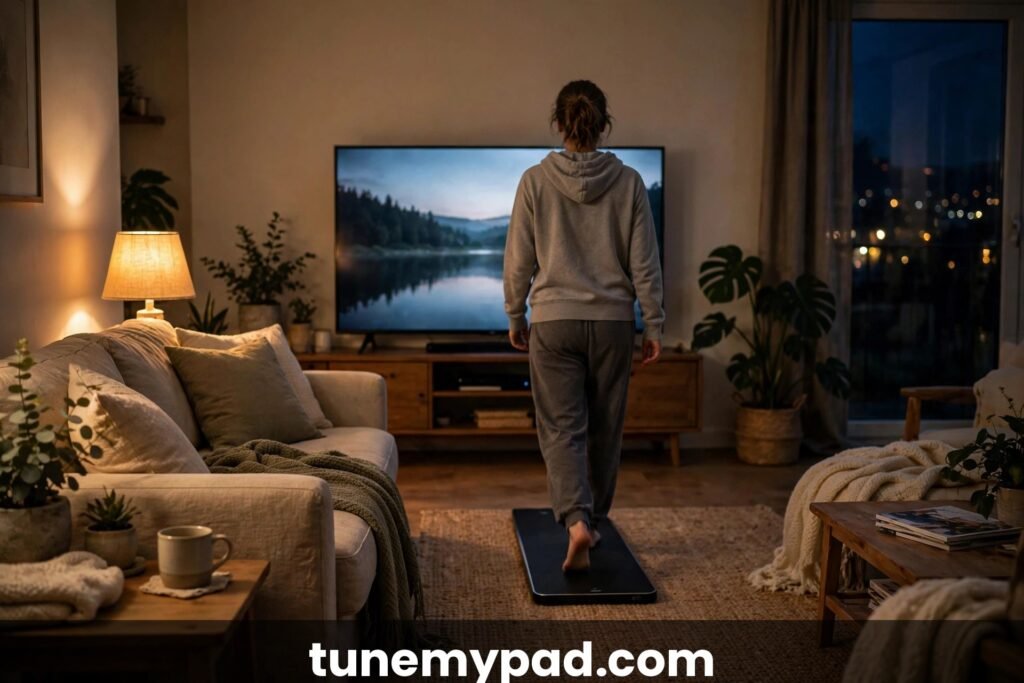
Walking Pad Evening Routine After Dinner: Why It Works
Dinner is typically the biggest meal of the day — lots of calories, sugar, and fat entering the bloodstream at once. Then most of us flop on the couch or head toward bed, which is exactly the wrong move: our bodies produce less insulin at night, so blood sugar stays elevated longer. Blood sugar spikes and crashes are linked to poor sleep quality, which is one reason a heavy late dinner can mean a restless night.
Gentle walking changes the equation. Your muscles soak up glucose from the bloodstream as you move, flattening the post-meal spike — research has found that as little as 2 to 5 minutes of post-meal walking helps lower blood sugar, though longer is better. Experts suggest moving within about half an hour of eating, while glucose is hitting your bloodstream, so your muscles can use it right away. That’s the core mechanism that makes a walking pad evening routine after dinner so effective.
The sleep connection runs deeper than blood sugar. A behavioral sleep specialist at Johns Hopkins notes that a gentle walk after dinner improves circulation and promotes relaxation — both of which set you up for better sleep. Neurologists echo this: a short, steady evening walk helps stabilize blood sugar and lower cortisol.
There’s a bonus benefit too: a post-dinner walk curbs the urge to keep eating. It serves as a distraction from second servings and late-night snacking, giving your hands and attention something to do besides reaching into a bag of chips. Many people find their walking pad evening routine after dinner quietly fixes their snacking habit within a week.
Walking Pad Evening Routine After Dinner: How Long to Wait After Eating
One of the most common questions — and the answer is pleasantly simple.
You can walk immediately after eating. Recent data discussed by exercise researchers indicates walking right after a meal reaps the most benefits, particularly for blood sugar balance and digestion. There’s no mandatory waiting period before starting your walking pad evening routine after dinner.
But listen to your stomach. Some people get discomfort — indigestion, nausea, gas, bloating — when they walk on a very full stomach, because recently eaten food shifts around during movement. If that’s you, wait 10–15 minutes before stepping on the pad.
Heavy, fatty meals need more time. Meals rich in fats and proteins take longer to digest, so give them closer to 30 minutes. A light salad or soup? Walk right away.
Practical rule: finish dinner, clear the table (your built-in 10–15 minute buffer), then step on the pad.
The Sample Walking Pad Evening Routine After Dinner (30 Minutes)
Here’s a complete walking pad evening routine after dinner. Adjust the times to fit your evening — the structure matters more than the exact minutes.
Step 1: Set the scene (2 minutes). Roll out the pad in front of the TV. Dim the overhead lights — bright light late in the evening works against the wind-down effect. Queue up your show, podcast, or playlist. Water bottle nearby.
Step 2: Gentle start at 1.5 mph (5 minutes). Ease in slowly and let your stomach settle into the rhythm. Breathe relaxed — in through the nose, out through the mouth. If you feel queasy, stay at this speed or pause; there’s no prize for pushing through discomfort.
Step 3: Steady digestive stroll at 2.0–2.5 mph (15 minutes). The core of the routine. Walk at a comfortable, conversational pace — you should be able to talk or sing along to your show without getting breathless. Enjoy your entertainment; the distraction is a feature, not a bug.
Step 4: Wind-down at 1.0–1.5 mph (5 minutes). Slow the belt right down and let your heart rate settle. Good minutes for gratitude journaling, light stretching (hold the rails), or quiet reflection on the day.
Step 5: Step off and transition. Stop the belt, stretch calves and hip flexors for a minute, and slide into the rest of your evening. Finish the walk at least an hour before bed so your body has time to settle.
Shorter versions of this walking pad evening routine after dinner
| Version | Total | Structure |
|---|---|---|
| The Minimum Effective Dose | 10 min | 2 min at 1.5 mph + 6 min at 2.0 mph + 2 min cool-down |
| The Standard | 20 min | 3 min at 1.5 mph + 14 min at 2.0–2.5 mph + 3 min cool-down |
| The Full Wind-Down | 30 min | Routine above |
Walking Pad Evening Routine After Dinner and Your Sleep
The relationship between evening walking and sleep is simple: gentle and not-too-late helps; intense and too-late hurts.
What helps: A light 10–20 minute walk, finished well before bed, lowers cortisol and gives your brain a screen-free buffer from the day’s stimulation. Treat your walking pad evening routine after dinner as a calming activity, not a workout session, and it becomes part of a healthy wind-down ritual.
What hurts: vigorous exercise close to bedtime raises heart rate and cortisol — the opposite of what you want. It can also interfere with digestion, since your body is supposed to be winding down. If you feel wired or can’t fall asleep after your walk, scale back the intensity or move the walk earlier.
The sweet spot: finish your walk 1–2 hours before bed, keep the pace conversational (1.5–2.5 mph), and keep the lights low. That combination supports digestion and sleep instead of trading one for the other. If your schedule pushes walks later into the night, our guide to using a walking pad late at night in an apartment covers the quiet-hours playbook.
Setting Up a Great Evening Walk Station
Evening walks should feel like a treat, not a chore. A few setup touches turn a walking pad evening routine after dinner into a ritual:
- Keep it quiet. Evening is when pad noise matters most. If your pad squeaks or thumps, fix it with our squeaking noise guide before it becomes the reason you skip.
- Face the entertainment. Position the pad where you can comfortably watch TV or a tablet — a neck craned sideways for 20 minutes undoes the relaxation.
- Warm, dim lighting. Bright overheads signal “daytime” to your brain. A lamp or dimmed lights support the wind-down.
- Quick storage. If the pad lives under the bed by day, make deployment a 30-second job — see how to store a walking pad under the bed.
- Pick a quiet model. If you’re shopping, compare the quietest walking pads for apartments — evening sessions are where low decibels pay off most.
What to Avoid in Your Evening Routine
A few guardrails keep your walking pad evening routine after dinner working for you, not against you:
- High-intensity intervals. Save the speed work for mornings. Evenings are for 1.5–2.5 mph, conversational pace, no exceptions.
- Walking on a painfully full stomach. Stuffed to the gills? Wait 30 minutes, then walk gently. Forcing it causes nausea, not digestion.
- Bright screens inches from your face. If you’re walking while scrolling your phone in a dark room, the blue light still counts against your sleep. TV across the room is the better evening companion.
- Caffeine timing mistakes. An evening walk doesn’t cancel out a 6 PM espresso. Keep caffeine out of the late afternoon if sleep is the goal.
- Skipping the cool-down. Stopping abruptly from 2.5 mph to zero feels jarring late at night. Taper the last few minutes.
Walking Pad Evening Routine After Dinner FAQs
Is walking on a walking pad after dinner good for digestion?
Yes. Light movement stimulates gut motility — the muscular contractions that move food through your digestive tract — and helps your muscles absorb blood glucose, reducing bloating and the heavy, sluggish feeling after big meals. Keep the pace gentle; vigorous movement on a full stomach can backfire. This digestive benefit is the main reason a walking pad evening routine after dinner works so well.
How long should I walk after dinner to lower blood sugar?
Even 10 minutes makes a measurable difference, and 15–30 minutes is the sweet spot most research points to. The key is timing: start within about 30 minutes of finishing your meal, when glucose is entering your bloodstream.
Will an evening walk keep me awake?
A gentle walk finished an hour or more before bed usually improves sleep by lowering stress hormones and stabilizing blood sugar. Walk intensely or finish right before bed, though, and it can delay sleepiness — keep it light and give yourself a buffer.
Can I walk on my walking pad right after eating, or should I wait?
You can start right away — current evidence suggests immediate post-meal walking gives the best blood sugar benefits. If it causes stomach discomfort, wait 10–15 minutes (30 after a very heavy or fatty meal) and walk gently.
What’s the best speed for an after-dinner walk?
1.5–2.5 mph. You should be able to hold a conversation comfortably. This is a digestive stroll, not cardio training — if you’re breathing hard, slow down.
Is it better to walk after dinner or before bed?
After dinner — within the hour after your meal — wins for digestion and blood sugar. Walking right before bed (especially anything brisk) can delay sleep onset. Finish at least an hour before you plan to sleep.
Walking Pad Evening Routine After Dinner: What to Eat for the Best Walk
Your walking pad evening routine after dinner starts at the dinner table, not on the belt. What and how much you eat determines whether the walk feels like a pleasant digestive stroll or a queasy chore.
Meal size sets the timeline. A moderate dinner — roughly a plate that’s half vegetables, a quarter protein, a quarter whole grains — is walk-ready within 10–15 minutes. A heavy restaurant meal, holiday feast, or fatty takeout needs 30 minutes before your walking pad evening routine after dinner begins, and the first five minutes should stay at 1.0–1.5 mph. There’s no virtue in rushing; the glucose-lowering benefit holds as long as you start within about half an hour of finishing.
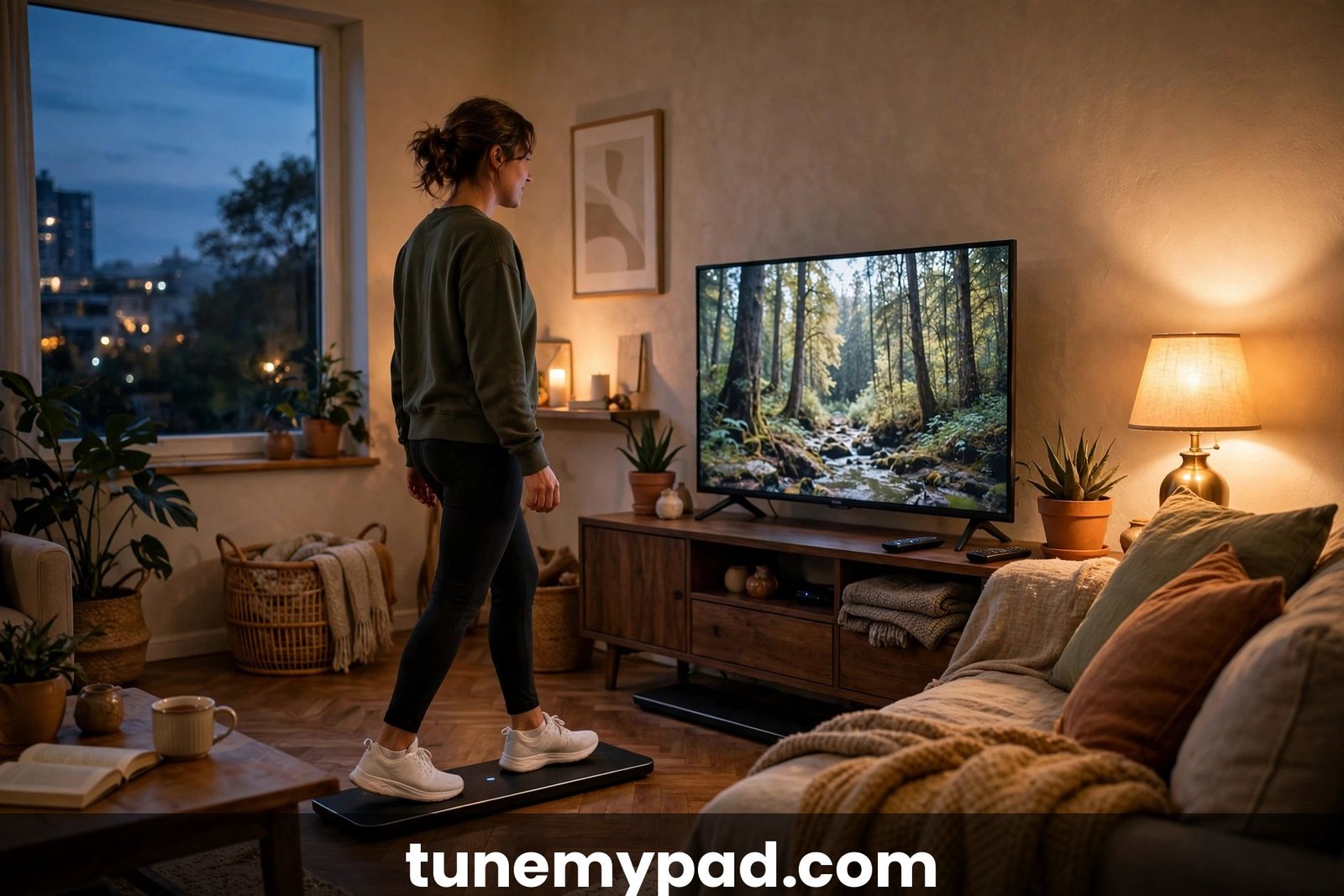
Composition matters more than calories. High-fat meals (fried food, creamy sauces, fatty cuts) slow gastric emptying, so they sit heavier during a walk. High-fiber meals digest steadily and pair beautifully with gentle movement. Very spicy food can cause reflux when you start moving — if dinner was a vindaloo, give it the full 30 minutes and keep the walk flat and easy.
Hydrate, but don’t chug. A glass of water with dinner and small sips during the walk is ideal. Chugging a liter right before stepping on the pad sloshes uncomfortably at any speed. Herbal tea after the walk (chamomile, ginger) doubles as a wind-down ritual — ginger in particular is traditionally used to settle the stomach, which complements the digestive goal of your walking pad evening routine after dinner.
What to skip before the walk: a second large dessert right before stepping on (eat it after the walk instead — the movement blunts the sugar spike even better when dessert follows it), alcohol in quantity (it disrupts the sleep benefit you’re walking for), and a big pre-walk coffee (caffeine after ~2 pm is a sleep thief no walk can fully offset).
Walking Pad Evening Routine After Dinner: Your First 30 Days
A walking pad evening routine after dinner fails the same way diets do — too much, too soon, then abandonment. This 30-day ramp builds the habit so gradually you barely notice the effort increasing.
| Week | Session | Focus |
|---|---|---|
| Week 1 | 10 min at 1.5–2.0 mph, 4 evenings | Just show up. Learn your pad’s quiet settings and find your comfortable pace. |
| Week 2 | 15 min at 2.0 mph, 5 evenings | Anchor it: same trigger every night (plates cleared → pad out). |
| Week 3 | 20 min at 2.0–2.5 mph, 5–6 evenings | Add entertainment pairing — a series you only watch while walking. |
| Week 4 | 25–30 min at 2.0–2.5 mph, nightly | Full routine. By now the walk should feel stranger to skip than to do. |

The two rules that make the ramp work: never increase duration and speed in the same week, and a missed evening is just a missed evening — resume the next night at the same level instead of “making up” with a longer walk. Your walking pad evening routine after dinner is a decades-long habit, not a 30-day challenge; the ramp is just the on-ramp.
Track one thing: evenings walked per week. When that number holds at 5+ for a month, the habit is installed and you can experiment — slightly brisker paces, incline if your pad has it, or pairing the walk with a podcast ritual you protect.
Can I do my walking pad evening routine after dinner every night?
Yes — gentle walking is one of the few exercise habits that’s genuinely safe daily. At 1.5–2.5 mph there’s minimal joint stress and no recovery debt. The only reason to take an evening off is life happening, not physiology. That said, if your feet, knees, or shins feel sore, drop to 10 easy minutes or rest a night; daily doesn’t mean ignoring pain signals.
What should I drink during an after-dinner walk?
Water, in small sips — you won’t sweat much at these paces, so a full bottle is overkill for 20 minutes. Avoid sugary drinks (they spike the blood sugar you’re trying to flatten) and alcohol (it undermines the sleep benefit). After the walk, herbal tea is the classic companion to a walking pad evening routine after dinner: ginger settles the stomach, chamomile nudges you toward sleep.
Is it okay to walk after a restaurant meal or takeout?
Absolutely — those are the meals that benefit most, since restaurant portions and hidden fats produce the biggest glucose spikes. Give it 20–30 minutes instead of 10, start at 1.0–1.5 mph, and keep the session gentle. Your walking pad evening routine after dinner is essentially damage control for the nights you eat out, and it works remarkably well at that job.
Conclusion
A walking pad evening routine after dinner is one of the simplest high-return habits you can build: 15–30 gentle minutes, started within half an hour of eating, at a pace that lets you enjoy your show. It aids digestion, flattens the blood sugar spike your body handles worst at night, tamps down late-night snacking, and — done gently and not too late — sets you up for deeper sleep. Start tonight: finish dinner, give it ten minutes, and let your walking pad evening routine after dinner do the rest.
External References
- NPR on post-meal walking — blood sugar, insulin, and why dinner is the most important meal to walk after.
- Woman & Home’s after-dinner walking guide — timing after meals and overeating prevention.
- Parade on the post-dinner walk habit — neurologist-backed tips for better sleep.