
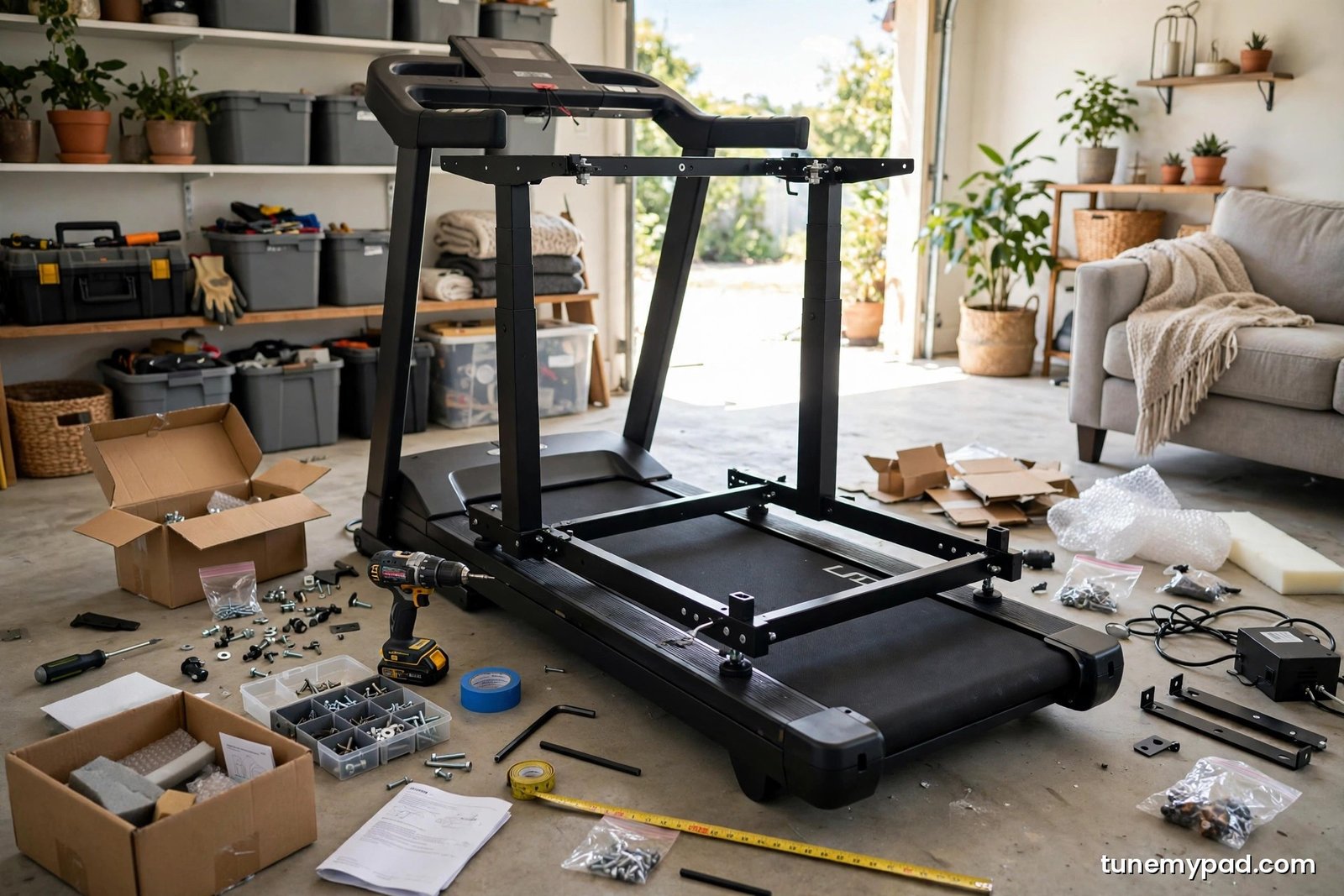
A ready-made treadmill desk can cost as much as a used car, but the concept is beautifully simple: a walking treadmill under a height-adjustable desk. If you are handy, learning how to build a DIY treadmill desk can save you hundreds of dollars and give you a setup tailored exactly to your space and body. This guide walks you through the full process, from choosing parts to the final safety checks.
Before we start, an honest note on whether you should DIY at all. Knowing how to build a DIY treadmill desk is worthwhile if you enjoy projects and already own some tools; if you own no tools and value your weekends, a budget walking pad plus an affordable standing desk frame often costs less than buying every tool and part separately. For background on why the effort pays off in daily movement, the CDC’s adult physical activity guidelines show how much moderate activity adults need.
This guide covers the three main approaches to how to build a DIY treadmill desk, the parts and tools you need, step-by-step assembly, ergonomics, safety checks, and the mistakes that ruin most DIY builds.
Quick Answer: How to Build a DIY Treadmill Desk
How to build a DIY treadmill desk in the simplest form? Buy a walking pad (treadmill base without handrails) and a height-adjustable standing desk frame with a desktop, place the walking pad under the desk, set the desk height so your elbows rest at 90 degrees while walking, and add a treadmill mat underneath. That is the core of how to build a DIY treadmill desk: two off-the-shelf components combined, no woodworking required. The full build takes 2 to 4 hours, and the detailed steps, measurements, and safety checks below make sure you get it right the first time.
Table of Contents
The 3 Approaches to How to Build a DIY Treadmill Desk
There are three common ways people approach how to build a DIY treadmill desk, ranging from pure assembly to genuine woodworking. Pick the one that matches your skills and tools.
Approach 1: Walking Pad Plus Standing Desk (Easiest)
Buy a walking pad and a separate electric standing desk frame with a desktop. Assemble both per their manuals, slide the pad under the desk, and set heights. This is how to build a DIY treadmill desk for 90 percent of people: no cutting, no drilling beyond the desk’s own assembly, and everything is adjustable later. Total time: 2 to 3 hours.
Approach 2: Treadmill Base Plus Custom Desktop (Moderate)
Buy a used full-size treadmill, remove or work around the console mast, and build or buy a desktop surface that spans over the treadmill at standing height. This version of how to build a DIY treadmill desk suits people who already own a treadmill and want to convert it. It requires basic carpentry: measuring, cutting a desktop panel, and securing it to a frame or wall-mounted brackets at the right height.
Approach 3: Full Custom Build (Advanced)
Build the desk frame from lumber or steel, sized exactly around your treadmill, with a custom desktop. This is how to build a DIY treadmill desk when you want a perfect fit for an odd space or a specific aesthetic. It needs a saw, drill, level, and comfort with load calculations. The result can be superb, but the effort is real: budget a full weekend.
For the rest of this guide, we focus on Approach 1 with notes on Approach 2, since those cover nearly everyone searching for how to build a DIY treadmill desk.
Parts and Tools You Need
The walking pad
Choose a walking pad (not a full treadmill with handrails) with these specs:
- Speed range up to at least 3.5 mph; you will walk at 1 to 2.5 mph
- Weight capacity at least 50 pounds above your body weight
- Belt width of 16 inches or more for comfortable foot placement
- A remote control or app, since you will not have a console in reach
- Low-profile deck height, ideally under 6 inches, so the desk height math works
Measure your available floor space and the pad’s footprint before ordering. A common regret in how to build a DIY treadmill desk projects is a pad that fits the room but leaves no space to step on and off safely.
The standing desk frame and desktop
Look for:
- Electric height adjustment with memory presets (you will switch heights constantly)
- Height range that covers both your sitting elbow height and your walking elbow height plus the pad’s deck height
- A desktop at least 48 inches wide and 24 inches deep; 60 by 30 inches is ideal for a real work setup
- Weight capacity that covers your equipment plus the dynamic load of typing while walking
Do the height math before buying: measure your elbow height while standing on the walking pad (pad deck height plus your standing elbow height), and confirm the desk’s maximum height reaches it. This single measurement prevents the most common how to build a DIY treadmill desk disappointment.
Tools and extras
| Item | Why you need it |
|---|---|
| Tape measure | All the height and clearance math |
| Bubble level | Leveling the pad and desk |
| Basic toolkit (screwdrivers, Allen keys) | Assembly of both components |
| Treadmill mat | Noise reduction and floor protection |
| Cable management tray | Keeping cords off the walking area |
| Power strip with surge protection | Single clean power point |
Related: Walking Pad Desk Workout Schedule While Working: 7 Plans
Step-by-Step: How to Build a DIY Treadmill Desk
Step 1: Measure your space and body
Clear the area and measure the floor footprint. Then stand on a thick book (simulating the pad’s deck height) and measure from the floor to your bent elbow; that is your target walking desk height. Measure your sitting elbow height in your chair separately. Write both numbers down; every later decision references them.
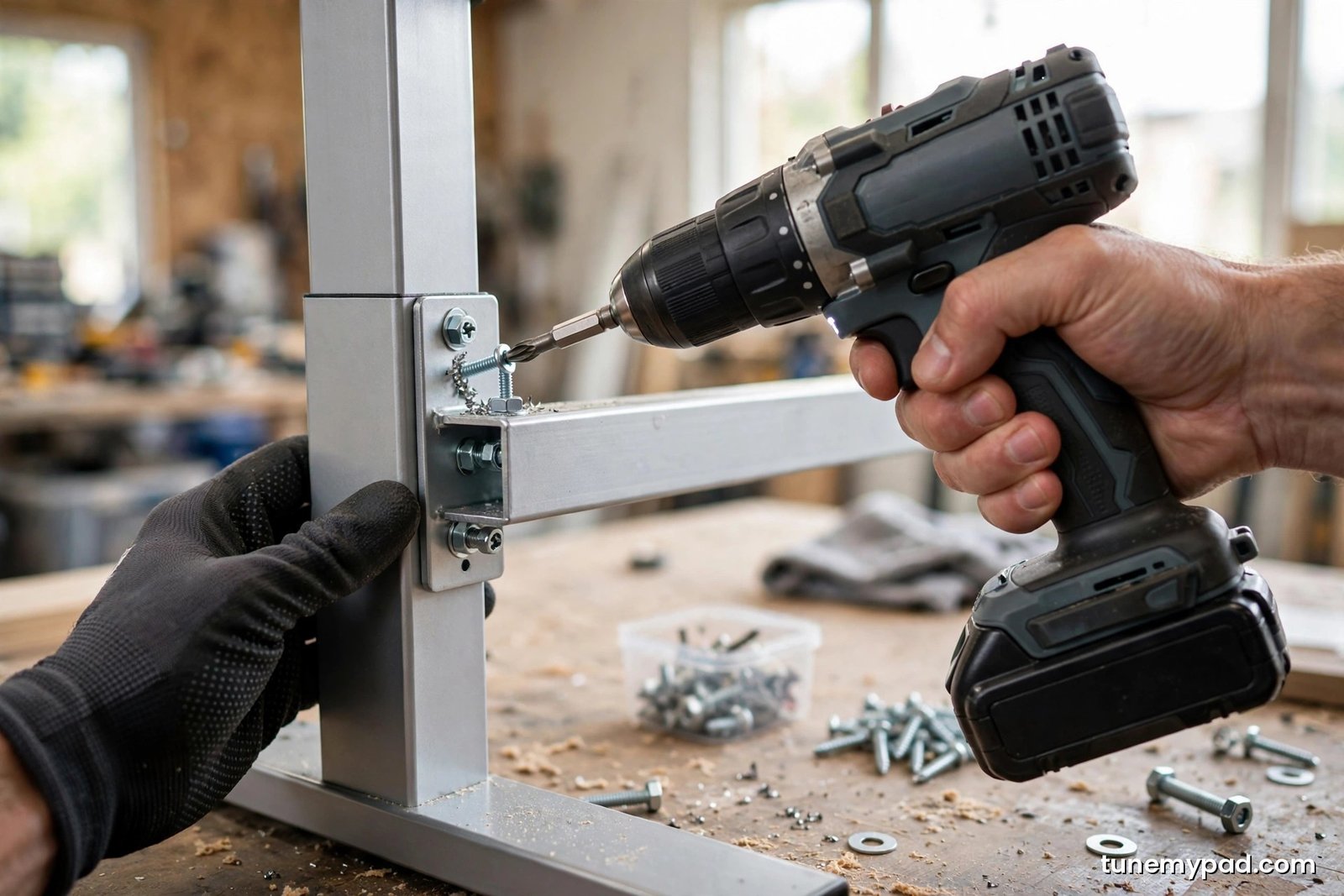
Step 2: Assemble the standing desk first
Build the desk frame and attach the desktop per the manufacturer’s instructions, but do not set its final position yet. Test the full height range and program the memory presets roughly: preset 1 for sitting height, preset 2 for your measured walking height. Leave the desk where you can walk around it.
Step 3: Position the treadmill mat and walking pad
Lay the mat in the final position, place the walking pad on it, and check that the pad is level. Plug it in and run it at 1 mph for two minutes to confirm normal operation before the desk goes over it. Discovering a defective pad after the desk is positioned is an avoidable frustration in any how to build a DIY treadmill desk project.
Step 4: Move the desk over the pad
With help (desk frames are awkward), position the desk so the pad sits centered under the desktop with clearance on both sides for safe step-on and step-off. The front of the pad should be roughly under the front edge of the desktop. Re-check level on both the desk and the pad.
Step 5: Set and program the exact heights
Stand on the pad, raise the desk to your measured walking height, and fine-tune: elbows at about 90 degrees, shoulders relaxed, monitor top at or slightly below eye level. Save this as your walk preset. Then sit in your chair and set the sit preset. Test switching between them several times; the transition should take seconds.
Step 6: Set up monitor, keyboard, and cables
Mount the monitor on an arm if possible so it moves with the desk. Route all cables through the management tray, keeping every cord away from the belt area. Nothing should dangle where a foot or the moving belt can catch it. This step is where many how to build a DIY treadmill desk builds go from functional to genuinely pleasant.
Step 7: Safety checks before first use
Walk through this checklist: the pad’s emergency stop (remote or tether) works and is within reach; the desk is stable at full walking height with no wobble; no cables touch the belt; there is clear space behind the pad in case you stumble; the mat extends beyond the pad on all sides. Only then do your first real work session.
Ergonomics: Getting the Heights Right
Ergonomics make or break a DIY treadmill desk. The most common error in how to build a DIY treadmill desk projects is setting the desk at standing height without accounting for the pad’s deck height and the slight lift of walking motion. The result is a desk that is 2 to 3 inches too low, causing neck and shoulder strain within days.
Use these targets:
- Elbows: bent at roughly 90 degrees, forearms parallel to the floor
- Shoulders: relaxed and level, not hunched or shrugged
- Monitor: top of screen at or slightly below eye level, about an arm’s length away
- Wrists: straight, not bent up or down while typing
Because walking raises your body slightly with each step, set the desk about 1 inch higher than your static standing elbow measurement, then fine-tune over the first week. Small adjustments matter enormously over 8-hour days. If you share the desk, the memory presets earn their keep here.
Cost Breakdown: DIY vs Buying Ready-Made
One of the main reasons people learn how to build a DIY treadmill desk is saving money. Here is a realistic comparison:
| Component | DIY approach | Ready-made treadmill desk |
|---|---|---|
| Walking base | $300 to $600 walking pad | Included |
| Desk | $250 to $500 standing desk | Included |
| Mat and extras | $50 to $100 | Often included |
| Total | $600 to $1,200 | $1,500 to $3,000+ |
The DIY route typically saves 40 to 60 percent, with the added benefit that each component is replaceable separately. If the walking pad dies in three years, you keep the desk. With an integrated unit, one failure can sideline the whole setup. That repairability is an underrated argument for how to build a DIY treadmill desk rather than buying integrated.
Mistakes That Ruin DIY Treadmill Desk Builds
Skipping the height math
Buying the desk before measuring walking elbow height is the classic blunder. Some budget standing desks top out too low once the pad’s deck height is added. Measure first, buy second. This single habit separates successful how to build a DIY treadmill desk projects from expensive returns.
Ignoring cable safety
Cables near a moving belt are a genuine hazard, not a tidiness issue. Every cable must be routed, clipped, and kept clear of the belt path. The emergency stop must be reachable without leaning. Do a deliberate “worst case” check: if you stumbled, what would you grab, and could anything catch? The U.S. Consumer Product Safety Commission is also a useful reference for general home product safety principles.
Placing the desk where you cannot step off safely
You need clear floor space beside or behind the pad to step off quickly. Pushing the setup into a corner with walls on three sides traps you on the belt. Leave at least 2 feet of clear space on one side and behind the pad.
Forgetting the mat
Skipping the treadmill mat to save $50 is false economy. Without it, noise complaints and floor damage arrive within weeks, and both cost far more than the mat. Every guide on how to build a DIY treadmill desk should list the mat as mandatory, not optional.
Overbuilding Approach 3 on the first try
If this is your first project, do Approach 1. Builders who start with full custom carpentry often stall halfway and end up with neither a desk nor a treadmill in use. You can always rebuild fancier later once the habit is established and you know your exact preferences.
Related: How Long Should You Walk on a Walking Pad Per Day? 7 Answers
Upgrading Your DIY Build Over Time
One of the quiet advantages of knowing how to build a DIY treadmill desk is that the project never really ends; it evolves. Start with the essentials, then upgrade based on what actually bothers you after a month of real use.
Common first upgrades include a monitor arm (so the screen tracks the desk height automatically), a proper anti-fatigue treadmill mat with more cushioning, and a small side table for water and the walking pad remote. Later upgrades might be acoustic panels if you take calls while walking, or a cable spine that keeps everything tidy through the full height range.
Resist the urge to buy every accessory upfront. Live with the basic build for a month, keep a list of friction points, and spend money only on the ones that persist. Builders who follow this staged approach to how to build a DIY treadmill desk end up with setups that fit like a glove, because every addition solved a real problem instead of an imagined one.
Maintaining Your DIY Treadmill Desk
A DIY build needs the same maintenance as any treadmill desk, with a couple of extra checks on the desk side:
- Lubricate the walking pad belt every 3 to 6 months with silicone lubricant
- Check belt centering and tension monthly
- Re-tighten desk frame bolts every few months; walking vibration loosens them faster than normal desk use
- Verify the memory presets still match your posture every few months; bodies and habits drift
- Keep cables re-clipped after any adjustment; they migrate over time
The desk-side checks are the ones DIY builders forget, because the treadmill gets all the attention. But a wobbly desk at walking height is both annoying and a spill risk, so put a quarterly reminder on your calendar.

Frequently Asked Questions About How to Build a DIY Treadmill Desk
How much does it cost to build a DIY treadmill desk?
A typical how to build a DIY treadmill desk project costs $600 to $1,200: $300 to $600 for a walking pad, $250 to $500 for an electric standing desk, plus $50 to $100 for a mat and cable management. That is roughly half the price of a ready-made integrated treadmill desk.
Is it cheaper to build or buy a treadmill desk?
Building is almost always cheaper upfront and cheaper long-term, because components are replaceable separately. The trade-off is 2 to 4 hours of assembly and the need to get the ergonomics right yourself. If you value your time highly and dislike assembly, a ready-made unit may be worth the premium.
What kind of treadmill works best for a DIY treadmill desk?
A walking pad (flat, no handrails, remote-controlled) is ideal for how to build a DIY treadmill desk projects. Full-size treadmills with console masts get in the way of the desktop and are harder to fit. Choose a pad with at least 16-inch belt width and weight capacity 50 pounds above your weight.
How high should the desk be for walking?
Measure your elbow height while standing on the pad (simulating deck height), then add about 1 inch for walking motion. That is your target. For most adults this lands 2 to 4 inches above their static standing desk height, which is why the desk must have enough maximum height. Getting this right is the most important detail in how to build a DIY treadmill desk.
Can I use a manual standing desk for a treadmill desk build?
You can, but electric with memory presets is strongly recommended. You will switch between sitting and walking heights multiple times daily, and cranking a manual desk each time adds enough friction to kill the habit. If budget forces a manual desk, at least choose one with a quick crank.
Do I need special tools to build a DIY treadmill desk?
For Approach 1 (walking pad plus standing desk), no: the included Allen keys and a screwdriver suffice, plus a tape measure and bubble level. Approach 2 needs basic carpentry tools, and Approach 3 needs a saw and drill. Most people asking how to build a DIY treadmill desk only need the basic kit.
How long does it take to build a DIY treadmill desk?
Approach 1 takes 2 to 4 hours including unboxing and height tuning. Approach 2 takes a day. Approach 3 takes a weekend. The height tuning and safety checks deserve unhurried time; rushing them is how ergonomic problems start.
Is a DIY treadmill desk safe?
Yes, if you follow the safety checks: working emergency stop within reach, stable desk at full height, no cables near the belt, and clear step-off space. A careful how to build a DIY treadmill desk build is as safe as a commercial unit. Skipping the safety checks is where risk creeps in.
Can I convert my existing standing desk into a treadmill desk?
Often yes. If your standing desk’s maximum height reaches your walking elbow height (measured on the pad’s deck height), you just add a walking pad underneath. Check the height math and the desk’s weight capacity first. This is the cheapest version of how to build a DIY treadmill desk because you only buy the pad and mat.
Will a DIY treadmill desk wobble while walking?
A quality electric desk frame at walking height is generally stable, but cheap frames can wobble. Choose a frame with good reviews for stability, keep the desktop load balanced, and re-tighten bolts periodically. Placing the desk against a wall also reduces perceived wobble.
Conclusion
Learning how to build a DIY treadmill desk is one of the highest-value home office projects you can take on: a weekend afternoon of work buys you years of effortless daily movement. Start with the simple approach (walking pad plus standing desk), do the height math before you buy anything, take cable safety seriously, and tune the ergonomics over your first week.
The best treadmill desk is the one you actually use every day, and a setup built around your body and your space has a head start on any off-the-shelf unit. Measure twice, assemble once, and enjoy the quiet satisfaction of walking to work without leaving home. Your future self, ten thousand steps richer every single week, will thank you for the afternoon you spent building it.