
How long should you walk on a walking pad per day? It is the most practical question a new owner can ask, because the answer decides your schedule, your expectations, and whether the habit survives its first month. The honest answer is that it depends on your goal: 30 minutes a day delivers real health benefits, 60 minutes drives steady weight loss, and desk workers who walk two to three hours across the workday get the biggest total payoff. There is no single magic number, but there are clear, evidence-based ranges for every goal.
This guide gives you seven answers to how long should you walk on a walking pad per day, one for each common goal: general health, weight loss, beginners, desk workers, seniors, heart health, and breaking plateaus. You will also find a minutes-per-day table, the science behind the minimum effective dose, and the warning signs that you are doing too much too soon. If you have a medical condition, get your doctor’s clearance before starting a daily walking routine.
Quick Answer: How Long Should You Walk on a Walking Pad Per Day?
If you want one number for how long should you walk on a walking pad per day, make it 60 minutes. An hour of daily walking at 2 to 3 mph burns 200 to 350 calories, meets and exceeds activity guidelines from every major health authority, and is achievable for most desk workers by splitting it into two or three blocks. Beginners should start at 20 to 30 minutes and add 5 to 10 minutes per week.
Table of Contents
| Your goal | Daily walking time | Typical pace |
|---|---|---|
| Basic health benefits | 30 minutes | 2.0 – 2.5 mph |
| Weight loss | 60 – 90 minutes | 2.5 – 3.5 mph |
| Desk worker (all-day movement) | 2 – 3 hours, split | 1.5 – 2.2 mph |
| Beginner (first month) | 20 – 30 minutes | 1.8 – 2.2 mph |
| Heart health | 30 – 45 minutes brisk | 2.8 – 3.5 mph |
The table is the short version; the seven answers below explain the reasoning, the trade-offs, and how to adjust each number for your body and schedule. When people ask how long should you walk on a walking pad per day, they are really asking how much is enough and how much is too much, and both questions have good answers.
Related: Walking Pad 10000 Steps a Day: 7 Real Results
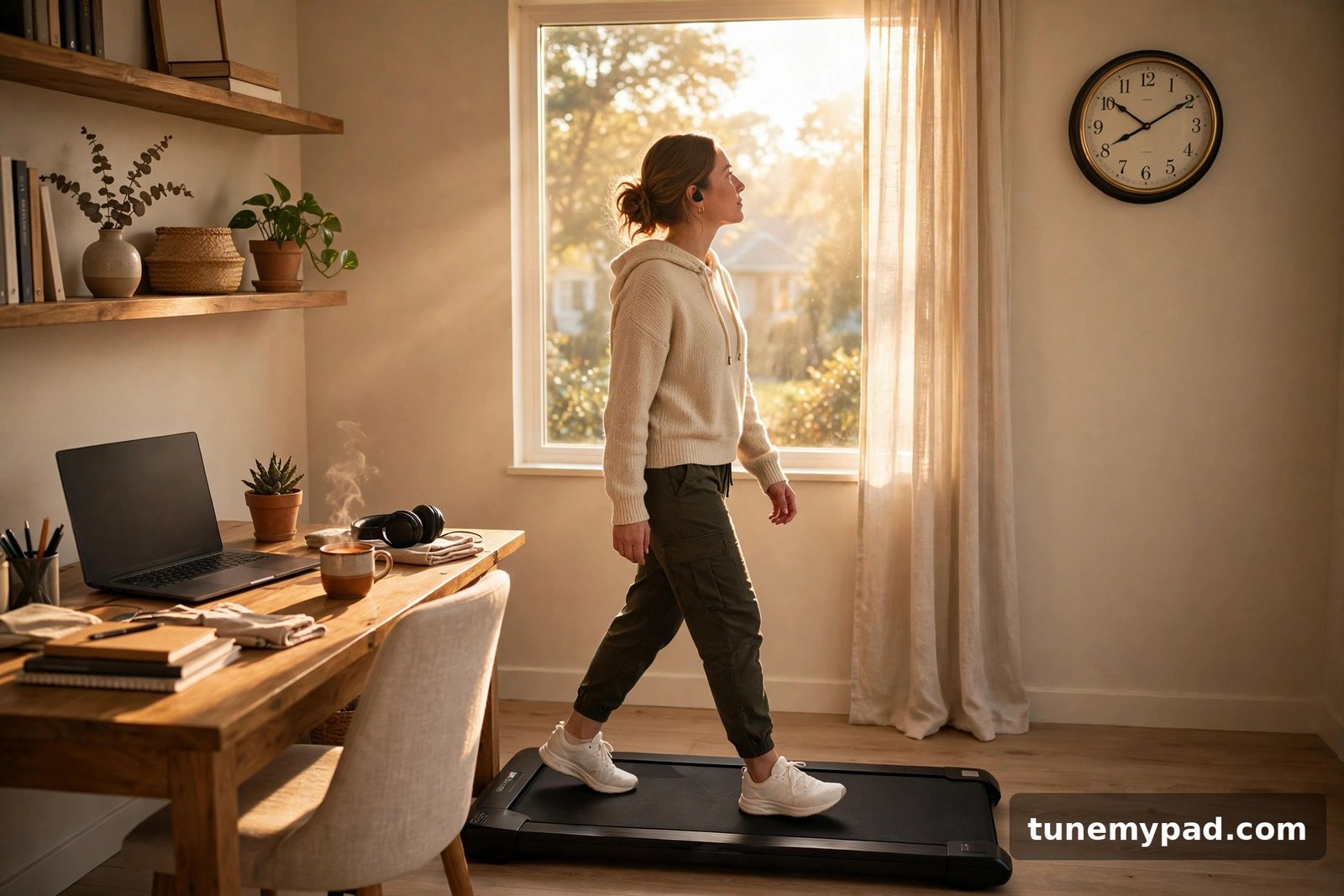
Answer 1: 30 Minutes a Day for General Health
The minimum effective dose is the first answer to how long should you walk on a walking pad per day. Thirty minutes of moderate walking daily is the amount behind the most-cited health findings: lower risk of heart disease, type 2 diabetes, and early mortality. It is also the core of the CDC’s physical activity guidelines, which call for 150 minutes of moderate activity per week, exactly 30 minutes over five days.
Thirty minutes is powerful because it is short enough to survive any schedule. One lunch-break walk at 2.5 mph covers it, and the habit is small enough to maintain for years. If you currently walk zero minutes a day, this answer to how long should you walk on a walking pad per day will transform your health more than any longer prescription you cannot sustain. Start here if you are sedentary, and treat longer durations as optional upgrades.
Make those 30 minutes genuinely moderate: you should breathe faster than at rest and be able to talk but not sing. A slow 1.5 mph amble while reading email still beats sitting, but the documented health benefits assume a purposeful pace of at least 2 mph. Set a timer, walk with intention, and count it, because deliberate minutes compound into measurable health gains over months.
Answer 2: 60 to 90 Minutes a Day for Weight Loss
Weight loss demands more, which brings the second answer to how long should you walk on a walking pad per day: 60 to 90 minutes. The math is unforgiving. A 160-pound person burns roughly 250 calories per hour at 2.5 mph, so 30 minutes creates only a 125-calorie deficit, easily erased by a handful of nuts. Sixty to ninety minutes creates a 250-to-375-calorie daily deficit, enough for roughly half a pound of fat loss per week before dietary changes.
This does not mean one continuous 90-minute session. Split the time and the answer to how long should you walk on a walking pad per day becomes far more livable: 30 minutes before work, 30 at lunch, 30 in the evening, or three 20-minute desk-walking blocks plus one 30-minute brisk session. Splitting also keeps each session’s intensity higher, because you are fresher for each block.
Pair the walking with stable eating. The most common reason this duration fails is compensatory hunger: people walk 90 minutes, feel virtuous, and eat back the deficit. Eat your normal meals, add protein to control hunger, and let the walking create the gap. Most people see the scale move within three weeks at this duration.
Related: What Speed on a Walking Pad to Lose Weight? 7 Fat-Burn Zones
Related: Walking Pad Beginner Workout Plan: Your Week 1, Day by Day
Related: Walking Pad for Seniors Over 60: 7 Safety Facts
Answer 3: 2 to 3 Hours, Split Across the Workday, for Desk Workers
Desk workers get a special answer to how long should you walk on a walking pad per day, because their goal is not a workout but the reversal of eight sitting hours. Two to three hours of slow walking at 1.5 to 2.2 mph, spread across the workday, burns 400 to 650 calories while you earn your living. This is the treadmill-desk lifestyle, and it is the highest-total-duration answer on this list precisely because the pace is the gentlest.
The key word is split. Nobody should walk three continuous hours on day one. Build to this answer to how long should you walk on a walking pad per day over four to six weeks: start with 30-minute blocks, add one block per week, and alternate walking with sitting or standing. Your feet, calves, and lower back need time to adapt to the new daily load, and gradual progression prevents the overuse injuries that end experiments early.
Structure helps enormously. Walk during email triage, status meetings where you mostly listen, and reading blocks; sit for deep writing, complex analysis, and video calls where you present. This rhythm typically yields two to three hours without willpower, because the walking is attached to tasks rather than scheduled as exercise.
Answer 4: 20 to 30 Minutes a Day for Beginners
Beginners need the humblest answer to how long should you walk on a walking pad per day: 20 to 30 minutes. This is not about fitness; it is about tissue adaptation. Your feet, Achilles tendons, shins, and lower back have likely spent years underloaded, and they adapt on a slower timeline than your cardiovascular system. Starting at 60 minutes invites shin splints, plantar fascia irritation, and the kind of soreness that makes you quit.
The progression rule is simple: add 5 to 10 minutes per week, or 10 percent, whichever is smaller. Week one at 25 minutes becomes week four at 40 to 45 minutes, and by week eight you are at the 60-minute weight-loss answer without ever having a miserable day. This answer to how long should you walk on a walking pad per day feels almost too easy at first, and that is exactly the point; easy is repeatable, and repeatable is what works.
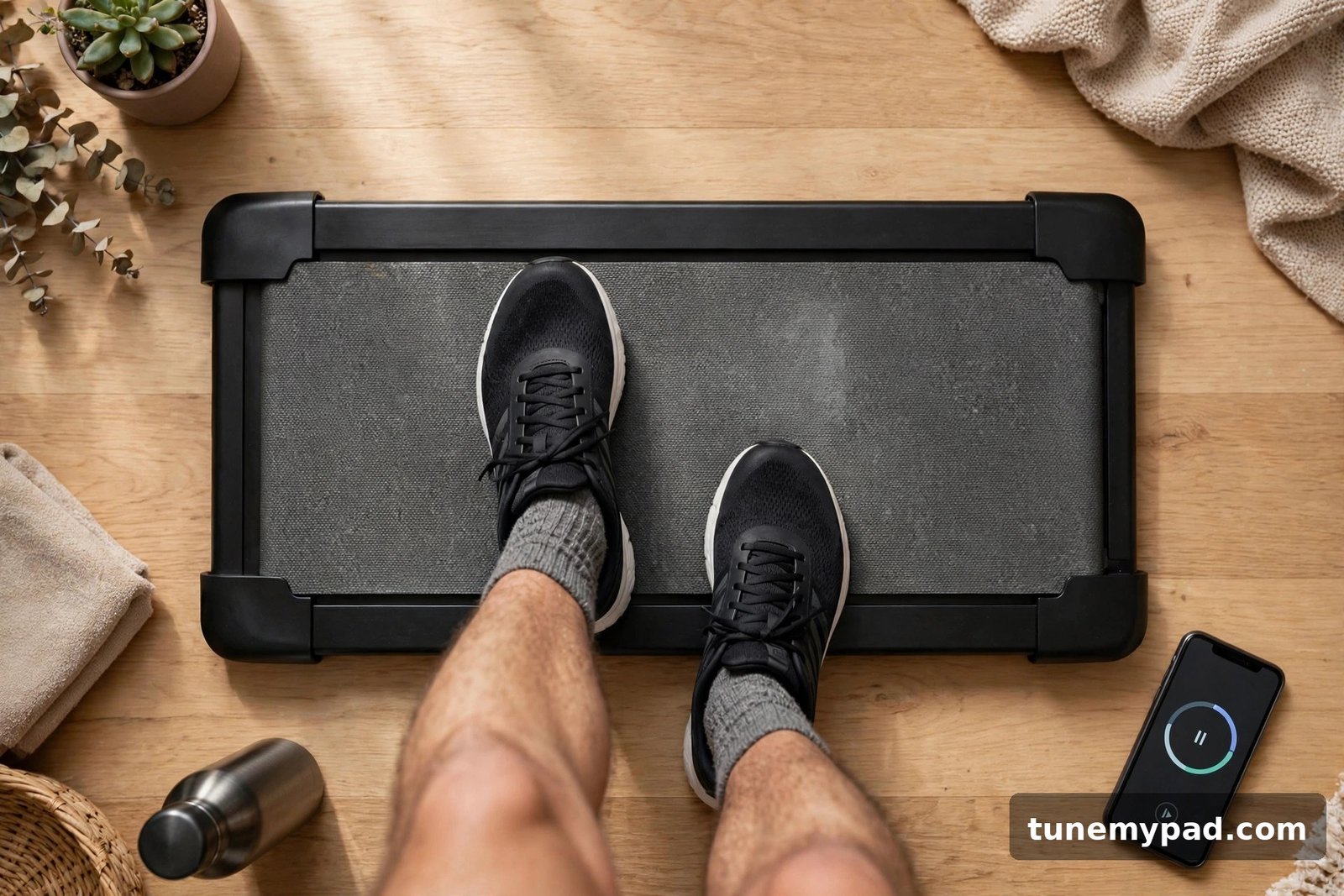
During the beginner phase, walk at 1.8 to 2.2 mph and wear proper walking shoes from day one. Socks or bare feet on a walking pad invite blisters and foot pain that have nothing to do with fitness. If anything hurts beyond mild muscle tiredness, cut the session short; pain is information, and beginners should listen carefully.
Answer 5: 30 to 45 Brisk Minutes a Day for Heart Health
For cardiovascular conditioning specifically, the answer to how long should you walk on a walking pad per day shifts toward intensity over duration: 30 to 45 minutes at a brisk 2.8 to 3.5 mph. Brisk walking qualifies as moderate-to-vigorous activity, and it is the intensity range where blood pressure, cholesterol, and insulin sensitivity improve most efficiently per minute.
Heart-health walking should feel like exercise, not like strolling. Use the talk test: you can speak in short sentences but would rather not chat. Many people structure this answer to how long should you walk on a walking pad per day as a dedicated session separate from desk walking: 35 brisk minutes before or after work, plus easy desk walking during the day for total volume.
Track your resting heart rate monthly. A drop of 3 to 8 beats per minute over two to three months confirms the conditioning is working, even if your weight barely changes. If you have diagnosed heart disease, high blood pressure, or take cardiac medication, get explicit exercise parameters from your cardiologist rather than using generic durations. Mayo Clinic’s walking guide is a solid reference for building a heart-healthy walking routine.
Answer 6: Shorter Sessions, More Days, for Seniors
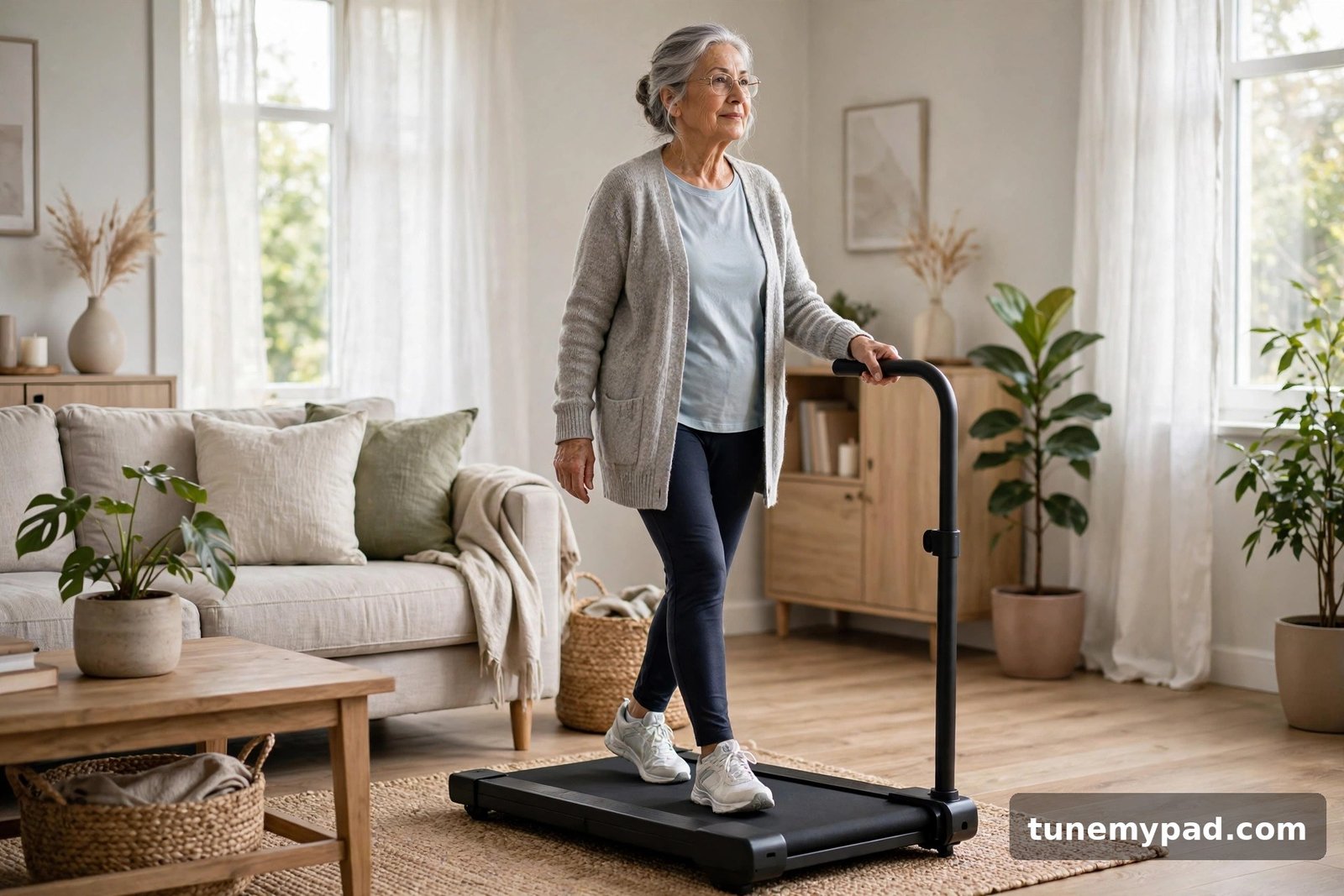
Older adults get a modified answer to how long should you walk on a walking pad per day: 20 to 40 minutes per session, possibly twice daily, at a comfortable 1.5 to 2.5 mph. Total daily time often lands at 30 to 60 minutes, but splitting protects joints and balance while delivering the same cardiovascular and metabolic benefits. The handrail, if your pad has one, is there to be used.
For seniors, consistency and safety outrank duration. A daily 25-minute walk maintained for a year beats an ambitious 60-minute plan abandoned in February. This answer to how long should you walk on a walking pad per day also assumes good footwear, a clutter-free area around the pad, and ideally someone nearby during the first weeks. Balance confidence builds with practice, but it should never be rushed.
Seniors with arthritis, osteoporosis, or neurological conditions affecting balance should get a clinician’s input on duration and pace before starting. Walking remains one of the most recommended exercises for healthy aging, but the prescription should be personalized.
Answer 7: When to Walk More, and the Signs You Are Overdoing It
The final answer to how long should you walk on a walking pad per day is about the ceiling. More is not always better. Walking three-plus hours daily at moderate intensity is fine for adapted desk workers, but jumping to high durations quickly produces overuse injuries: shin splints, Achilles tenderness, hip flexor tightness, and foot pain. Increase total weekly time by no more than 10 percent per week.
Watch for warning signs that your answer to how long should you walk on a walking pad per day is currently too high: pain that worsens as a session continues (as opposed to mild stiffness that eases), soreness that does not resolve within 48 hours, declining energy rather than increasing energy, and disrupted sleep. Any of these means cut duration by a third for a week, then rebuild more slowly.
One more ceiling to respect: the pad itself. Most walking pads are rated for a daily duty cycle, and marathon daily sessions accelerate belt and motor wear. Check your manual’s guidance, keep the belt lubricated per the schedule, and give the motor rest between very long sessions. Your longevity plan should include the machine’s.
How to Fit the Minutes Into a Busy Day
Knowing how long should you walk on a walking pad per day is useless if the minutes never happen, so here is the scheduling trick that works for busy people: attach walking to existing calendar events. Walk during your first 30 minutes of email, during every meeting where you listen more than talk, and during one phone call. Most office workers have 90-plus minutes of such low-focus time daily without realizing it.
The second trick is the minimum viable session. Commit to just 10 minutes; once you are on the belt, you will usually keep going, but even if you stop, 10 minutes still counts toward your total. People who fixate on how long should you walk on a walking pad per day often skip entirely on busy days because a full hour feels impossible; three 10-minute sessions on a chaotic day beat zero every time.
Finally, protect the habit with environment design. Leave the pad unfolded, keep walking shoes beside it, and put a sticky note on your monitor with today’s minute target. Every bit of friction you remove is worth more than any motivational quote, because the question is never really how long should you walk on a walking pad per day but whether you step on at all.
Frequently Asked Questions
How long should you walk on a walking pad per day to see weight loss results?
Plan on 60 to 90 minutes daily at 2.5 mph or faster, and expect visible results in three to four weeks. The question of how long should you walk on a walking pad per day for weight loss is really about creating a 300-plus-calorie daily deficit, which takes most people a full hour of purposeful walking. Keep eating steady and the deficit does the work.
Is 20 minutes a day on a walking pad enough?
Enough for what? Twenty minutes beats zero by a wide margin for general health, mood, and breaking up sitting, but it burns only 70 to 120 calories, so it will not drive weight loss alone. If 20 minutes is what fits your life, do it daily and consider it a foundation; when people ask how long should you walk on a walking pad per day, the best honest answer starts with “more than yesterday.”
Can I split my walking into multiple short sessions?
Yes, and you should. Three 20-minute sessions deliver essentially the same health and calorie benefits as one 60-minute session, with less fatigue and easier scheduling. Research on accumulated activity supports splitting; your body counts total daily minutes, not session length. This is the most practical insight in the whole how long should you walk on a walking pad per day debate.
How long should you walk on a walking pad per day as a beginner over 50?
Start at 15 to 20 minutes daily at 1.5 to 2 mph, and add 5 minutes per week. The standard guidance on how long should you walk on a walking pad per day assumes younger joints; after 50, connective tissue adapts more slowly, so the ramp should be gentler. Get medical clearance first if you have heart disease, diabetes, or balance issues.
Should I walk on the pad every day or take rest days?
Daily easy walking needs no rest days; walking is what human bodies are built for. But if you do brisk or interval sessions, take one or two easier days per week at slow desk pace. Complete rest days are optional unless you feel persistent soreness. Listen to your body more than any schedule, including this one.
Does walking slowly for 3 hours beat walking fast for 1 hour?
For total calorie burn they are surprisingly close: 3 hours at 1.8 mph burns roughly what 1 hour at 3.2 mph burns for the same person. The fast hour wins for cardiovascular fitness per minute; the slow three hours win for joint-friendliness and multitasking with work. When deciding how long should you walk on a walking pad per day, match duration and intensity to your goal rather than chasing one ideal.
How long should you walk on a walking pad per day to hit 10,000 steps?
About 80 to 100 minutes at 2 to 2.5 mph, split however you like. Step count and duration are two views of the same thing, and the how long should you walk on a walking pad per day question often hides a step goal underneath. Use whichever metric motivates you more and ignore the other.
Can too much walking pad time hurt my feet?
Yes, if you ramp too fast or wear bad shoes. Plantar fascia irritation and metatarsal soreness are the classic too-much-too-soon injuries. Build duration gradually, wear supportive walking shoes, consider a cushioned mat under the pad, and back off at the first sign of sharp or persistent foot pain. Feet adapt, but they demand patience.
Does the 10-percent rule apply to walking pad duration?
Yes. Increase total weekly walking time by no more than 10 percent per week, and your tissues will adapt without injury. Jump from 30 to 90 minutes daily in one week and shin splints are likely; the same jump spread over six weeks is trivial. Patience is the entire injury-prevention program.
How long should you walk on a walking pad per day if you also lift weights?
Walking complements strength training beautifully; it does not replace it. Keep your lifting schedule unchanged and add 30 to 45 minutes of easy walking on training days, longer on rest days. The question of how long should you walk on a walking pad per day for lifters is really about recovery: easy walking improves blood flow and soreness, so treat it as active recovery, not extra training stress.
What is the absolute minimum that still counts?
About 10 continuous minutes at 2 mph or faster. Shorter bouts still break up sitting, which has independent benefits, but the cardiometabolic research behind walking recommendations uses 10-minute bouts as the building block. Stack three of them and you have a real workout day.
Conclusion: Start at 30, Build Toward Your Goal
Seven answers, one principle: how long should you walk on a walking pad per day depends on what you want, but 30 minutes is the floor worth defending and 60 minutes is the target worth building toward. Beginners start at 20 to 30, weight-loss seekers work up to 60 to 90, and desk workers split two to three easy hours across the day.
Whatever number you choose, the best duration is the one you will repeat tomorrow. Set a timer, lace your shoes, and step on. The minutes add up faster than you think, and so do the results. A year from now, the daily walkers will barely remember deciding to start; they will just be healthier people with a quiet, powerful habit humming under their desks.
2 thoughts on “How Long Should You Walk on a Walking Pad Per Day? 7 Answers”