
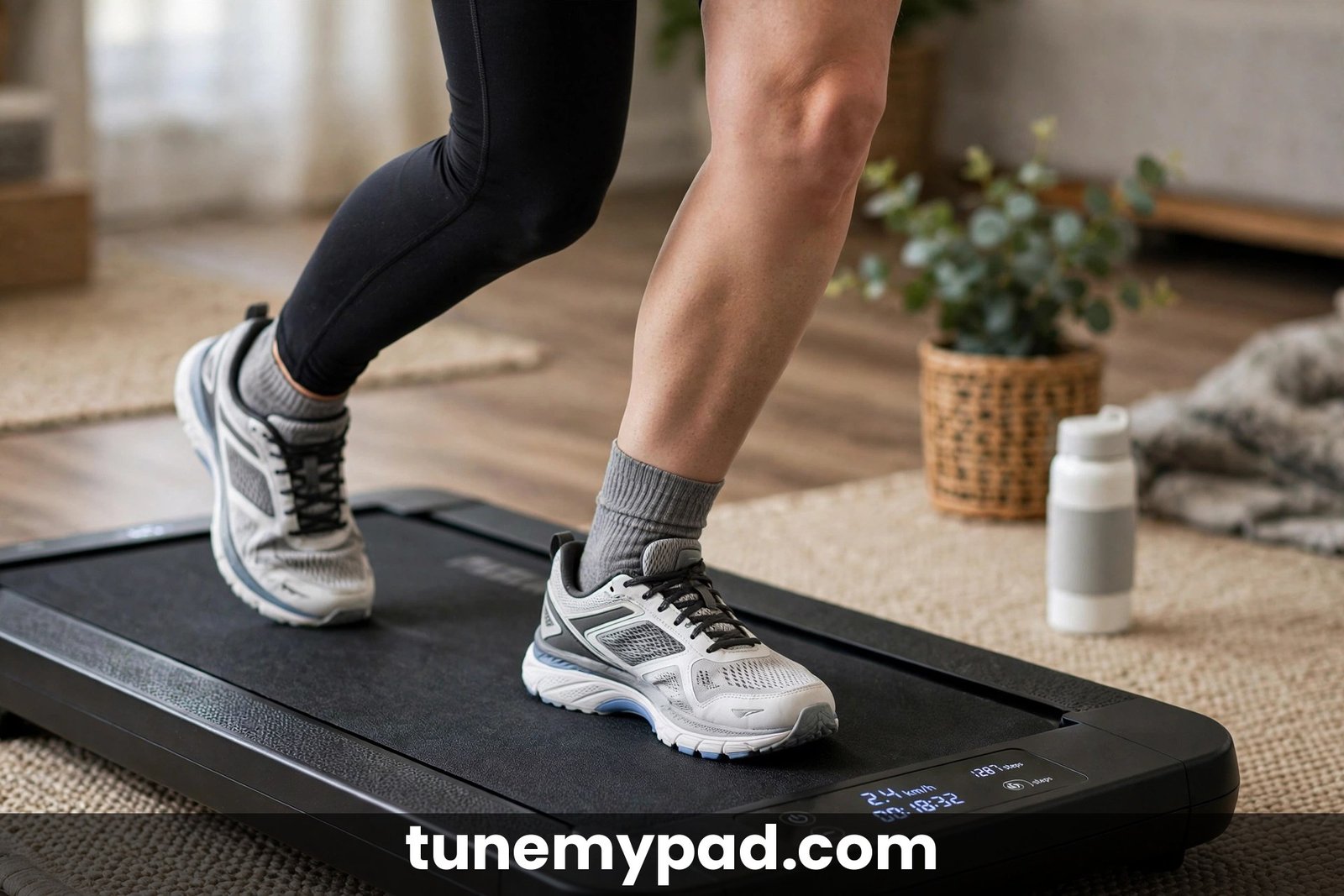
Knee pain is the number one fear that keeps people off walking pads, and it is a fair question: is a walking pad bad for your knees, or is it actually one of the gentlest ways to stay active? The short answer is that for most healthy knees, slow walking on a cushioned pad is low-impact and joint-friendly. But “most” is doing heavy lifting in that sentence, so let’s get specific.
Important: this article is general information, not medical advice. It cannot diagnose your knee pain or tell you whether walking is safe for your specific condition. If you have knee pain, swelling, a history of knee injury or surgery, or arthritis, talk to your doctor or physical therapist before using a walking pad. Nothing here replaces professional evaluation.
With that said, the question is a walking pad bad for your knees has seven evidence-informed answers, covering impact science, cushioning, form mistakes, footwear, progression, red flags, and who should be cautious. Read all seven before deciding.
Table of Contents
Quick Answer: Is a Walking Pad Bad for Your Knees?
| Question | Answer |
|---|---|
| Is a walking pad bad for your knees? | For most healthy adults, no. Slow walking is low-impact, and pad cushioning reduces force further. |
| Who should be careful? | People with knee osteoarthritis, meniscus injuries, ligament damage, recent knee surgery, or persistent knee pain: get clinician clearance first. |
| What hurts knees most on a pad? | Too much speed, too much volume too soon, worn-out shoes, and overstriding. |
| What protects knees? | Slow speeds (1 to 2 mph), cushioned shoes, short sessions ramped gradually, and good posture. |
| When is knee pain a red flag? | Sharp pain, swelling, locking, catching, giving way, or pain that worsens across sessions: stop and see a clinician. |
So is a walking pad bad for your knees? For healthy knees used sensibly, no: it is among the lowest-impact cardio options available. The rest of this article shows how to keep it that way.
Answer 1: What the Impact Science Actually Says
Walking is fundamentally different from running in ways that matter enormously for knees. When you run, each footstrike can load the knee with 2.5 to 3 times your body weight. When you walk, peak loads are roughly 1 to 1.5 times body weight, and one foot is always on the ground. That is why clinicians routinely recommend walking, not running, for people protecting their joints.
A walking pad adds two more advantages. First, the belt’s cushioning layer absorbs some impact compared to concrete or asphalt. Second, and more important, speed is capped: most people walk pads at 1 to 2.5 mph, far below the speeds where impact forces climb. So when asking is a walking pad bad for your knees, remember that slow walking on a forgiving surface is about as gentle as weight-bearing exercise gets.
Answer 2: Cushioning Helps, But It Is Not Magic
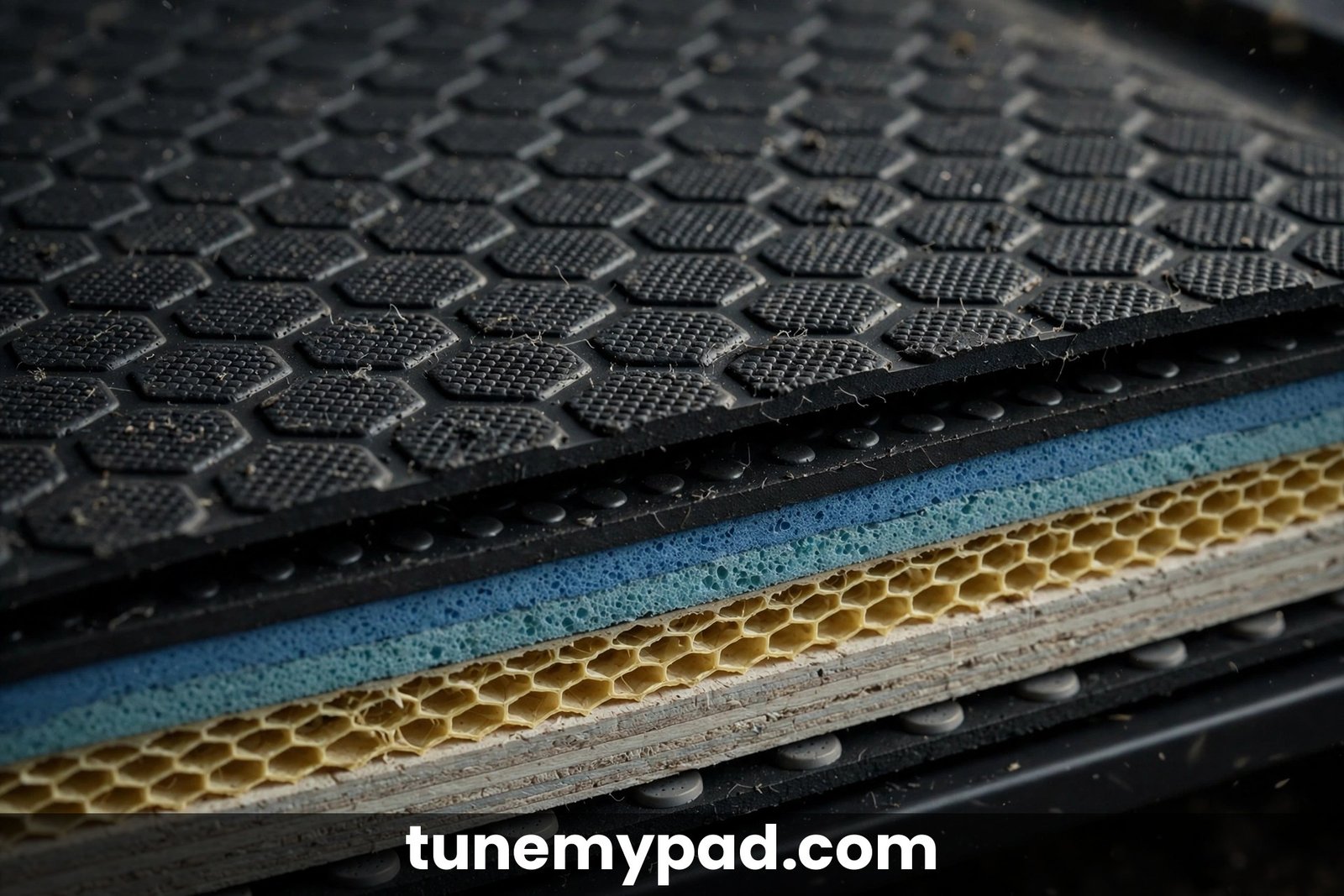
Pad manufacturers love to advertise multi-layer shock-absorbing decks, and cushioning does reduce peak impact forces modestly. But cushioning is the least important knee-protection factor, ranking well behind speed control, volume control, footwear, and form.
Think of it this way: a runner pounding at 6 mph on the softest pad still loads knees far more than a walker strolling at 1.5 mph on a firm one. If you are evaluating whether is a walking pad bad for your knees based on deck specs alone, you are looking at the wrong variable. Prioritize a pad with a comfortable belt and a stable, non-bouncy feel, then focus your attention on how you use it.
Related: Best Shoes for Walking Pad: What to Wear for Comfortable Daily Walks
Answer 3: The Four Form Mistakes That Hurt Knees
Most knee complaints from pad users trace to form, not the machine. When people ask is a walking pad bad for your knees after a painful week, one of these four culprits is usually responsible.
Overstriding. Reaching far forward with each step increases braking forces at the knee. Fix: take shorter, quicker steps and let the belt bring your foot under your hips.
Locked knees. Walking with stiff, straight legs transmits shock upward. Fix: keep a soft, slight bend in the knee, the way you walk naturally outdoors.
Leaning on the desk. Hunching over the desk shifts load awkwardly through hips and knees. Fix: stand tall, shoulders over hips, and raise the desk so you are not reaching down.
Toe-dragging or shuffling. A lazy shuffle increases shear forces. Fix: pick your feet up and roll heel to toe, even at 1 mph.
Answer 4: Shoes Matter More Than the Pad
Ask any physical therapist whether is a walking pad bad for your knees, and they will ask about your shoes before your pad. Worn-out, unsupportive footwear is the single most common fixable cause of pad-related knee and foot complaints.
Rules: wear dedicated cushioned walking shoes, not socks, not slippers, not dead sneakers. Replace them every 300 to 500 miles (for a daily 2-hour walker, that is roughly every 6 to 9 months). If you have flat feet or overpronation, consider stability shoes or the orthotics your clinician recommended. And never share the “barefoot is natural” experiment with your knees as the test subjects: on a moving belt, barefoot walking increases slip risk and removes all cushioning.
Answer 5: Volume and Progression: The Real Knee Killers
Here is the pattern behind most “is a walking pad bad for your knees” pain stories: new pad arrives Monday, user walks 4 hours Monday, knees ache Tuesday, user concludes pads destroy knees. The pad did not do it; the dose did.
Tendons and cartilage adapt slower than enthusiasm. Safe progression: week 1, 20 to 30 minutes daily at 1 to 1.5 mph. Add no more than 10 to 20 percent total weekly volume. Keep speed under 2 mph for the first month. Schedule one lighter day per week. Mild muscle fatigue is fine; joint pain that lingers into the next day is a signal to cut volume, not push through.
Answer 6: Red Flags: When Knee Pain Means Stop and Get Checked
Some knee symptoms are not “part of getting used to it.” Stop walking and consult a clinician promptly if you experience sharp or stabbing knee pain; visible swelling during or after walking; the knee locking, catching, or giving way; pain that worsens across sessions despite rest; or pain accompanied by redness and warmth (possible inflammation or infection).
These red flags apply whether you are asking is a walking pad bad for your knees as a beginner or as a long-time user with new symptoms. Early professional evaluation of knee problems leads to far better outcomes than months of self-managed pushing through. This is general information: only a clinician who examines you can diagnose the cause.

Answer 7: Who Should Be Extra Cautious
A walking pad can still work for many people with knee concerns, but some situations demand professional guidance first: diagnosed knee osteoarthritis, meniscus tears or ligament injuries, recent knee surgery or injections, rheumatoid or inflammatory arthritis, significant leg-length discrepancy or alignment issues, and any knee pain that already limits daily activities like stairs.
If that is you, the question is a walking pad bad for your knees becomes a question for your physical therapist, who may clear slow, short, flat walking while ruling out incline or longer sessions. Many people with mild to moderate knee osteoarthritis do walk regularly on medical advice; the key is that the advice is theirs, personalized, not a blog’s. The Mayo Clinic’s overview of knee pain causes and care is a solid starting point for understanding your situation before that appointment.
FAQs
Is a walking pad bad for your knees if you walk 3 hours a day?
Duration alone does not doom knees if you built up gradually, keep speeds slow, and wear good shoes. Problems come from sudden jumps in volume. A gradual ramp to 3 daily hours at 1.5 mph is tolerated well by most healthy knees; jumping there in week one is not. Listen to lingering joint soreness as your governor.
Is a walking pad bad for your knees compared to outdoor walking?
Pads are generally gentler: consistent cushioning, no downhill pounding, no cambered sidewalks, and precise speed control. Outdoors wins on varied terrain (which strengthens stabilizers) and enjoyment. For pure knee-friendliness, a slow pad walk is hard to beat.
Should I use incline if I am worried and asking is a walking pad bad for your knees?
Incline increases knee loading, particularly at the patellofemoral joint. If knees are your concern, stay flat until you have months of pain-free walking, then add incline gradually and only with clinician approval if you have any knee condition. Flat and slow beats inclined and sorry.
Do knee sleeves or braces help on a walking pad?
Compression sleeves provide warmth and proprioceptive feedback that some walkers find comforting, but they do not fix mechanical problems or substitute for medical care. Hinged or unloading braces should only be used as prescribed by a clinician. If you need a brace to walk comfortably, that is itself worth a medical visit.
Is a walking pad bad for your knees if you are overweight?
Extra body weight does increase joint loading, which makes gradual progression even more important, not avoidance. Slow walking remains one of the most joint-friendly ways to build activity, and many clinicians recommend it. Start with short sessions, progress slowly, prioritize shoes, and loop in your doctor for a personalized plan. The CDC’s guidance on physical activity and arthritis supports staying active with joint conditions under professional guidance.
Can walking pads cause arthritis?
No quality evidence suggests that moderate walking causes osteoarthritis in healthy joints; in fact, regular moderate activity is associated with better joint health. Arthritis has genetic, injury, age, and load-history components far beyond any single exercise choice. The question is a walking pad bad for your knees should not be confused with “does walking cause arthritis”: for healthy knees, the answer to both is no.
What is the best speed for knee comfort on a walking pad?
Most knee-sensitive walkers feel best at 1.0 to 1.8 mph with short, soft steps. Higher speeds lengthen stride and raise impact; very slow speeds can feel awkward and encourage shuffling. Experiment within that band and let comfort, not ambition, set the number.
When should I see a doctor about knee pain from walking?
If pain is sharp, causes swelling, involves locking or giving way, worsens over two weeks despite rest and volume reduction, or limits daily activities, book an appointment. Do not wait months hoping it resolves. Early assessment is always the better bet, and this article cannot substitute for it.
The Bottom Line
Is a walking pad bad for your knees? For healthy knees, used at slow speeds with good shoes and sensible progression, no: it is one of the gentlest cardio options you can own. Respect the red flags, ramp volume gradually, fix your form and footwear before blaming the machine, and get professional input for any real knee condition. Your knees were built for walking; a pad just removes the weather excuse.
Related: Walking Pad for Seniors Over 60: 7 Safety Facts
Related: How Long Should You Walk on a Walking Pad Per Day? 7 Answers
How Walking Compares to Other Cardio for Knees
When people ask is a walking pad bad for your knees, they are often choosing between cardio options. Here is how slow pad walking stacks up for knee stress:
| Activity | Relative knee impact | Knee-friendliness |
|---|---|---|
| Slow walking pad (1-2 mph) | Very low | Excellent |
| Outdoor walking | Low | Excellent |
| Stationary cycling | Very low | Excellent (if seat height correct) |
| Elliptical | Low-moderate | Good |
| Swimming | Near zero | Excellent (no weight-bearing) |
| Jogging/running | High | Poor for sensitive knees |
No single “best” exists: the right answer to is a walking pad bad for your knees versus other options depends on your body and preferences. But slow pad walking belongs firmly in the gentlest tier, alongside swimming and easy cycling. If your knees tolerate outdoor walking, they will almost certainly tolerate a pad.
The 5-Minute Knee-Friendly Warm-Up and Cool-Down
Even gentle walking deserves a proper start and finish, and this routine directly addresses the worry is a walking pad bad for your knees by preparing joints for load. Warm-up: 2 minutes at 0.8 mph, then 10 leg swings per leg (holding the desk), 10 ankle circles per foot, 10 gentle bodyweight squats to a comfortable depth.
Cool-down: 2 minutes at 0.8 mph, then calf stretch 30 seconds per leg, quad stretch 30 seconds per leg (hold the desk for balance), and hip-flexor stretch 30 seconds per side. Total: 5 minutes. This small ritual reduces the stiffness that beginners often misread as the answer to is a walking pad bad for your knees being “yes.”
What Arthritis Research Says About Walking
For the many readers asking is a walking pad bad for your knees because of arthritis: major guidelines, including the CDC’s arthritis program, recommend regular moderate activity for adults with arthritis, and walking is the most-studied modality. Appropriate activity reduces pain and improves function for many people with osteoarthritis; inactivity reliably makes things worse.
The qualifiers matter enormously. “Appropriate” means low-impact, gradually progressed, and cleared by your clinician. Flare-ups mean backing off, not pushing through. Weight management amplifies every benefit, since each pound lost removes roughly four pounds of knee load per step. So is a walking pad bad for your knees if you have arthritis? It can be an excellent tool within a clinician-guided plan, and a risky one without guidance. Get the guidance.
More FAQs
Is a walking pad bad for your knees if you walk on incline?
Incline raises patellofemoral joint stress, so if knees are the concern, the answer to is a walking pad bad for your knees on incline is: more stressful than flat, yes. Stay flat for your first few months, then add incline only gradually and pain-free. Flat walking delivers nearly all the benefits with the least joint cost.
Does belt cushioning really protect knees, or is it marketing?
It genuinely helps a little: multi-layer decks measurably reduce peak impact forces versus concrete. But the effect is modest compared to speed, volume, shoes, and form. When judging is a walking pad bad for your knees, treat cushioning as a nice bonus, not the deciding factor.
Is a walking pad bad for your knees after knee replacement?
Only your surgeon can answer that, and the answer depends on the procedure, healing stage, and rehab protocol. Many total-knee-replacement patients eventually walk regularly, often including pad walking, as part of rehab. But timelines and restrictions are strictly individual: this general article cannot clear you. Ask your surgical team exactly when and how you may start, and whether the question is a walking pad bad for your knees has a yes-or-no answer in your specific case.
Can weak muscles make a walking pad bad for your knees?
Weak quadriceps, glutes, and hip stabilizers let the knee track poorly under load, which is a genuine and fixable contributor to discomfort. Two weekly sessions of simple strength work (sit-to-stands, step-ups, glute bridges, calf raises) protect knees far more than any equipment choice. Strong muscles are the best knee brace ever invented.
Is a walking pad bad for your knees if you are over 60?
Age alone does not disqualify you: many adults over 60 walk daily on pads with healthy, happy knees. What matters is joint history, not birth year. Get clinician clearance if you have arthritis, prior injuries, or persistent pain, start slow with rails if balance is a concern, and progress gradually. For healthy older knees, the answer to is a walking pad bad for your knees is the same as for younger ones: no, with sensible use.
Should I ice my knees after walking?
If knees feel warm or mildly achy after a session, 10 to 15 minutes of icing can calm things down, and it is a reasonable recovery habit. But recurring post-walk pain that needs icing every time is a signal to reduce volume and get evaluated, not a routine to normalize. Occasional ice: fine. Daily ice dependency: see a clinician.
Your Personal Knee-Comfort Checklist
Turn this article into action with a one-page checklist. Before each walking week, confirm: shoes have fewer than 500 miles on them; last week’s volume increase was under 20 percent; no session is planned above 2 mph until month two; warm-up and cool-down are scheduled, not skipped; and any new or worsening joint pain gets a rest day plus evaluation, not another session.
Keep a simple pain log for the first month: date, minutes, speed, and a 0-10 knee-comfort score after each walk. Patterns jump out fast: maybe evenings are worse, or speeds above 1.8 mph always cost you. Nobody can answer is a walking pad bad for your knees for your body except your body, tracked honestly, plus your clinician. Data beats worry every time.
Tracking Comfort Over Time
The most useful thing a knee-conscious walker can do is track. For one month, log each session’s minutes, speed, and a 0-to-10 knee-comfort score afterward. Review weekly: you will spot your personal thresholds fast, like speeds above 1.8 mph always costing you, or evening sessions feeling worse than mornings.
Use what you learn. If the data says 1.5 mph for 30 minutes keeps you at 9/10 comfort while 2.0 mph drops you to 6/10, the choice is obvious: cap speed and extend time. Nobody can answer is a walking pad bad for your knees for your body except your body, tracked honestly. Data turns anxiety into a plan.
Walking Is a Skill Worth Keeping
Here is the encouraging truth behind the question is a walking pad bad for your knees: walking is the movement your knees were designed for, refined over millions of years. A pad simply gives you a safe, weather-proof place to do it daily. Treat your knees with respect, progress patiently, and they will carry you gladly for decades.