
If you are asking what speed on walking pad to lose weight, you are already ahead of most buyers, because speed is the single biggest lever you control once the machine is under your desk. A walking pad does not care how hard you feel like you worked; it responds to pace, time, and consistency, and the right speed turns a casual stroll into a genuine fat-burning session. Too slow and you burn barely more than sitting, too fast and you cannot sustain it long enough to matter, so what speed on walking pad to lose weight actually works best depends on your fitness level, your body weight, and how long you plan to walk.
This guide breaks the answer into seven fat-burn zones, from a gentle desk-walking pace to brisk power-walk intervals. You will find a quick answer up front, exact speed ranges in miles per hour, heart-rate targets, a calories-burned table by body weight, and a progression plan that moves you through the zones over eight weeks. Everything here applies to the typical 0.5 to 4 mph walking pad, and the zones work whether you walk while working or during dedicated workout sessions. Check with your doctor before starting a new exercise routine, especially if you have a heart condition, diabetes, or joint problems.
Quick Answer: What Speed on a Walking Pad to Lose Weight?
For most people, what speed on walking pad to lose weight comes down to one sweet spot: 2.5 to 3.5 mph. That pace is brisk enough to raise your heart rate into the fat-burning zone (roughly 60 to 70 percent of your maximum heart rate) while staying slow enough to sustain for 45 to 60 minutes. At 3 mph, a 160-pound person burns about 260 to 300 calories per hour; at 2 mph that drops to roughly 180 to 200 calories per hour.
Table of Contents
| Goal | Best speed range | Session length | Why it works |
|---|---|---|---|
| Walk while working | 1.8 – 2.2 mph | 2 – 4 hours spread through the day | Sustainable for typing; steady calorie burn adds up |
| Best fat burn per minute | 3.0 – 3.5 mph | 45 – 60 minutes | Hits the fat-burning heart-rate zone for most adults |
| Beginner weight loss | 2.0 – 2.5 mph | 30 – 45 minutes | Low injury risk, easy to repeat daily |
| Breaking a plateau | Intervals 2.5 – 4.0 mph | 30 – 40 minutes | Intervals raise total calorie burn and EPOC |
The short version is simple: 2 to 2.5 mph is your working pace, 3 to 3.5 mph is your workout pace, and anything above 3.5 mph on a walking pad is a deliberate training choice, not a daily habit. When people ask what speed on walking pad to lose weight, trainers and exercise physiologists give nearly the same answer, and the seven zones below explain exactly why each pace earns its place.
Related: Walking Pad Calories Burned Calculator: Best Manual Guide (2026)
Related: Walking Pad Beginner Workout Plan: Your Week 1, Day by Day
Related: How Many Calories Does a Walking Pad Burn? 7 Honest Estimates
Related: Walking Pad Interval Workout for Fat Loss: 7 Plans
Related: Walking Pad for Seniors Over 60: 7 Safety Facts
Related: Is a Walking Pad Bad for Your Knees? 7 Best Answers
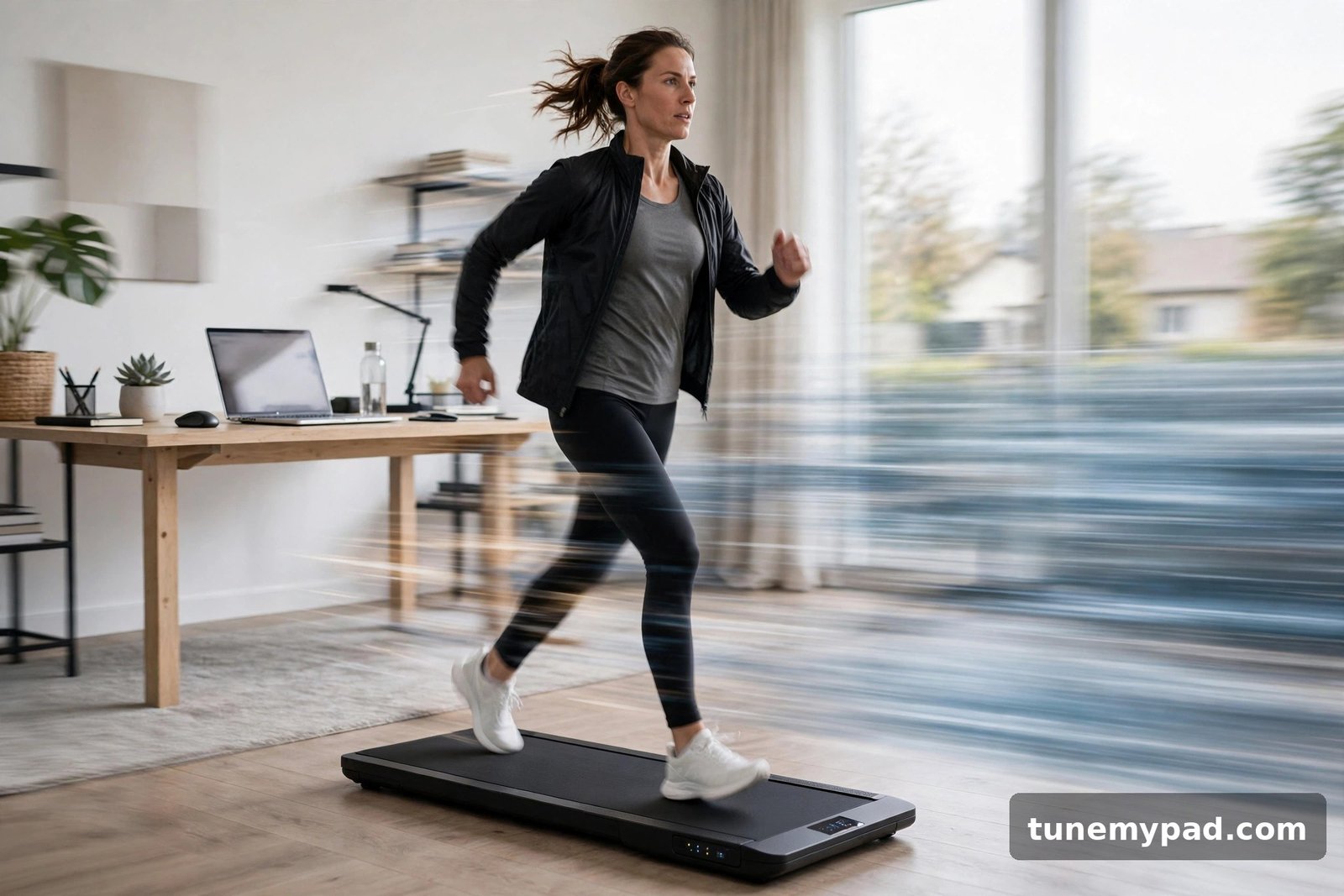
Zone 1: 1.5 – 2.0 mph, the All-Day Desk Pace
When the question is what speed on walking pad to lose weight while working a full day, Zone 1 is where most desk workers live. At 1.5 to 2 mph you can type, read, and join calls without your accuracy falling apart, and the movement is gentle enough to sustain for hours. Research on treadmill desks consistently shows that cognitive performance holds up at speeds under 2 mph, which makes this zone the practical foundation of a workday weight-loss strategy.
Do not underestimate the calorie math here. A 180-pound person walking at 1.8 mph burns roughly 200 to 220 calories per hour. Spread that over three hours of a workday and you have added 600-plus calories of expenditure without a dedicated workout. That is the equivalent of skipping a large meal every single day, which is why Zone 1 quietly drives more real-world weight loss than any intense session people quit after two weeks.
People researching what speed on walking pad to lose weight often doubt Zone 1 because the pace feels so easy. It counts. It counts. Fat loss is driven by total energy expenditure over weeks, and consistency beats intensity for beginners. Start your first two weeks here if you are new to walking pads, new to exercise, or carrying significant extra weight, and let your joints, feet, and lower back adapt before you chase faster speeds; this patient start is the safest answer to what speed on walking pad to lose weight for beginners.
Zone 2: 2.0 – 2.5 mph, the Beginner Fat-Loss Standard
What speed on walking pad to lose weight if you are a true beginner? Zone 2, at 2.0 to 2.5 mph, is the standard answer from physical therapists and trainers. It is a genuine walk, not a shuffle, and it lifts your heart rate into the lower end of the fat-burning range for most adults. You can still hold a conversation, but you would rather not be on a video call while doing it.
At 2.2 mph, calorie burn rises meaningfully: a 160-pound walker burns about 230 calories per hour, while a 220-pound walker burns closer to 320. Over a 45-minute session five days a week, that adds up to roughly 850 to 1,200 calories per week from walking alone, which is enough to move the scale when combined with sensible eating. This is the zone where most successful walking-pad weight-loss stories begin.
Stay in Zone 2 for your dedicated walking sessions during weeks one through four. Walk 30 to 45 minutes at this pace five days a week, use Zone 1 for the rest of your desk walking, and you have a complete answer to what speed on walking pad to lose weight works for beginners. If your shins, knees, or feet complain, drop back to Zone 1 for a few days rather than pushing through pain; connective tissue adapts more slowly than your cardiovascular system, and patience here prevents the injuries that derail weight-loss plans.
Zone 3: 2.5 – 3.0 mph, the Brisk Cardio Sweet Spot
Zone 3 is where the answer to what speed on walking pad to lose weight gets exciting. At 2.5 to 3 mph you are walking briskly, your breathing deepens, and most adults land squarely in the classic fat-burning heart-rate zone of 60 to 70 percent of max. This is the pace that maximizes the proportion of calories coming from fat while remaining fully aerobic, which means you can sustain it for an hour.
The numbers are motivating. A 160-pound person burns about 260 to 290 calories per hour at 3 mph; a 200-pound person burns roughly 330 to 360. Do this pace for one hour, five days a week, and you create a weekly deficit of 1,300 to 1,800 calories from walking alone, which translates to roughly a third to half a pound of fat per week before any dietary changes. Add a modest calorie cut and you are looking at real, visible results within a month.
Zone 3 is also the zone most people can graduate to by week four or five. The telltale sign you are ready: Zone 2 starts to feel boring, and your heart rate stays noticeably lower at the same pace. If you are tracking what speed on walking pad to lose weight as you progress, move up in 0.2 mph increments rather than jumping straight from 2.2 to 3.0; small steps keep the pace sustainable and your form clean.
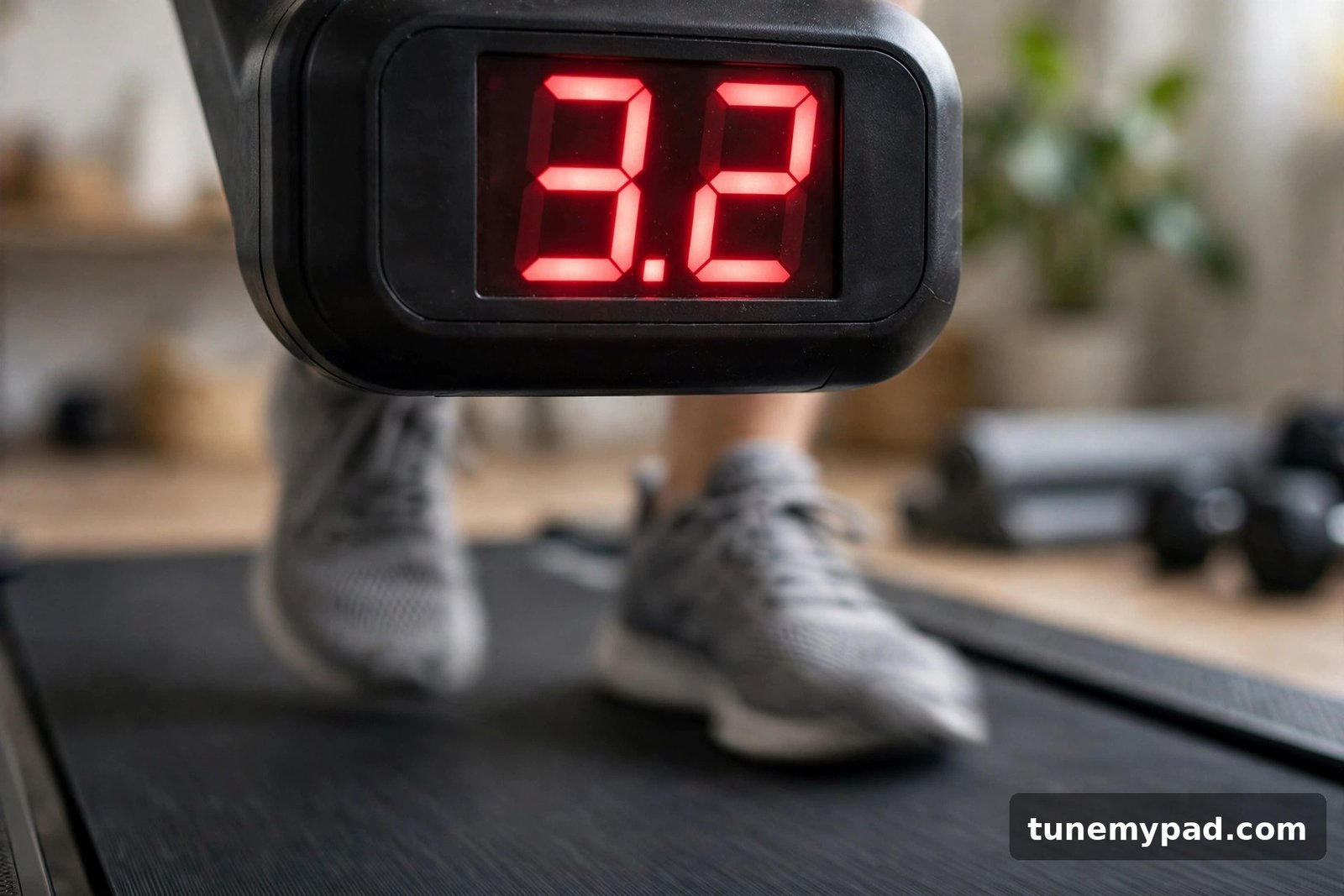
Zone 4: 3.0 – 3.5 mph, the Power-Walk Fat Burner
If you want the single best answer to what speed on walking pad to lose weight per minute spent, Zone 4 at 3.0 to 3.5 mph is it. This is a determined power walk: arms pumping, stride long, breathing hard enough that full sentences take effort. For most adults this pace sits at the top of the fat-burning zone or just into the cardio zone, where total calorie burn per minute is highest while the session remains sustainable.
At 3.5 mph, a 160-pound walker burns about 320 to 350 calories per hour; a 220-pound walker burns 430 to 470. That is nearly double the per-minute burn of Zone 1, which is why time-crunched people get better results from 30 hard minutes at 3.2 mph than from 60 easy minutes at 1.8 mph. The trade-off is that you cannot type or work at this pace, so schedule Zone 4 as dedicated workout time, ideally before work, at lunch, or in the evening.
A word of caution for anyone chasing what speed on walking pad to lose weight at the top end: many walking pads top out around 3.7 to 4 mph, and belt width gets unforgiving at higher speeds. Keep your stride centered, wear proper walking shoes (not socks or slippers), and stop immediately if you feel dizzy or get shin pain. Zone 4 is a training tool, not an all-day pace; three to four sessions per week is plenty for fat loss.
Zone 5: 3.5 – 4.0 mph, the Tempo Challenge Zone
What speed on walking pad to lose weight fastest in a 30-minute window? Zone 5, from 3.5 to 4 mph, is the ceiling for most walking pads and the fastest sustainable walking pace for fit adults. You are essentially race-walking: cadence is high, arm drive is aggressive, and you will be breathing hard within five minutes. Calorie burn peaks here at 350 to 500-plus per hour depending on body weight.
Reserve Zone 5 for short, deliberate sessions of 20 to 30 minutes, two or three times per week at most. This pace stresses the calves, shins, and Achilles tendons, so a five-minute warm-up at 2 mph is non-negotiable. Many people find that their walking pad feels narrow at 3.8 mph and above; if your belt is under 17 inches wide, consider capping your top speed at 3.5 mph for safety and comfort.
The real value of Zone 5 when deciding what speed on walking pad to lose weight will break your plateau is metabolic: repeated hard efforts improve insulin sensitivity and raise your resting metabolic rate slightly, effects that linger after the session ends. Use it as a plateau-breaker when Zone 3 and 4 sessions stop moving the scale, then cycle back down.
Zone 6: Speed Intervals, 2.5 – 4.0 mph Alternating
When someone asks what speed on walking pad to lose weight and break through a stall, the honest answer is often not one speed but two. Zone 6 is interval training: alternate one to two minutes at 3.5 to 4 mph with two to three minutes of recovery at 2 to 2.5 mph, repeated for 25 to 35 minutes. Intervals burn more total calories than steady walking at the same average speed and produce a larger afterburn effect (excess post-exercise oxygen consumption, or EPOC).
A sample 30-minute session looks like this: five minutes at 2 mph to warm up, then six rounds of two minutes at 3.6 mph followed by two minutes at 2.2 mph, finishing with four minutes at 2 mph to cool down. A 180-pound person burns roughly 280 to 330 calories in that half hour, about 15 to 20 percent more than 30 steady minutes at 3 mph. The Mayo Clinic notes that interval training can deliver comparable fitness benefits in less time than steady-state exercise, which is exactly why it fits busy schedules.
Start intervals with a 1:2 work-to-recovery ratio (one minute fast, two minutes easy) and progress to 1:1 over several weeks; this progression is how what speed on walking pad to lose weight stops being a single number and becomes a training system. Do intervals on non-consecutive days, two to three times per week, and keep your other days at steady Zone 2 or 3 paces. If you feel sharp joint pain rather than muscle fatigue, stop the intervals and return to steady walking; intervals amplify impact forces, and your joints need time to catch up to your ambition.
Zone 7: The 8-Week Progression Ladder
The final zone is not a speed at all but a plan, because what speed on walking pad to lose weight changes as you get fitter. Zone 7 is an eight-week ladder that moves you systematically through the zones so your body keeps adapting instead of plateauing. Week one and two: Zone 1 desk walking plus three 30-minute Zone 2 sessions. Week three and four: add one Zone 3 session per week, extending Zone 2 sessions to 45 minutes.
Weeks five and six introduce Zone 4 twice a week for 30 minutes while keeping a daily Zone 1 or 2 base, which is exactly how the answer to what speed on walking pad to lose weight evolves as your fitness improves. Weeks seven and eight add one Zone 6 interval session, replacing one of the Zone 4 sessions. By week eight you will be spending about five hours per week on the pad across mixed intensities, which for a 180-pound person totals roughly 1,500 to 2,000 calories of weekly walking expenditure, enough to lose about half a pound per week from exercise alone.
The ladder works because of progressive overload, the same principle behind every effective training program. Your body adapts to a fixed stimulus within three to four weeks, so the planned speed increases keep the stimulus ahead of your adaptation. Track your sessions in a notebook or app, and only advance a zone when the current one feels comfortable for two consecutive weeks.
How to Find Your Personal Fat-Burn Heart Rate Zone
Speed is a proxy; heart rate is the truth. The classic fat-burning zone is 60 to 70 percent of your maximum heart rate, estimated as 220 minus your age. A 40-year-old therefore targets roughly 108 to 126 beats per minute for maximum fat oxidation. Wear a fitness watch or chest strap during your first few sessions and note which walking-pad speed puts you in that range; that number is your personal answer to what speed on walking pad to lose weight, more precise than any generic chart.
| Age | Fat-burn zone (60-70% max HR) | Typical walking-pad speed |
|---|---|---|
| 25 | 117 – 137 bpm | 3.0 – 3.5 mph |
| 35 | 111 – 130 bpm | 2.8 – 3.3 mph |
| 45 | 105 – 123 bpm | 2.6 – 3.1 mph |
| 55 | 99 – 116 bpm | 2.4 – 2.9 mph |
| 65 | 93 – 109 bpm | 2.2 – 2.7 mph |
Two caveats. First, the 220-minus-age formula has a margin of error of about 10 to 12 beats per minute, so treat the zone as a starting point and adjust by feel: you should be able to speak in short sentences but not sing. Second, medications like beta-blockers blunt heart-rate response, so if you take heart medication, use perceived exertion rather than heart-rate math to judge what speed on walking pad to lose weight is right for you, and follow your doctor’s guidance over heart-rate formulas.
Calories Burned by Speed and Body Weight
Concrete numbers make the what speed on walking pad to lose weight decision easier, so here is a reference table of approximate hourly calorie burn at common speeds. These are estimates for level walking; your actual burn varies with body composition, walking efficiency, and whether you swing your arms.
| Speed | 140 lbs | 160 lbs | 180 lbs | 200 lbs | 220 lbs |
|---|---|---|---|---|---|
| 1.5 mph | 150 | 170 | 190 | 210 | 230 |
| 2.0 mph | 180 | 205 | 230 | 255 | 280 |
| 2.5 mph | 215 | 245 | 275 | 305 | 335 |
| 3.0 mph | 250 | 285 | 320 | 355 | 390 |
| 3.5 mph | 290 | 330 | 370 | 410 | 450 |
| 4.0 mph | 330 | 375 | 420 | 465 | 510 |
Notice how body weight dominates the what speed on walking pad to lose weight equation: a 220-pound walker at 2.5 mph burns more than a 140-pound walker at 3.5 mph. This is good news for heavier beginners, because it means Zone 2 speeds produce meaningful calorie burn from day one. As you lose weight, the same speed burns fewer calories, which is one reason the Zone 7 progression ladder matters; you must keep raising intensity to maintain the same deficit.
Frequently Asked Questions
What speed on walking pad to lose weight is best for absolute beginners?
Start at 2.0 mph for 30 minutes, five days a week. The question of what speed on walking pad to lose weight tempts beginners to go fast, but the first goal is building the daily habit and letting your feet, shins, and knees adapt. Increase speed by 0.2 mph every week or two as the current pace starts feeling easy.
Is 2 mph on a walking pad enough to lose weight?
Yes, if you do enough of it. Two mph burns roughly 200 to 280 calories per hour depending on your weight, and three hours of desk walking at 2 mph adds up to a serious answer to what speed on walking pad to lose weight for desk workers to a 600-to-800-calorie daily expenditure. Paired with sensible eating, that produces steady fat loss; it just takes longer per session than faster speeds.
What speed on walking pad to lose weight while working at a desk?
Stay at 1.8 to 2.2 mph while doing focused work. That is the fastest most people can walk without typing accuracy or reading comprehension dropping. Save 2.5 mph and above for calls where you mostly listen, and 3 mph plus for dedicated workout blocks outside work hours.
How fast should I walk on a walking pad to burn belly fat?
There is no speed that targets belly fat specifically; spot reduction is a myth. What speed on walking pad to lose weight overall is the right framing: 2.5 to 3.5 mph for 45 to 60 minutes, five days a week, creates the sustained calorie deficit that shrinks belly fat along with fat everywhere else. The CDC recommends at least 150 minutes of moderate activity per week, and brisk walking qualifies.
Should I use the fastest speed on my walking pad every day?
No. Daily max-speed walking raises injury risk and is hard to sustain. A better weekly mix for what speed on walking pad to lose weight is two or three moderate sessions (2.5 to 3 mph), one or two harder sessions (3 to 3.5 mph or intervals), and daily easy desk walking at 1.5 to 2 mph. Rest days matter too; muscles and tendons adapt during recovery.
What speed on walking pad to lose weight if I have bad knees?
Stick to 1.5 to 2.5 mph on a flat belt and keep sessions to 20 to 30 minutes at first. Slower speeds reduce impact forces, and shorter sessions limit cumulative joint stress. Strengthening the quadriceps and glutes off the pad also protects knees. See your doctor or a physical therapist before starting if you have diagnosed knee arthritis or recent knee pain.
Does walking at 3 mph on a walking pad count as exercise?
Absolutely. For anyone wondering what speed on walking pad to lose weight counts as real exercise, three mph is a brisk walk that meets the definition of moderate-intensity aerobic activity used by health authorities. It elevates heart rate, improves cardiovascular fitness, and burns 250 to 390 calories per hour depending on body weight. It counts every bit as much as an outdoor walk at the same pace.
How long before I see results from walking pad weight loss?
Most people asking what speed on walking pad to lose weight notice looser clothes within three to four weeks of consistent walking (five-plus sessions per week) combined with reasonable eating. Scale weight typically moves 0.5 to 1 pound per week at a sustainable pace. Take measurements and progress photos, because the scale alone can hide fat loss behind water-weight fluctuations.
Conclusion: Pick Your Zone and Stay in It
The complete answer to what speed on walking pad to lose weight is a range, not a number: 1.5 to 2 mph for all-day desk walking, 2 to 2.5 mph for beginner sessions, 2.5 to 3.5 mph for dedicated fat-burning workouts, and intervals up to 4 mph for breaking plateaus. Start where you are, progress one zone at a time with the eight-week ladder, and let consistency do the heavy lifting that intensity cannot.
Remember that when you ask what speed on walking pad to lose weight, speed is only half the equation; total weekly time on the pad and your eating habits decide the outcome. Five hours a week at mixed speeds beats one heroic weekend session every time, and that is the real lesson behind what speed on walking pad to lose weight: consistency at the right pace wins. Set your pad to your zone, put on a podcast, and walk your way to results, one mile at a time.
1 thought on “What Speed on a Walking Pad to Lose Weight? 7 Fat-Burn Zones”