
Ten thousand steps a day is the most famous fitness target on the planet, and walking pads have turned it from a nice idea into a daily reality for desk workers. If you are wondering about walking pad 10000 steps a day results, you want to know what actually happens to your body, your weight, and your energy when you hit that number consistently. The short answer is encouraging: people who reach 10,000 daily steps on a walking pad typically lose 1 to 2 pounds per month, sleep better, and report noticeably higher energy, all without leaving their desk.
This article lays out seven real-world outcomes you can expect from walking pad 10000 steps a day results, how long each one takes to show up, exactly how much walking 10,000 steps requires at different speeds, and a practical plan for hitting the target even on your busiest workdays. The numbers below assume a typical adult walking at 2 to 3 mph; adjust for your stride and pace. As always, check with your doctor before starting a new exercise program if you have heart disease, diabetes, or joint problems.
Quick Answer: Walking Pad 10000 Steps a Day Results
Walking pad 10000 steps a day results follow a predictable timeline. In weeks one and two you will notice better sleep and less afternoon sluggishness. By weeks four to six, most people see 2 to 4 pounds of weight loss and looser-fitting clothes. By month three, consistent 10k-step walkers report improved resting heart rate, better mood, and a habit so automatic it feels strange to skip. Reaching 10,000 steps takes about 80 to 100 minutes of walking at 2 to 2.5 mph, which most desk workers split across the workday.
Table of Contents
| Timeframe | Typical walking pad 10000 steps a day results |
|---|---|
| Week 1-2 | Better sleep, more energy, mild foot/leg soreness as you adapt |
| Week 3-4 | 2-4 lbs lost, clothes fit looser, afternoon slump fades |
| Month 2 | 4-8 lbs lost, resting heart rate drops, walking feels easy |
| Month 3+ | 8-15 lbs lost, habit on autopilot, improved blood pressure markers |
The key insight behind walking pad 10000 steps a day results is that the steps do the work while you do your job. Unlike gym sessions that compete with your schedule, desk walking stacks movement onto hours you were going to spend sitting anyway. The seven outcomes below describe what that stacking produces, in the order most people experience it.
Related: Walking Pad Calories Burned Calculator: Best Manual Guide (2026)
Result 1: Sleep Quality Improves Within Two Weeks
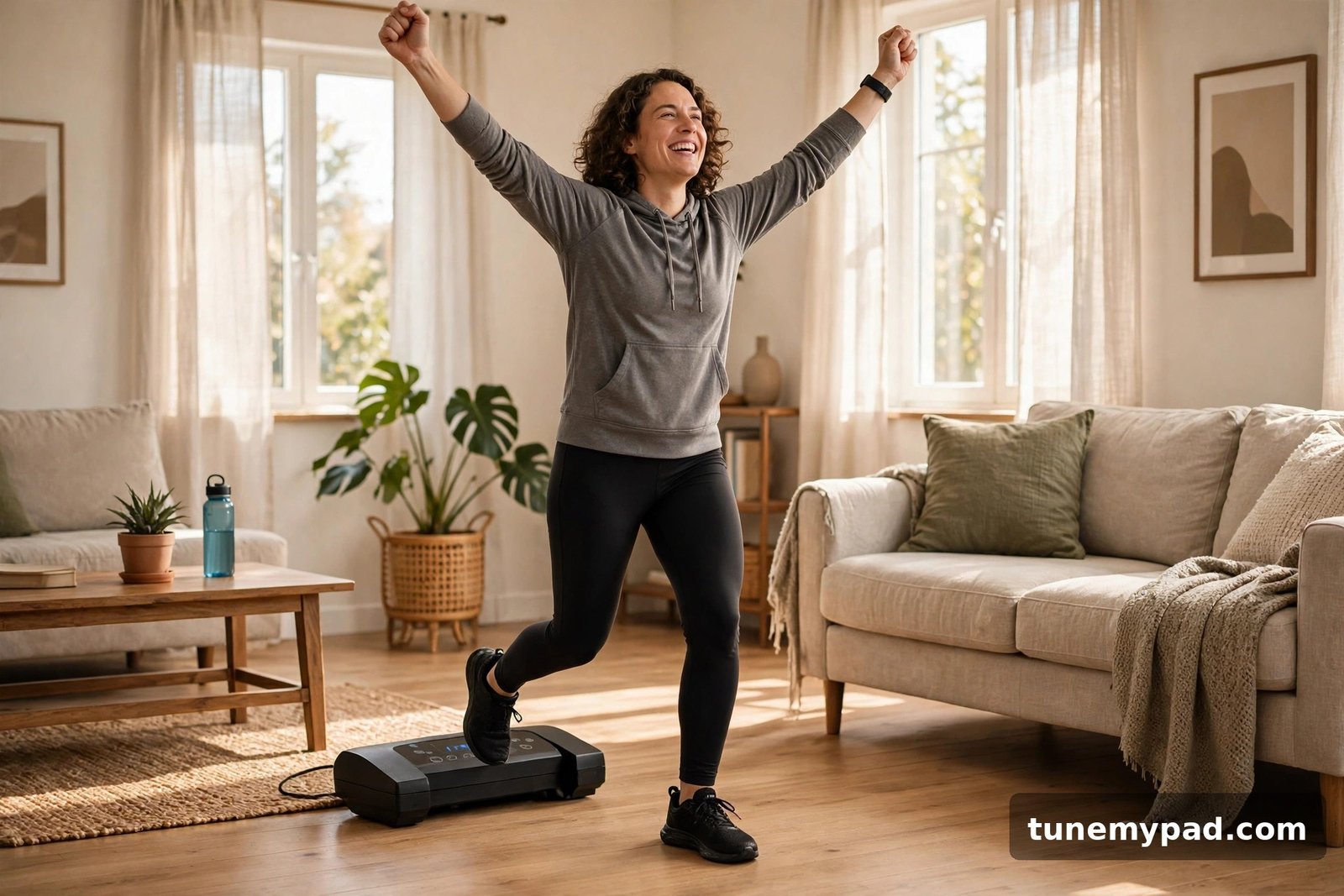
The first of the walking pad 10000 steps a day results most people notice is not on the scale but in bed. Daytime physical activity, especially moderate walking, is one of the strongest behavioral predictors of sleep quality. People who start hitting 10,000 steps consistently report falling asleep faster and waking up less during the night, often within the first ten to fourteen days.
The mechanism is straightforward. Walking regulates your circadian rhythm by exposing you to more daytime activity signals, and the mild physical fatigue makes your body crave genuine rest instead of restless tossing. It also reduces the anxiety and rumination that keep desk workers awake; walking is a proven mild anxiolytic. If better sleep is your primary goal, finish your last walking block at least two hours before bed so your core temperature has time to drop.
Track this result with a simple 1-to-10 sleep rating each morning rather than an expensive sleep tracker. Most walking pad 10000 steps a day results stories mention sleep before weight loss, which makes sense: sleep changes arrive in days, while body-composition changes take weeks. Better sleep also makes every other result easier, because rested people eat less impulsively and move more.
Result 2: The Afternoon Energy Slump Disappears
Desk workers know the 2 PM crash: heavy eyelids, a third coffee, and productivity crawling to a halt. One of the most appreciated walking pad 10000 steps a day results is the disappearance of that slump. Walking increases blood flow to the brain and triggers the release of norepinephrine and dopamine, neurotransmitters directly involved in alertness and focus.
The practical pattern looks like this. Walk at 1.8 to 2.2 mph during your morning work block and your early-afternoon block, and the post-lunch dip flattens dramatically. Many people find they can cut their afternoon caffeine entirely, which further improves the sleep result above. The research summarized by Healthline links regular brisk walking to improved energy and reduced fatigue across multiple studies.
Do not expect this result on day one. Walking pad 10000 steps a day results for energy typically need five to seven consistent days before the pattern shifts, because your body needs a few days to adapt its energy systems to the new demand. Push through the first week even if the afternoon still feels heavy; the turnaround is coming.
Result 3: 2 to 4 Pounds Lost in the First Month
Now the result everyone asks about: walking pad 10000 steps a day results for weight loss. Ten thousand steps at a moderate pace burns roughly 400 to 550 calories for most adults, depending on body weight and speed. Do that five to six days a week and you create a weekly deficit of 2,000 to 3,300 calories from walking alone, which translates to about half to one pound of fat per week.
Realistic first-month walking pad 10000 steps a day results land at 2 to 4 pounds for most people, with heavier individuals losing more because every step costs them more energy. The scale may not move in week one due to water retention in newly worked muscles; this is normal and temporary. Measure your waist as well as your weight, because waist circumference often shrinks before the scale cooperates.
The critical factor is diet. Walking pad 10000 steps a day results compound dramatically when paired with even modest eating changes, and they can stall completely if the extra activity triggers extra snacking. A common trap is rewarding 10,000 steps with food; the walk burned 450 calories, but the celebratory muffin erased 400 of them. Keep meals steady and let the steps do the deficit work.
Related: What Speed on a Walking Pad to Lose Weight? 7 Fat-Burn Zones
Related: Is a Walking Pad Bad for Your Knees? 7 Best Answers
Result 4: Resting Heart Rate Drops by Month Two
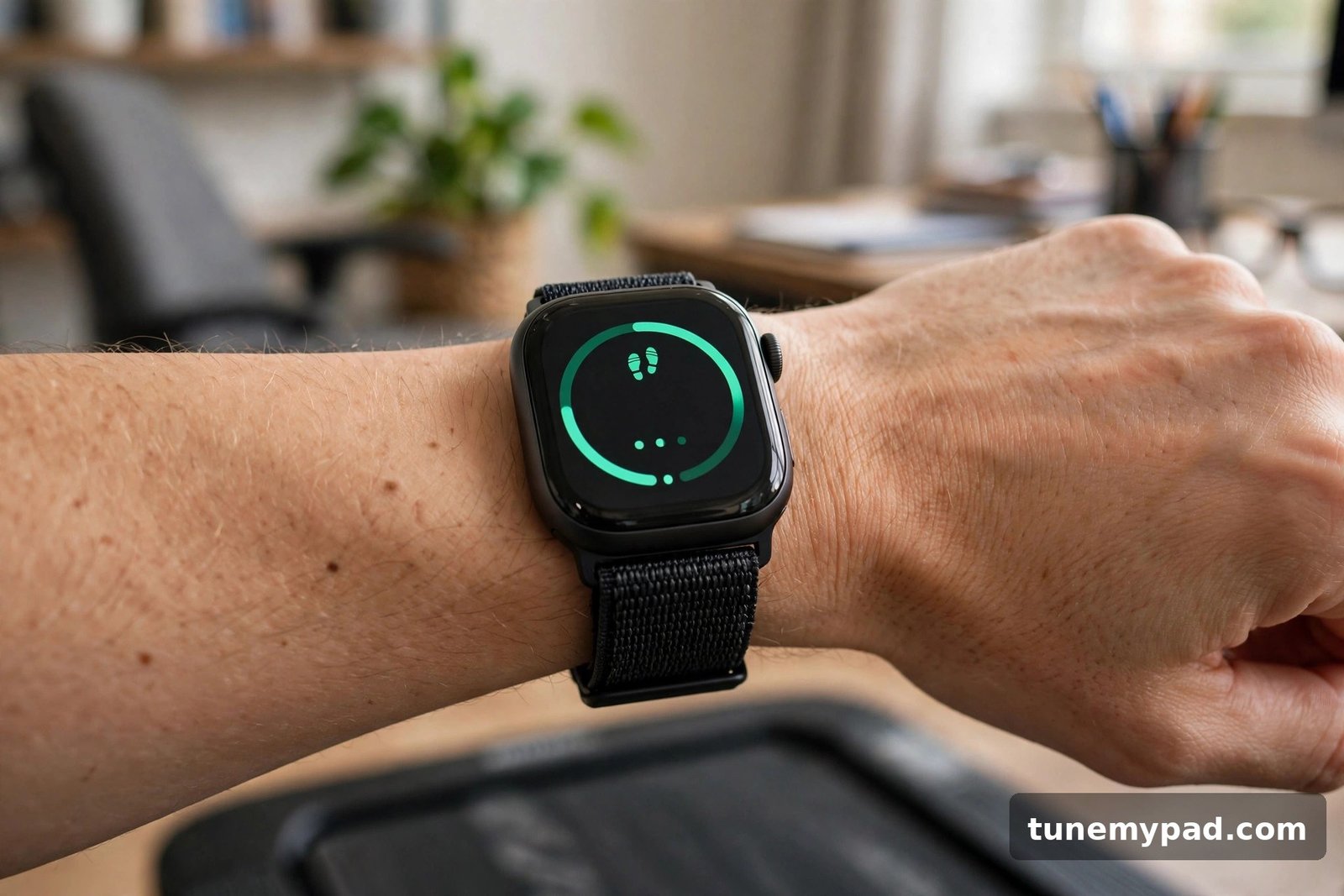
Cardiovascular fitness improves quietly in the background of walking pad 10000 steps a day results. After six to eight weeks of consistent 10k-step days, most people see their resting heart rate fall by 3 to 8 beats per minute. That drop is a direct marker of improved cardiac efficiency: your heart moves more blood per beat, so it beats less often at rest.
This result matters more than it looks. Resting heart rate is one of the simplest predictors of cardiovascular health, and a sustained drop signals that your daily walking is genuinely conditioning your heart, not just burning calories. Check yours first thing in the morning before getting up, and compare week one to week eight. Walking pad 10000 steps a day results at the two-month mark often include this improvement even in people whose weight has barely changed, which is why the scale is a poor sole measure of progress.
To strengthen this result, make at least two of your weekly walking blocks brisker: 2.8 to 3.2 mph for 30 to 45 minutes. The CDC counts brisk walking toward its 150-minute weekly target, and mixing in faster paces accelerates cardiovascular adaptation. Your walking pad makes this easy: nudge the speed up during a podcast, then drop back to desk pace for work.
Result 5: Joint Stiffness and Back Ache Fade
It sounds backwards, but one of the most consistent walking pad 10000 steps a day results is less joint pain, not more. Prolonged sitting starves spinal discs and joint cartilage of the gentle compression-and-release cycles that nourish them. Walking restores those cycles, and desk workers with chronic low-back tightness often report major relief within three to four weeks of daily 10k-step walking.
The caveat is the adaptation window. Walking pad 10000 steps a day results for joints follow a J-curve: the first week or two may bring sore feet, tight calves, or achy knees as underused tissues wake up, then comfort improves steadily. Support the transition with real walking shoes (not socks), a week or two of shorter days at 6,000 to 8,000 steps, and calf stretches after your longest block.
People with diagnosed arthritis or chronic knee problems should treat this result cautiously. Gentle walking is widely recommended for osteoarthritis, but the jump straight to 10,000 steps can be too much; build up over four to six weeks and get your doctor’s or physical therapist’s guidance on a safe ramp.
Result 6: Mood and Stress Resilience Improve
The mental-health walking pad 10000 steps a day results are as well documented as the physical ones. Regular moderate walking reduces symptoms of anxiety and depression, and the effect size is meaningful: multiple meta-analyses find walking interventions produce moderate improvements in mood, comparable to other low-intensity exercise. Desk workers, who combine sedentary time with high cognitive load, seem to benefit disproportionately.
Part of this result comes from the walking itself and part from breaking up sitting. Long uninterrupted sitting is independently associated with worse mood and higher perceived stress, so a walking pad attacks the problem twice: it adds movement and removes the long sedentary blocks. Many people describe the effect as a calmer baseline, fewer snappy afternoons, and an easier time switching off after work.
Walking pad 10000 steps a day results for mood arrive gradually and are easy to miss if you are watching only the scale. Keep a one-line evening journal for the first month (“energy 7/10, mood good, no 3 PM crash”) and read it back at week four. The pattern is usually obvious in retrospect, and seeing it written down reinforces the habit that produced it.
Result 7: The Habit Becomes Automatic Around Day 60
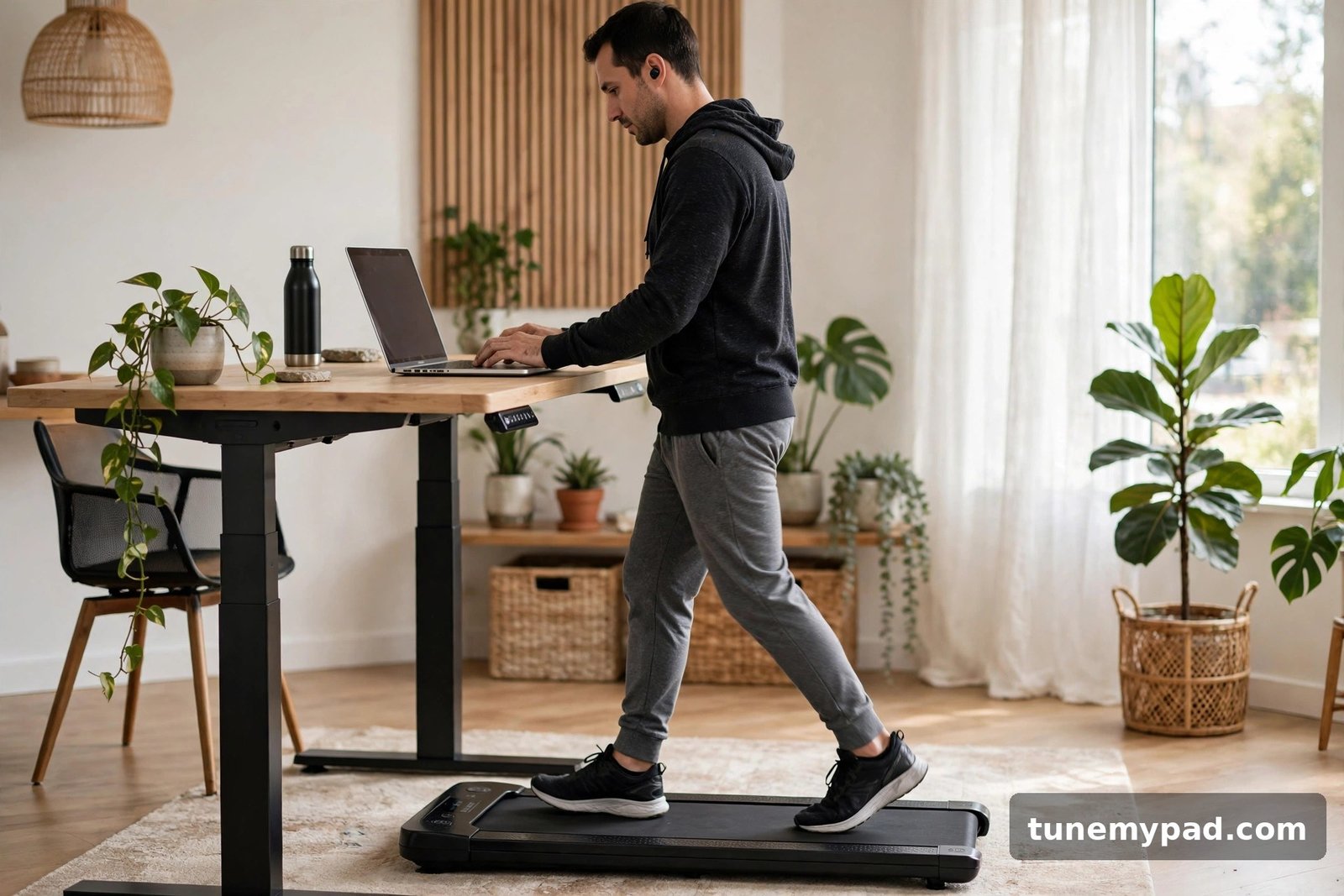
The final result is meta but powerful: walking pad 10000 steps a day results become self-sustaining. Behavioral research suggests simple daily habits take roughly two months to become automatic, and desk walking is an ideal habit candidate because it piggybacks on an existing routine (your workday) in a stable context (your desk). By day 60, most consistent walkers report that stepping onto the pad feels like sitting down used to: just what you do.
This automaticity is what separates walking pad 10000 steps a day results from gym-based results. Gym habits require daily motivation, travel time, and schedule negotiation; desk walking requires only that you step on the belt when you sit down. The friction is near zero, which is why adherence, the true driver of all long-term fitness results, is so much higher.
Protect the habit during the fragile first month. Put the walking pad where you cannot ignore it, keep your walking shoes next to it, and set a non-negotiable minimum (even 20 minutes counts) for chaotic days. Walking pad 10000 steps a day results belong to the people who keep showing up, not the people with the perfect plan.
How Long Does 10,000 Steps Actually Take?
The most practical question behind walking pad 10000 steps a day results is time: how many minutes of walking does 10,000 steps require? It depends on your cadence. At a desk-walking pace of 2 mph, most adults take about 100 steps per minute, so 10,000 steps takes roughly 100 minutes. At 2.5 mph the cadence rises to about 115 steps per minute, cutting the time to roughly 87 minutes. At 3 mph and 125 steps per minute, you are done in about 80 minutes.
| Walking speed | Steps per minute (approx) | Time for 10,000 steps |
|---|---|---|
| 1.8 mph (easy desk pace) | 95 | ~105 minutes |
| 2.2 mph (steady desk pace) | 105 | ~95 minutes |
| 2.5 mph (brisk) | 115 | ~87 minutes |
| 3.0 mph (workout pace) | 125 | ~80 minutes |
Split the time and it stops looking intimidating. Two 30-minute blocks and one 40-minute block across a workday gets you to 10,000 steps at desk pace, and you were going to be at your desk anyway. Walking pad 10000 steps a day results do not require a single heroic session; three modest blocks beat one long one for both adherence and joint comfort.
What to Do When You Stall Below 10,000 Steps
Many people chasing walking pad 10000 steps a day results get stuck at 6,000 or 7,000 steps for weeks. The usual culprit is not laziness but friction: the pad is folded in a corner, the shoes are upstairs, or meetings eat the walking blocks. Audit your setup before your motivation. Keep the pad unfolded under or beside your desk, park your walking shoes next to it, and pre-schedule two walking blocks on your calendar like meetings.
The second fix is speed. If 7,000 steps take all day at 1.8 mph, add one 30-minute block at 2.8 mph and you will bank roughly 3,400 extra steps in half an hour. Walking pad 10000 steps a day results do not care how you split the total; one brisk block plus easy desk walking is the most time-efficient recipe. Track steps for one week with the fixes in place before judging whether 10,000 is realistic for your schedule.
Frequently Asked Questions
How many calories does walking pad 10000 steps a day burn?
For most adults, 10,000 steps burns 400 to 550 calories, with heavier walkers at the high end and lighter walkers at the low end. Speed matters less than people think; the step count itself is the main driver. Walking pad 10000 steps a day results for weight loss follow directly from this math: five days a week creates a 2,000-to-2,750-calorie weekly deficit.
Can I get walking pad 10000 steps a day results walking slowly?
Yes. Even at 1.5 to 2 mph, 10,000 steps deliver the full step-count benefit for sleep, mood, joint health, and weight loss; you just spend more minutes to get there. Faster speeds add cardiovascular conditioning on top, but the 10k results do not require speed. Consistency at any pace beats sporadic fast sessions.
Do I need to hit 10,000 steps every single day?
No. Walking pad 10000 steps a day results come from the weekly pattern, not a perfect streak. Five or six 10k days per week produce nearly all the benefit; one or two lighter days at 5,000 to 7,000 steps aid recovery. Perfectionism kills more fitness habits than laziness, so build in rest days from the start.
Will 10,000 steps a day on a walking pad hurt my knees?
For healthy knees, no; walking is low-impact and the flat, cushioned belt is gentler than pavement. Build up gradually over two to three weeks rather than jumping from 3,000 to 10,000 steps overnight, wear supportive shoes, and keep the belt flat rather than propped at an angle. If you have diagnosed knee problems, check with your doctor first and ramp over six weeks.
How do walking pad 10000 steps a day results compare to running?
Running burns more calories per minute and builds cardiovascular fitness faster, but walking pad 10000 steps a day results win on sustainability: almost anyone can walk daily for years, while few sustain daily running. For fat loss, the best exercise is the one you will actually do every day, and 10,000 daily steps beats three weekly runs for most desk workers.
Should I count steps from my walking pad display or a fitness tracker?
Use one consistent source. Walking-pad displays estimate steps from belt movement and can drift by 10 to 15 percent; wrist trackers count arm swing and can undercount desk walking (your arms barely swing while typing). Pick one, learn its bias, and track trends rather than absolute truth. What matters for walking pad 10000 steps a day results is the daily habit, not the exact digit.
What if I can only manage 6,000 steps a day at first?
Start there proudly. Six thousand daily steps still delivers most of the health benefit; research shows mortality risk drops steeply up to about 7,000 to 8,000 steps, with diminishing returns beyond. Add 1,000 steps per week and you will reach 10,000 within a month. Walking pad 10000 steps a day results are a destination, not a day-one requirement.
Do walking pad 10000 steps a day results require dieting too?
For weight loss, diet matters enormously, but “dieting” need not mean anything extreme. Keep your current eating, avoid increasing portions as your appetite adjusts to the new activity, and the walking deficit alone produces 1 to 2 pounds per month. Add a modest 300-calorie daily reduction and results roughly double. Talk to your doctor or a dietitian before any major dietary change.
Can walking pad 10000 steps a day results include better posture?
Indirectly, yes. Walking pad 10000 steps a day results for posture come from spending fewer hours slumped in a chair; walking naturally stacks your spine, engages your core lightly, and alternates hip positions. Do not expect miracles for existing postural problems, but most desk walkers report less end-of-day stiffness and a taller feeling stance within a month.
Is it safe to do 10,000 steps on a walking pad while pregnant?
Many pregnant women walk for exercise, but pregnancy changes balance, joint laxity, and cardiovascular demands, so do not treat walking pad 10000 steps a day results as a personal target without medical guidance. Ask your obstetrician what daily activity level is safe for your specific pregnancy, start well below 10,000 steps, and stop for dizziness, contractions, or unusual pain.
Conclusion: 10,000 Steps Is a System, Not a Streak
Walking pad 10000 steps a day results reward the patient: better sleep in two weeks, real weight loss in a month, a stronger heart in two months, and an automatic habit by day sixty. The target works because it converts dead desk hours into movement without asking for extra time, extra motivation, or a gym membership.
Start where you are, add a thousand steps a week, and split the walking across your workday. Three months from now the person hitting 10,000 steps before dinner will not remember the effort it took to get there, only the results. Step on, and let the steps stack up.
1 thought on “Walking Pad 10000 Steps a Day: 7 Real Results”